FastForward #72: The backlash against AI data centers is spreading


Hi everyone. My working vacation continues, so I decided to send out another abbreviated newsletter without the news of the week. I'll be publishing normally again starting next week. If you like my newsletter, please share this week’s edition with a friend, and encourage them to subscribe. It really helps.💌 Sign up here.
ForwardThinking 🤔
The backlash against AI data centers is spreading
If you were to walk around Silicon Valley these days, you’d find nary a negative word about AI. It’s advancing fast. It’s powerful, so powerful we should be afraid of it. And if you’re not all in, you’re going to be left in the dust of history. We need to build more data centers to accommodate this amazing technology, and we need to do it quickly. We are ready to commit billions, even trillions of dollars to it, if you’ll only let us.
And there's the problem. Once you step outside the confines of tech bros and AI true believers, you find a very different attitude, especially when it comes to the growing thirst for data centers. Tech companies want to build 'em, but increasingly politicians and ordinary citizens are putting their foot down.
In March, I wrote a commentary in this space called "Everybody hates AI" about the growing backlash against AI in general. Over the last several months that dislike of AI has gelled into a movement against data center expansion, one that spans both sides of the aisle.
Taking action
New York became the first state to impose a moratorium on large data centers this month, pausing construction of facilities over 50 megawatts. Maine passed a similar measure last spring that was subsequently vetoed by the governor. There are a number of other initiatives in play across 14 states, although it's unclear if they will pass or not.
Regardless, politicians are reacting to negative feelings coming from the public. A May Gallup poll found that 7 out of 10 Americans oppose construction of data centers in their communities. Technology companies want to keep building, but the public is fed up.
Among the reasons are the impact on the environment, the use of resources like water and electricity, a belief it will lead to higher energy costs, and in some cases, a general disdain for AI. Supporters argue that data centers generate jobs and other economic benefits (although after they're built, data centers don't tend to be huge jobs creators).
Investors worry too
But it's not just community activists pushing back against this construction. Investors are beginning to as well. The big tech companies are continuing to spend at a historically high rate with the belief that if you build it they will come. In other words, someone will end up using these resources because AI is such a resource-heavy exercise.
For example, Oracle has placed a big bet on data centers and the market is beginning to question the financial burden, according to reports. Investors have been punishing the stock over the last month over concerns about its ballooning Capex numbers and a surging debt load associated with it.
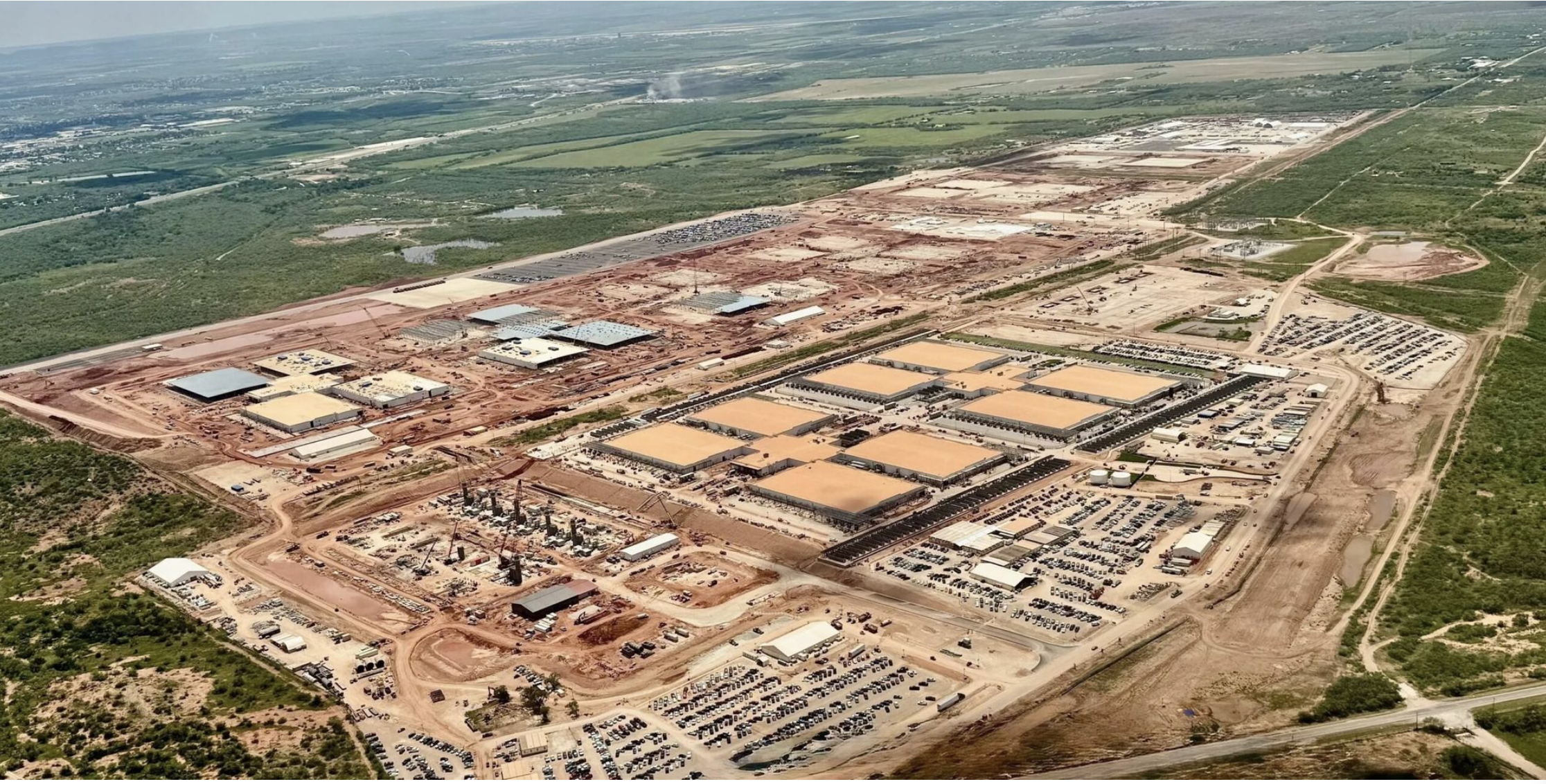
Just this week, Alphabet reported huge growth in Google Cloud, up 82% year over year, but that was offset by a sharp increase in full-year capex guidance to a range of $195 billion to $205 billion, up from $180 billion to $190 billion. Executives on the earnings call also predicted a sizable increase in 2027, according to Yahoo Finance. The news rattled investors, pushing the stock down around 8% after the report.
Clearly investors, with a different set of concerns, are also questioning whether all this spending is really going to pay off in the end. Ordinary people worried about the impact of this construction on their communities care little about the problems of big tech companies, but when it comes down to cost, investors do. And suddenly two groups with seemingly different agendas are coming to the same conclusion: the cost of all this building may simply be too high.
~Ron
What's new on the blog 📰
Pega founder Alan Trefler thinks big AI is selling fear
Pega CEO Alan Trefler founded his company in the 1980s, and he's been around long enough to call out big AI when he sees fear mongering and manipulation.
"They're both trying to scare them into thinking it's all powerful, and also scare them into thinking that if they don't use it, they're going to fall behind."
I spoke to Trefler about how his company's workflow software has been designed to use AI strategically, rather than as the center of the system, an approach he believes will help them control costs and give customers more predictable bills
Investor Jai Das on AI hype and the changing face of enterprise investing
I caught up with Sapphire Ventures co-founder Jai Das in April at HumanX. We talked about AI hype and the changing investment environment.
As the AI labs try to muscle into areas traditionally covered by Enterprise SaaS companies, he says there are still areas where enterprise investors can succeed.
"I'm in a little bit a better position than my colleagues who look more at apps because I do more on the infrastructure and software. So those layers, I think, are not going to get disintermediated by the models as much.”
Why Abby Kearns thinks AI has changed the rules for the open source software supply chain
I first met Abby Kearns when she was running Cloud Foundry a decade ago. Today, she is CEO at ActiveState, a company that is trying to create a way to keep software libraries safe at a time when the open source software supply chain has been under increasing attack.
She said recent moves by the Linux Foundation and IBM and Red Hat show the industry recognizes there is a serious problem.
"When institutions of that scale stand up coordinated programs around open source supply chain protection, the consensus has changed. This is no longer treated as a niche security topic. It is a crisis and recognition is finally catching up to the pace at which the exposure has been building."

Databricks continues to soar as private company, but margins starting to shrink
In the latest collab between me and Alex Wilhelm, we dive deep into the success of Databricks, which continues to soar as a private company. Alex and I have been covering this company for a long time – my favorite part of the article is where I link to like a half dozen analysis pieces we wrote together over the years when we were at TechCrunch. I wasn't kidding when I said we've covered them a long time.
This will be cross-posted on Alex's Cautious Optimism blog.
Zscaler CEO Jay Chaudhry's latest bet focuses on protecting enterprises from AI-fueled threats
Speaking to Zscaler founder and CEO Jay Chaudhry, it's hard not to be impressed, even if as a journalist I'm supposed to be above such things.
From his back story growing up in a small village in India to his move to the U.S. with a one-way ticket and $200 in his pocket to starting 5 companies, four of which were acquired before launching Zscaler in 2007, he has had a long and successful run, and he shows no signs of slowing down.
I spoke to him across two conversations. One in April and one at the company conference in Las Vegas earlier this month where he talked about going after the threat AI adds to the security equation:
"While these models can generate code, they can also create exploits, and they can create a fix for the exploit," Chaudhry said. "Here's the difference: If a model created an exploit, and it only works 90% of the time, the attacker doesn't care. If your fix only works 90% of the time, you have a problem."
Note that I had a paid engagement with Zscaler when I attended their conference. My editorial standards and guidelines apply regardless. I have a full disclosure statement at the top of the piece.
What I'm reading 📚

The Army Is Burning Through Its AI Tokens
~By Vittoria Elliott, Wired
Indeed chief economist: Aging Baby Boomers are America's real labor problem, not AI
~By Svenja Gudell, Fortune
It’s past time to end AI-based automated customer responses
~By Evan Schuman, ComputerWorld
What I'm watching 📺
Magnificent 7 Lose $767 Billion as AI Skeptics Dump Tech Stocks
~Bloomberg Businessweek
Look who's talking 👄
"A token is three quarters of a word. It's mathematical. They could have charged by the word, and everybody would have understood what they were paying for."
~Alan Trefler, Pega CEO, on why token-based pricing is deliberately confusing, as told to FastForward this week.