
Databricks continues to soar as private company, but those margins are starting to shrink

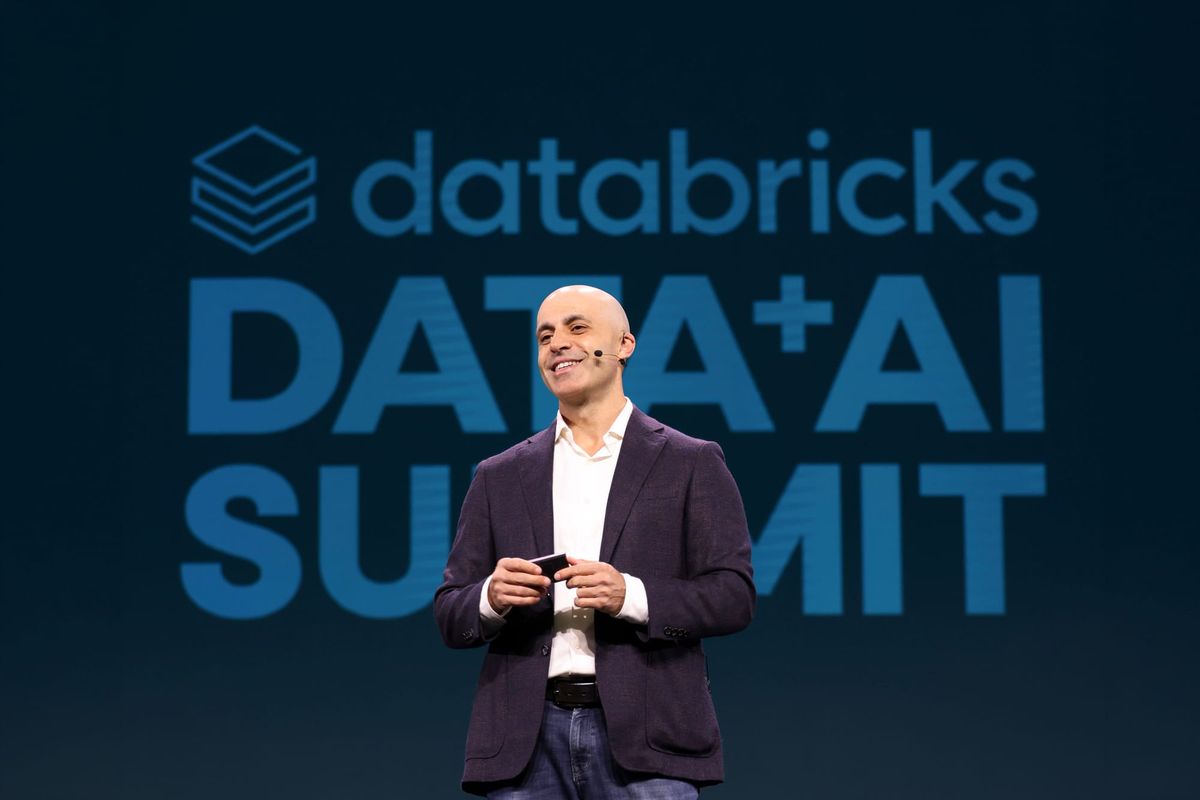
The following piece is the result of a collab with my long-time friend, occasional colleague, and forever writing partner Alex Wilhelm. Alex is the author at Cautious Optimism, which I both enjoy and recommend. As with many of our collabs, I handles news and context, and Alex closes with numbers. We hope to do more of these in the coming months. — Ron
Alex and I joked on the phone recently that we’ve been covering Databricks for 10,000 years. It has seriously been a long time. My earliest TechCrunch piece was the company's 2014 Series B, the year I joined the publication, so I’ve been on the Databricks beat since they were puppies, and they’re big dogs now.
Alex and I wrote a bunch of analysis pieces together (here, here, here, here, here, and here) when we were at TechCrunch over several years, and every conversation we had with CEO and co-founder Ali Ghodsi had a familiar ring: We will go public when the time is right. When you're flying as a private company, and continuing to grow revenue and value, the public markets are a bet that might not be worth taking at the moment.
Earlier this month, CNBC reported that the company (you can't really call them a startup anymore) reached a revenue run rate of $6.9 billion, up an impressive 80% over the prior year. To be experiencing that kind of growth in a company this mature is nothing short of remarkable.
But all that glitters is not gold, and the company's margins are shrinking from the high cost of running all those pesky agents, a problem that we are seeing across the AI landscape, from the vendors to the customers. Everyone is spending a ton of money and CFOs are starting to get annoyed.
In a conversation with CNBC, Ghodsi says his organization is going where everyone is heading, the consumption-based model, where you pay as you go. Sounds fair -- token pricing is going down -- but everyone's using more. Someone's got to pay and it's probably going to be the customer in the end. It usually is.
In spite of those shrinking margins, Databricks is in an excellent position. In the age of AI when data matters more than ever, it's smack-dab in the middle of that along with Snowflake, and it appears there's plenty of room in the market for both companies.
In the midnight hour, she cried more, more, more
Databricks recently made a move to bring in even more revenue when it announced a security product last March. And why not? It's managing pretty much everything else in its software, so why not security data too. And given the nature of the growing threat landscape, it could be a very lucrative area indeed.
When I (Ron) wrote about the security announcement in FastForward, one of my go-to database analysts, Sanjeev Mohan – a former Gartner analyst who now runs his own shop, SanjMo and has covered database technologies for many years – told me that Databricks was engaging in a different sales motion and it wouldn't be easy to sell to a security buyer.
But at its recent customer conference, Databricks attacked that problem with a vengeance, announcing it intended to acquire Panther, a security startup that helps fill in some of those blanks Mohan told me about.
"Along with a well respected AI SOC platform with 100-plus prebuilt integrations, Databricks also gets a team of engineers and former SOC analysts who already speak the CISO's language and carry credibility," he told FastForward. "That takes Lakewatch from an open SIEM vision to an actual detection engine and agentic SOC workflows underneath it," Mohan told me recently.
That bodes well for future revenue, shrinking margins be damned.
Swapping gross margins for AI growth
Rewind the clock, and you can watch Databricks change its talk track as it scaled. During the post-ZIRP days when startups were told that investors wanted to see profitable growth more than the suddenly-feared growth at all costs approach, Databricks made noise about its revenue quality.
In September 2023, while announcing its Series I, Databricks reported that it had “achieved record non-GAAP subscription gross margins” of 85%. It was a very impressive detail, implying strong pricing power for Databricks (limited discounting), and excellent long-term value accretion (future cash flows!).
In December of 2024, Databricks said that it was still recording non-GAAP subscription gross margins above 80%. That’s the last time we can find any reporting from Databricks regarding its gross margins. Instead, the company began to emphasize its AI-derived revenues, saying in December of 2025 that its AI run rate had crossed the $1 billion mark. That figure grew to $1.4 billion in February, when Databricks announced $7 billion worth of new capital (equity and debt), and $1.7 billion more recently.
Did Databricks swap top-shelf gross margins for AI growth? Somewhat, but unlike other companies it appears to have done so at little risk to its core business. In other words, if Databricks is absorbing novel AI-related costs to pursue incremental growth, it’s making a calculated choice from a position of strength; desperation, this is not.
What do we mean? In September, 2025, December, 2025, and February, 2026, Databricks reported “positive free cash flow over the last 12 months.” You don’t have to worry about gross margin as much when you are growing quickly enough that your aggregate gross profit expansion is sufficient to keep you in cash-flow-positivity-land.
And Databricks is growing quickly. Databricks posted 50% and 55% growth rates in the third and fourth quarters of 2025; the company was growing at 65% year-over-year by Q1 2026, and most recently expanded its revenue run rate by 80% in a single year, as mentioned above.
To put the situation in more prosaic terms, if your train is accelerating rapidly, you don’t mind an extra shovel or two of coal heading into the firebox.
Not alone
Many companies are reporting declining gross margins as they scale their AI offerings. Databricks arch-rival Snowflake reported that its non-GAAP product gross margin fell from 76.3% in its fiscal year 2025 to 75.8% in its fiscal 2026 and 75.0% in its current year. A quick perusal of Snowflake’s website underscores just how critical AI and its related workloads have become for the company.
There are other examples. Doctor-focused medical network Doximity noted that its gross margins were eroding in its most recent quarter due to “AI compute costs.” Amplitude said that rising “inference costs [driven by] adoption of AI tools by customers outpaced” expectations, leading to “gross margin compression” in its most recent quarter. To pick another example, Procore expects that AI revenue growth will likely cause “modest headwinds to gross margins given the increased compute expenses to support these workloads.”
The problem of AI products eating gross margin has become so severe in certain cases that Microsoft is considering turning to DeepSeek’s latest model to produce a lower-cost model to meet the rising usage of its Copilot Cowork product (think Claude Cowork, but for Office). Databricks can read the room. Per CNBC:
Large companies “want to be able to absolutely use the frontier, smartest models,” he said, highlighting Anthropic’s Mythos. “They are interested in that, but not for everything, right? And for the mundane tasks, they absolutely want to curb the cost and use simple open-source models.”
Chinese models are extremely popular among Databricks customers, Ghodsi said.
What works for customers will work for Databricks, too; if companies large and small are increasingly turning to lower-cost AI models with intelligence we would have killed for a year ago at prices a fraction of the current frontier, there’s ever more AI on offer for (effectively) lower prices. The trend will continue.
Databricks is seeing accelerating growth at the cost of near-term margin pressure. Who cares? Double the spend and finally let loose the S-1 filings of war!