FastForward #87: Turkey Day Tech Thoughts II


Hi everyone. Hard to believe, but we are just a week before Thanksgiving here in the U.S. I'll be taking next week off and resume publishing the newsletter on Friday December 4th. I’d like to thank Akamai for returning as a sponsor this week. If you're interested in advertising, please drop me a line at ads@fastforward.blog. If you like what you see, please share this week’s edition with a friend, and encourage them to subscribe. It really helps.💌 Sign up here.

ForwardThinking 🤔
Some of you may recall that last year, I used the Thanksgiving holiday to run my semi-regular tribute to Dan Shaughnessy, the long-time sports columnist at the Boston Globe, who regularly mixes random thoughts about sports with a healthy dose of musical references.
With so much going on in the tech world these days, I have many thoughts, so it feels like a good idea to run it back. I bring you Turkey Day Tech Thoughts 2.
So here goes: Picked up enterprise tech news pieces while watching our IT infrastructure crumble.
*They say the best things in life are free, but VCs want the money. It's what they want. And by golly they got it in gobs this week as Anthropic went public. There were lots of newly minted millionaires and even quite a few billionaires too: investors, founders, employees, anyone who owned even a small slice of the company had a good day. They should have had Oprah on the NASDAQ floor: "You get a check! And you get a check!"
That's all well and good for those folks, but after the confetti is cleaned up and the checks are cashed, Anthropic has to deal with the reality and the vagaries of the public markets. It's worth noting that the stock was down 11% this morning as we went to press. It didn't take long for the euphoria to wear off.
They may have gotten here with a combination of decent tech and even better marketing, but now they have to operate under a different set of rules with a higher level of scrutiny that public reporting brings. It'll sure be interesting to watch how they navigate that.
Quiz 1: Before Kubernetes became the standard for container orchestration, what was the name of Google's internal system that was its precursor?
*Slow down, you move too fast. We saw everything from air traffic control to banking to airlines to Outlook run into some serious IT issues over the last week, and nobody was feeling groovy. Even the NSA went down. Everyone is wondering what the heck is going on. It was a field day for conspiracy theorists, but could it actually be AI?
Maybe, at least indirectly. One theory goes that AI is exposing more vulnerabilities than ever forcing companies to patch faster than ever, and as I wrote in this week's profile of IBM CIO Matt Lyteson, sometimes the cure is worse than the disease. Patches can actually break working software.
In fact, CBS News reported that the NSA outage was caused by systems failing to restart properly after installing patches for vulnerabilities discovered with the help of, wait for it, AI. And Reuters reported Wednesday that cybersecurity experts suspect the rush to patch newly discovered vulnerabilities could be contributing to some of the other outages.

Nobody really knows the root cause of all this IT chaos, but as the old advertising campaign says, speed kills. It was talking about driving, of course, but the increased velocity of exposing problems brings a host of problems in itself, and maybe, just maybe, these companies and governments need to slow down and look at the implications before patching. Who knows? Maybe they could use AI to help.
Quiz 2: What widely used open-source event-streaming platform was originally developed at LinkedIn before becoming an Apache project?
*I used to be disgusted, now I try to be amused. That about sums up my feelings about the whole Jensen Huang affair. He resigned as Nvidia CEO last week amid reports of multiple extramarital affairs, including one involving a woman with suspected ties to Chinese intelligence and others involving Nvidia employees. In the aftermath, a bunch of Silicon Valley tech execs showed how out of touch they truly are by suggesting that Huang was too important to have to deal with the consequences of his own actions, something we expect from our children, but apparently not our AI leaders.
Huang wants back in because of course he does, but for now at least the board is resisting his overtures. There was even an online petition being circulated last week, which many prominent tech company leaders put their weight behind. It was a bad look for everyone involved.
Jensen Huang shouldn't get off scot-free just because he's one of the most powerful people in tech. As Dylan once wrote, "They may call you doctor or they may call you chief, but you're gonna have to serve somebody." Even Jensen.
On that note, I wish everyone in the U.S. a Happy Thanksgiving. I won't be publishing next week. See you on December 4th.
Quiz 1 answer: Borg
Quiz 2 answer: Kafka
~Ron
What's new on the blog 📰
How IBM CIO Matt Lyteson uses Project Lightwell to protect his company's software supply chain
When IBM and Red Hat announced Project Lightwell earlier this year, a paid subscription service that lets companies patch vulnerable open source libraries without upgrading them, IBM CIO for technology platform transformation Matt Lyteson's team was one of the first to use it.
I spoke to Matt about his team's experience with Lightwell and how AI is increasing the pressure on companies to find and fix vulnerabilities faster, without breaking the underlying software. He had a good analogy for that challenge:
"I think a good analogy is like the lockpick just got a lot smarter, and so we as the locksmiths need to come in, and we need we need to get a lot smarter too."
Egnyte CEO predicts major shakeup in SaaS pricing by mid-2027
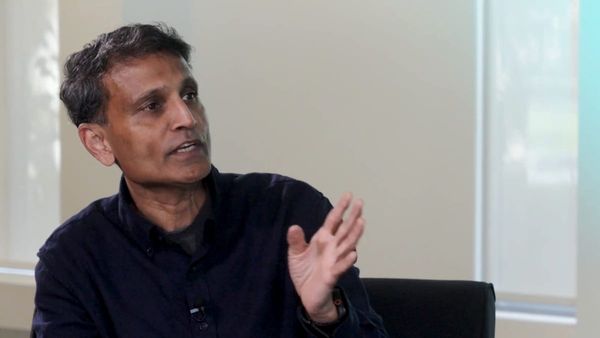
I recently went to Egnyte headquarters in Mountain View, CA to interview company co-founders CEO Vineet Jain and CTO Amrit Jassal for a sponsored video.
In this article, based on this interview, I looked at the pricing challenges that companies like Egnyte are facing in the agentic AI age. As Jain told me, he expects the model to shift next year to something hybrid.
"But I think, if I had a crystal ball, I think this will come to a head by midpoint of 2027, where you will absolutely see the deconstruction of the per seat model, and something hybrid will absolutely become de rigueur."
The full video interview is embedded in the article.
Note that Egnyte paid me to co-produce this video, but it had no input into the article. If you're interested in having me do a sponsored video with one of your executives, please feel free to reach out.
Adobe backs Creator Act to protect artists from AI-driven style exploitation
I looked at some legal protection that Adobe has helped introduce in Congress this year to protect creatives from bad actors stealing their unique styles, and giving them legal recourse when they do, protection they lack right now.
It's an interesting role for Adobe to take on, and I thought it was worth digging into to learn more.

How AI is rewriting the startup playbook
As AI speeds up getting that initial idea off the ground faster than ever, it raises questions about the role of the cloud provider in this new world.
I spoke to Darren Mowry, head of startups at Google Cloud, recently on the FastForward on PPN podcast about this changing role and how the cloud companies have to adapt quickly in a rapidly changing landscape. Mowry knows from whence he speaks having worked at Amazon and Microsoft in the past before joining Google Cloud 6 years ago.
As he told me, cloud credits are a given, but the cloud vendors have to move beyond that when it comes to working with startups. "We're all going to offer credits. Credits are not differentiating, right? The way that we help you get value from those credits is what's differentiating," he said.
The full podcast is embedded in the story.
AI velocity is still limited by human requirements in large companies
I produced a sponsored video with SailPoint's CTO Chandra Gnanasambandam last month during the SailPoint Navigate conference in Austin.
We discussed how any major change management exercise, and AI may be the biggest yet, requires companies to balance innovation with risk. Teams charged with protecting the company can slow the pace of change. Gnanasambandam says that keeping everyone moving forward requires constant communication and empathy.
"So the things that I talk about a lot these days is actually things around empathy, active listening. When you when you actually hear a legal colleague say something like, 'No, no, no, you can't do that,' I'm like, curb that knee-jerk reaction and you know assume positive intent and go back and ask a question why," he said.
Note that SailPoint paid me to produce this video in collaboration with their team, while I retained editorial independence over the questions I asked and final piece. If you want me to do a sponsored video with your company, please feel free to reach out.
The 15 minute final interview is embedded in the post.
Zurich US chief data officer recognizes that AI isn't the answer to every problem
I recently interviewed Kristen Bessette, chief data officer at Zurich North America. As an insurance company that deals primarily with business customers, it has to be particularly sensitive when it comes to introducing new technology like AI agents.
But Bessette said something super interesting during our conversation: The solution to every problem isn't necessarily AI.
"I told my team when I came in, listen we don't need a sledgehammer to kill a fly. Sometimes you just swat it, right? So if it's a swatable solution, just swat it."
News of the Week 📣
Palo Alto Networks keeps on buying: Announces intent to acquire Applied Compute for $4.5B
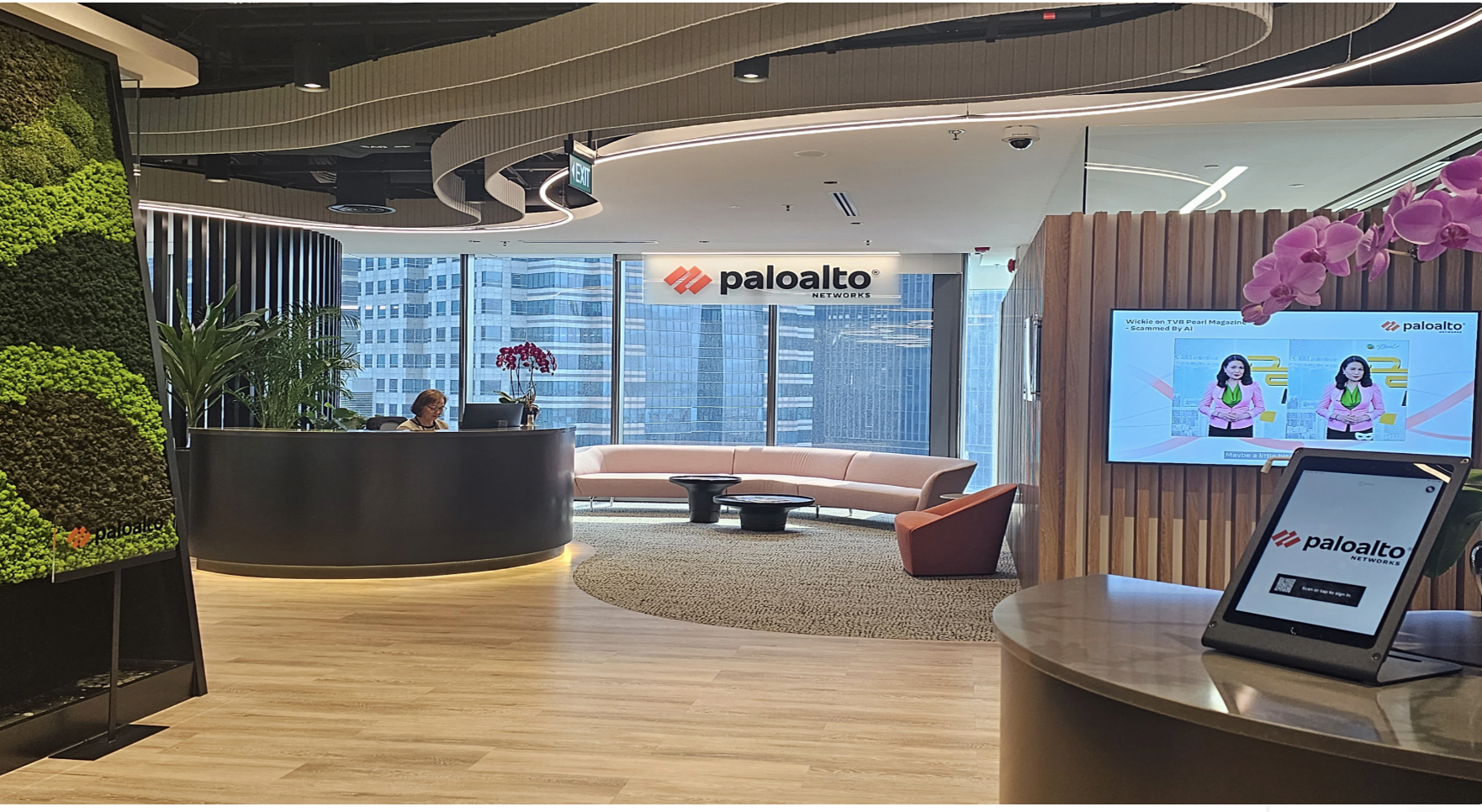
Palo Alto Networks has built its company through a combination of organic growth and a healthy acquisition appetite. This week it continued with the latter when it announced its intent to acquire Applied Compute, a company that helps customers train, customize and deploy AI models using their own data, in an all stock deal worth a cool $4.5 billion.
The announcement comes just a couple of weeks after the startup announced a new $350 million round of funding on a $3.25 billion valuation. The company also announced it had reached a $100 million annualized revenue run rate in just 18 months. That could explain why PAN paid a $1.25 billion premium to get it.
As a company that is primarily focused on cyber security, you may be wondering why it chose to spend so much on a startup that seems a bit outside its wheelhouse. The idea behind the acquisition is this: the company sees a hybrid future where companies deploy a mix of open weight and proprietary models. They need to be able to train and deploy these models on their data sets in a secure way. By combining the two companies, PAN believes this gives them an edge.
"When you look at open-weight models, most, if not all, of the models enterprises run in the future will be post-trained models optimized for their own needs. For that to work, both the post-training process and inference need the highest level of enterprise security capabilities," Lee Klarich, chief product and technology officer wrote on LinkedIn.
It's paying dearly to implement this idea. Of course, it also gets a bunch of smart AI minds in the process, another reason for established companies like PAN to buy up and coming AI startups. The sale is expected to close in the first half of 2027 subject to regulatory scrutiny, of course.
Microsoft and Salesforce make strange bedfellows once again with Copilotforce

Microsoft and Salesforce have always had a complicated relationship, at once rivals and partners, depending on the circumstances. The companies even sued each other before joining forces in 2014 at the beginning of Satya Nadella's tenure.
More recently, Benioff has been on the attack again as the companies jockey for position in the developing agentic AI market. Last year on the Logan Bartlett Show podcast, he had this to say about Microsoft's approach to AI:
"Microsoft has disappointed everybody with how they've approached this kind of AI world. We're out there right now in production with 1000s of customers, and they're just not at that level. And I think this Copilot thing has been a huge disaster for them," Benioff said at the time.
But despite the continuing rivalry, the companies are once again finding reasons to cooperate. This week at Microsoft Ignite, the two giants announced a new partnership called Copilotforce because what else would you call it?
As you would expect, it lets Microsoft Copilot users access Salesforce data and perform sales-related tasks without having to switch back and forth between the two products. The partnership also includes a Sales Cloud integration with Teams that provides information about sales pipelines and customer deals, along with a connection between Salesforce Data 360 and Microsoft Fabric that lets companies access data across the two platforms without having to duplicate it.
It makes sense for both companies to be cooperating here instead of sniping as they both gain. The Copilot integration includes more than 38 prebuilt sales skills that enable people working in Microsoft tools to do things like draft a follow-up email after a phone call with a potential customer.
The Salesforce plugin for Copilot is in public preview, while the Teams integration is in pilot. Parts of the Fabric integration are already generally available. Regardless, Copilotforce represents another chapter in the two companies' ongoing relationship soap opera.
Bending Spoons is back at snagging MailChimp for the bargain price of $3.7 billion

When Intuit spent $12 billion for Mailchimp five years ago, it was fair to ask what the heck were they doing? As I wrote in TechCrunch at the time, a quick scan of their website showed it had a laser focus on managing finances. Mailchimp is about managing, well, sending business emails. Which of these things was not like the other?
At the time, it seems Intuit had decided it wanted to become a one-stop shop for small business, not just for finances, but for running the entire operation and Mailchimp was step one toward that goal. Yesterday, the dream died when Intuit dumped its $12 billion purchase on SaaS clean-up service, Bending Spoons for $3.68 billion.
So now Bending Spoons is adding to its growing portfolio of once-valuable SaaS companies, businesses that still have substantial revenue and recognizable brands behind them, but are not what they once were at their peak. Who is really?
The growing portfolio now includes Evernote, Miro, Airtable and Vimeo. Heck they even bought AOL (which once bought TechCrunch in six degrees of M&A separation moment).
While Intuit takes a shave and a haircut in this deal, CNBC reported that Mailchimp collected $313 million in revenue for its likely final quarter with the company, down 1% over the prior year, but still a healthy $1.25 billion run rate.
The deal is expected to close in the first quarter of next year, according to the company.
What I'm reading 📚

Netflix CEO admits app may bury stuff you want to watch under stuff you don’t
~By Scharon Harding, Ars Technica
Waymo says its robotaxis crash far less than humans. California just called them an ‘imminent hazard’ and pulled them off freeways
By Tatiana Sataua, Fortune
Microsoft CEO Satya Nadella explains why he asked 60K employees to quit
~By Julie Bort, TechCrunch
What I'm watching 📺
The OpenAI board member who fired Sam Altman says we still can't trust AI CEOs
~Decoder with Nilay Patel interview with Helen Toner
Look who's talking 👄
“If the Board of Directors decides that my return is in the best interest of our shareholders, our employees, the company, and America, I would be honored to answer these calls and return as CEO.”
— Jensen Huang, November 17 on X
“The Nvidia board unanimously accepted his resignation and does not intend to reinstate Jensen as CEO.”
— Harvey Jones, Nvidia board chair, later that day as reported by Reuters