FastForward #86: Adobe's AI balancing act

Hi everyone. Just back from a few days in steamy Miami, but it's back to reality in the Northeast this morning. I’d like to thank Akamai for returning as a sponsor this week. If you're interested in advertising, please drop me a line at ads@fastforward.blog. If you like what you see, please share this week’s edition with a friend, and encourage them to subscribe. It really helps.💌 Sign up here.

ForwardThinking 🤔
Adobe's AI balancing act
Disclosure: I was paid by Adobe to produce a sponsored video at Adobe Max. The company had no input into this commentary and this piece was not part of that engagement.
I'm sitting in the Miami airport this morning, waiting for a flight from steamy Miami to cold and rainy (and maybe even snowy) Massachusetts. It's not even 9:30 am ET and Jensen Huang just resigned amid a growing sex and spying scandal that enveloped him and swallowed him up with surprising speed.
But I'm not here to write about Jensen. I'll leave it to others to sort out that mess and provide their hot takes. I spent the early part of the week at a South Beach Art Deco boutique hotel while attending Adobe Max 2026, a conference devoted to all things creativity and design.
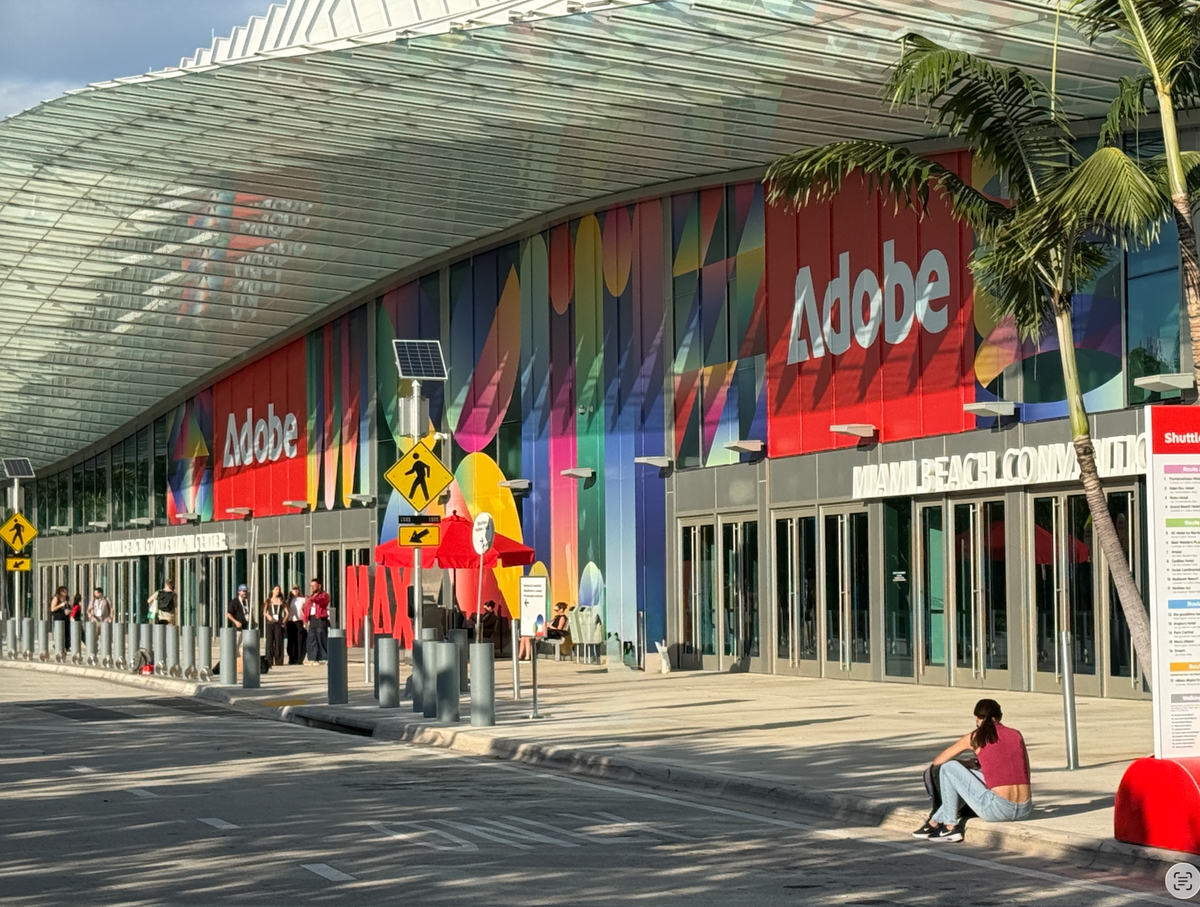
It was my first Max conference and it was bigger and more expansive than I would have imagined. Held in the sprawling Miami Beach Convention Center, a building so confusing I was left confounded and frustrated each time I entered the labyrinth. Even people who worked there didn't seem to know their way around (or even care).
It was only a 10 minute walk from my hotel, but the convention center was so massive, and I got lost so often, I had daily step counts of 11,000 on Tuesday and 16,000 on Wednesday. But the conference was clearly more than wandering through a large building. Here's some things I observed this week.
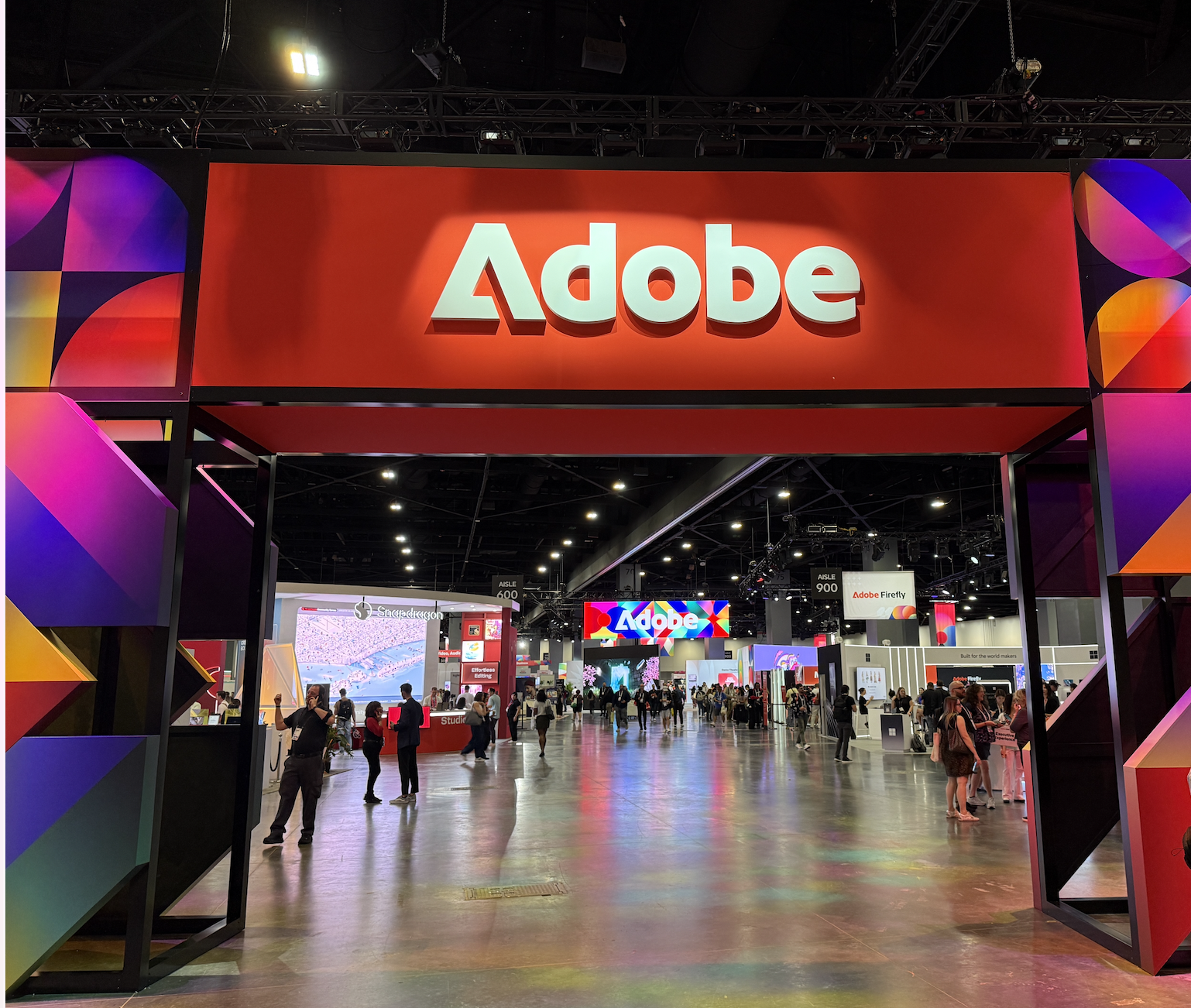
- Adobe Max is not your typical tech conference. Unlike the middle-aged white male geeks who tend to dominate most IT-related tech conferences, this one is focused on creatives and it skewed younger and more diverse. There were more colorful outfits and brighter booths on the show floor. It was much more about pageantry and aesthetics than your average tech gathering.
In fact, most of the folks here were practitioners. They didn't care about the underlying infrastructure or what model was being used or even increased productivity (at least not from a management perspective). They wanted the software to work in service of their creativity, and nothing more. - Yet creatives have a complicated relationship when it comes to AI. Adobe is clearly pushing it hard and embedding it across the entire platform from Creative Cloud to Firefly Enterprise to GenStudio. But during the keynote on Tuesday they went to pains to acknowledge there are people in their creative customer base who want nothing to do with it, and that was fine with them.
Interestingly enough though during the packed Adobe Max Sneaks, part party, part TechCrunch Disrupt Battlefield, part TV talk show, 10 people delivered an incredibly creative array of new features that each individual had created themselves. The best ones could eventually get incorporated into Adobe products. Each one was impressive, solving a tough creative problem inside Creative Cloud software, and the people around me who used Adobe products were clearly impressed. It's worth noting that every last one of them relied on AI. Just saying.
- The enterprise was not forgotten amidst this hoopla and hype. While creative pros may have a choice when it comes to using AI or not, most organizations who rely on the Adobe platform for building brand, marketing and advertising, will have little choice but to embrace it. Tools like Brand Intelligence are designed to sit in the background and ensure that regardless of who builds the creative, a professional or a novice, they adhere to the brand's aesthetic.
The executives I spoke to were careful to point out that this wasn't a rigid rules-based engine, but one that would recognize the nuances of the creative process and understand when it was OK to bend those rules. We'll see. My experience with AI as an editorial assistant is that it's hard to teach the model that kind of subtlety.
Even in a corporate setting, Adobe seems to recognize that creativity is different from most business processes, which tend to follow a more prescribed set of rules. The challenge will be not just the nuance, but allowing creative freedom so that everything doesn't look and feel the same. - Finally, I would be remiss if I didn't point out that this was Shantanu Narayen's final Adobe conference, and you could almost see the torch being passed after almost 19 years at the helm. Anil Chakravarthy, announced as his replacement earlier this year, takes over on December 1st. After a brief appearance, Narayen made his way off stage and Chakravarthy took over, a literal and symbolic changing of the guard.
Looking ahead, it's worth noting that Chakravarthy comes from the enterprise side of the house and it will be interesting to watch if the company remains true to the creatives who continue to rely on tools like Illustrator, Photoshop and Premiere Pro or if its attention tilts towards the enterprise.
In some ways it felt like a more colorful Dreamforce, albeit far smaller, but with the same feel of trying to go big, put on a show, be bold. But beyond the spectacle, what struck me was how Adobe is trying to navigate two different worlds. One celebrates individual creativity and the freedom to work without AI. The other is moving rapidly toward an enterprise future where AI is becoming imperative. The challenge will be making sure the second doesn't overwhelm the first.
~Ron
What's new on the blog 📰
Zurich US chief data officer recognizes that AI isn't the answer to every problem
I recently interviewed Kristen Bessette, chief data officer at Zurich North America. As an insurance company that deals primarily with business customers, it has to be particularly sensitive when it comes to introducing new technology like AI agents.
But Bessette said something super interesting during our conversation: The solution to every problem isn't necessarily AI.
"I told my team when I came in, listen we don't need a sledgehammer to kill a fly. Sometimes you just swat it, right? So if it's a swatable solution, just swat it."
Adobe backs Creator Act to protect artists from AI-driven style exploitation
I looked at some legal protection that Adobe has helped introduced in Congress this year to protect creatives from bad actors stealing their unique styles, and giving them legal recourse when they do, protection they lack right now.
It's an interesting role for Adobe to take on, and I thought it was worth digging into to learn more.
How AI is rewriting the startup playbook
As AI speeds up getting that initial idea off the ground faster than ever, it raises questions about the role of the cloud provider in this new world.
I spoke to Darren Mowry, head of startups at Google Cloud, recently on the FastForward on PPN podcast about this changing role and how the cloud companies have to adapt quickly in a rapidly changing landscape. Mowry knows from whence he speaks having worked at Amazon and Microsoft in the past before joining Google Cloud 6 years ago.
As he told me, cloud credits are a given, but the cloud vendors have to move beyond that when it comes to working with startups. "We're all going to offer credits. Credits are not differentiating, right? The way that we help you get value from those credits is what's differentiating," he said.
The full podcast is embedded in the story.

AI velocity is still limited by human requirements in large companies
I produced a sponsored video with SailPoint's CTO Chandra Gnanasambandam last month during the SailPoint Navigate conference in Austin.
We discussed how any major change management exercise, and AI may be the biggest yet, requires companies to balance innovation with risk. Teams charged with protecting the company can slow the pace of change. Gnanasambandam says that keeping everyone moving forward requires constant communication and empathy.
"So the things that I talk about a lot these days is actually things around empathy, active listening. When you when you actually hear a legal colleague say something like, 'No, no, no, you can't do that,' I'm like, curb that knee-jerk reaction and you know assume positive intent and go back and ask a question why," he said.
Note that SailPoint paid me to produce this video in collaboration with their team, while I retained editorial independence over the questions I asked and final piece. If you want me to do a sponsored video with your company, please feel free to reach out.
The 15 minute final interview is embedded in the post.
Qualcomm CIO Atilla Tinic is rethinking the IT playbook for the AI era
I spoke to Qualcomm CIO Atilla Tinic recently. We talked about how AI is forcing him to question long-held assumptions about how to run IT, including how companies use their data.
“I've done a 180 now, and I really believe your data lake or lakehouse is really your source of record for unified data going forward. And when you start to incorporate AI agents on top, they are more powerful in their capabilities when they have unified data that's trusted and curated that they can leverage.”
News of the Week 📣
Brian Halligan returns as HubSpot CEO amid year-long stock slide
If I told you a CEO was replaced this week as the company stock took a hit, you would probably think I was talking about Nvidia, but Jensen Huang wasn’t the only executive to lose his job this week.
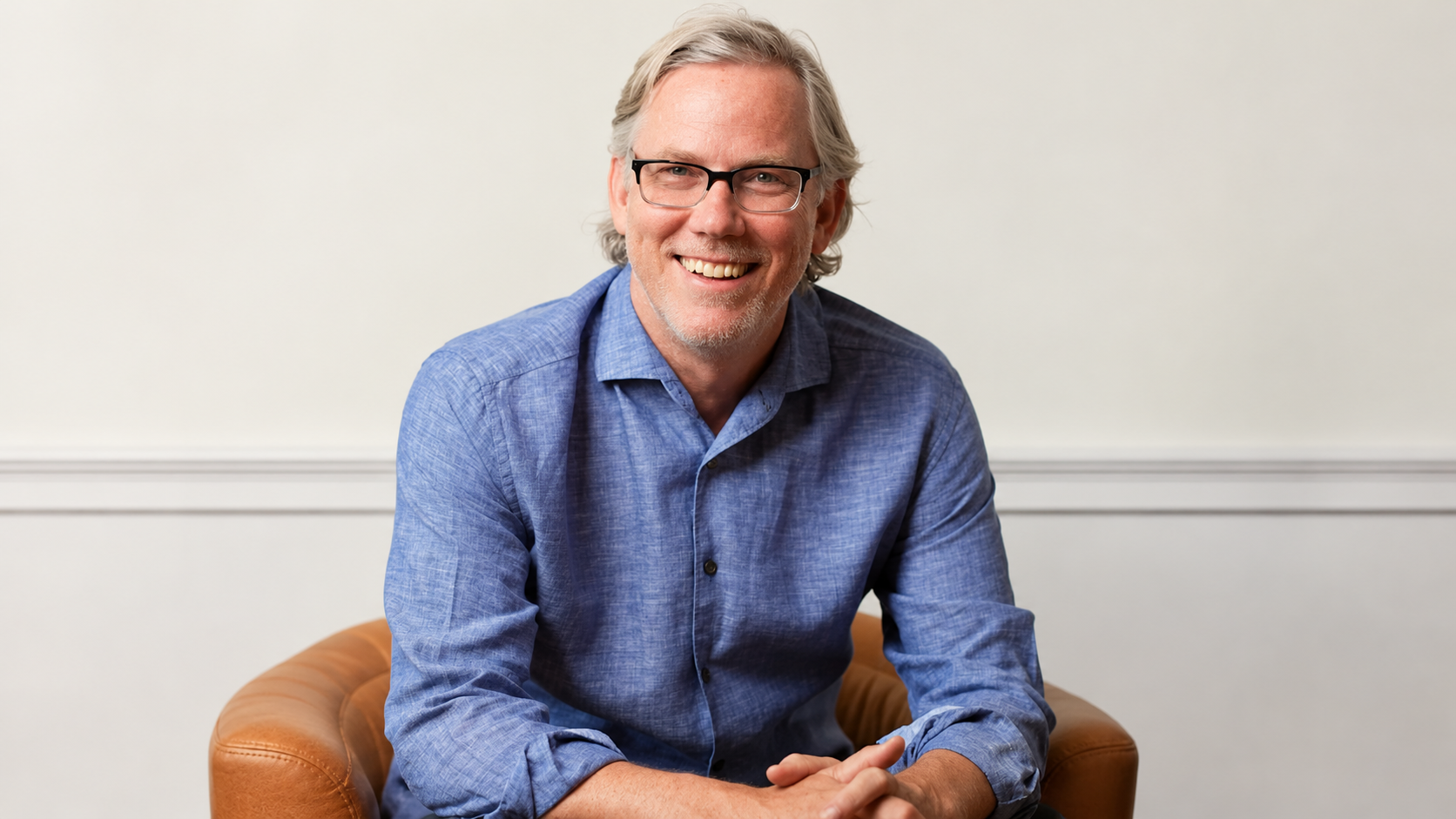
In a less dramatic move, Boston-based CRM and marketing automation firm, HubSpot parted ways with CEO Yamini Rangan, and brought back co-founder and former CEO Brian Halligan, whose job is to attempt to right the ship.
The company actually had a decent earnings report last week with revenue growing 17% to $947.6 million, but a poor fourth quarter forecast of just 12% growth negated any good news. Amid a SaaS upheaval this year, HubSpot was hit particularly hard with the stock down over 43% since the start of the year — and it took another hit on the weak guidance.
Rangan had been attempting to bring the company into the AI conversation, but like a lot of SaaS companies, pricing has become a challenge as the per seat license model has come under pressure. Companies have attempted to pivot to outcome-based pricing with mixed results.
The company also turned to former Adobe executive Karen Burgess who is set to become the new chief financial officer in February when current CFO Kate Bueker retires.
The company did grow during Rangan's five-year tenure, going from $1.3 billion in annual revenue to projected $3.7 billion in 2026, per the company, but with a flagging stock price the company felt compelled to make some major changes at the top of the org chart.
Just last month, the company announced it was laying off 660 employees or 7% of the workforce as it looked to cut costs and placate investors.
IBM and Microsoft announce extensive agentic partnership ahead of Ignite

You don’t often get two bigger enterprise players connecting for a partnership than IBM and Microsoft. But that’s just what happened this week when the two enterprise powerhouses announced a major joint effort around agentic AI called IBM Imagine Enterprise.
The two companies each bring something to the party. For IBM it’s more than 6,000 prebuilt AI agents and assets designed to support industry-specific applications. Meanwhile Microsoft provides the cloud, data and security pieces that underpin the agents.
In a typical IBM approach, instead of selling these solutions off the shelf, they are instead being rolled out through IBM’s consulting division. IBM would argue this helps ensure a more successful implementation, but it undoubtedly also contributes to a higher cost.
The announcement comes ahead of the Microsoft Ignite conference next week where the two companies are expected to present the idea to customers in person. It’s worth noting that Microsoft will not be selling this product, only IBM.
If it goes according to plan though, both companies could benefit with Microsoft selling more software and infrastructure and IBM selling more services. They get points for trying, that’s for sure.
Microsoft 365 outage lasts almost an entire day as service is slowly restored

Not being able to get your email is probably a double-edged sword these days, but when your business relies on a service like Microsoft 365, when parts of that service go down for an extended period of time, it's never a good thing.
That's precisely what happened yesterday when parts of the system used by millions of users went down, leaving many without access to critical business communications tools. Reports started appearing on Microsoft's X status account a little after 11 am ET on Thursday. Microsoft later reported that multiple services including Outlook, Teams, Power BI and Sharepoint Online were impacted.
According to the company the trouble started when a core connection process on the backend servers became overwhelmed. As traffic shifted to the remaining servers, those became overwhelmed too, causing widespread service disruptions. Because of the scope of the problem, it forced the company to take a go-slow approach to restoring the services.
There were reports online that service was coming back this morning, but not all at once, and some regions did not have full service as of publication.
The outage shows the fragility of relying on these services, and that even in the age of AI, when it is supposed to be easier to react more quickly to outages like this, there is not always a clear path to recovery.
Microsoft has promised a post-incident report, and it will be interesting to hear about the causes, impacts and recovery process when that happens. In the meantime, a lot of people were left without crucial services for a day, an unusually long outage, and that can never be considered acceptable by enterprise customers, who hold a company like Microsoft to a much higher standard.
What I'm reading 📚

The Fridge-Hacking Spree Is an Internet-of-Things Wake-Up Call
~By Lily Hay New and Matt Burgess, Wired
Even Martin Scorsese uses AI for storyboards. Can the art survive?
By Lana Crowe, The Guardian
NASA asks Earthlings to wave as Voyager 1 reaches a light-day away
~By Richard Speed, The Register
What I'm watching 📺
Why the data center you dread might never even be built
~TechCrunch Equity with Rebecca Bellan and Tim DeChant
Look who's talking 👄
"It has become all too clear that with few exceptions, the ultrawealthy are rarely looking out for anyone’s interests but their own. In the end, like so many American giants before him, Huang was brought down by his sex drive. But the real scandal is that he thought only he could run the company he founded, and now the rest of us have to live with the consequences. "
~Casey Newton writing on Platformer on Jensen Huang's ouster this week