Adobe's AI balancing act

Disclosure: I was paid by Adobe to produce a sponsored video at Adobe Max. The company had no input into this commentary and this piece was not part of that engagement.
I'm sitting in the Miami airport this morning, waiting for a flight from steamy Miami to cold and rainy (and maybe even snowy) Massachusetts. It's not even 9:30 am ET and Jensen Huang just resigned amid a growing sex and spying scandal that enveloped him and swallowed him up with surprising speed.
But I'm not here to write about Jensen. I'll leave it to others to sort out that mess and provide their hot takes. I spent the early part of the week at a South Beach Art Deco boutique hotel while attending Adobe Max 2026, a conference devoted to all things creativity and design.
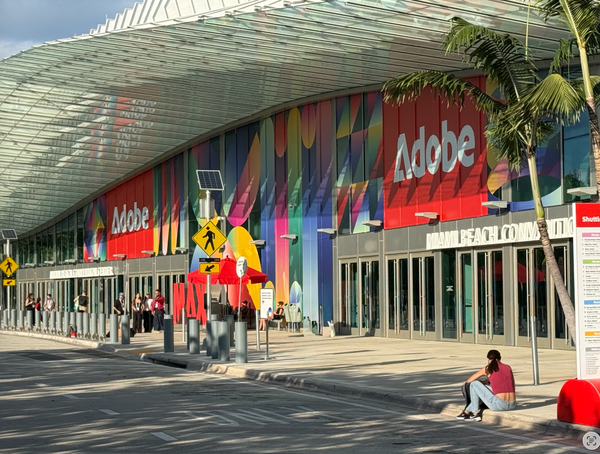
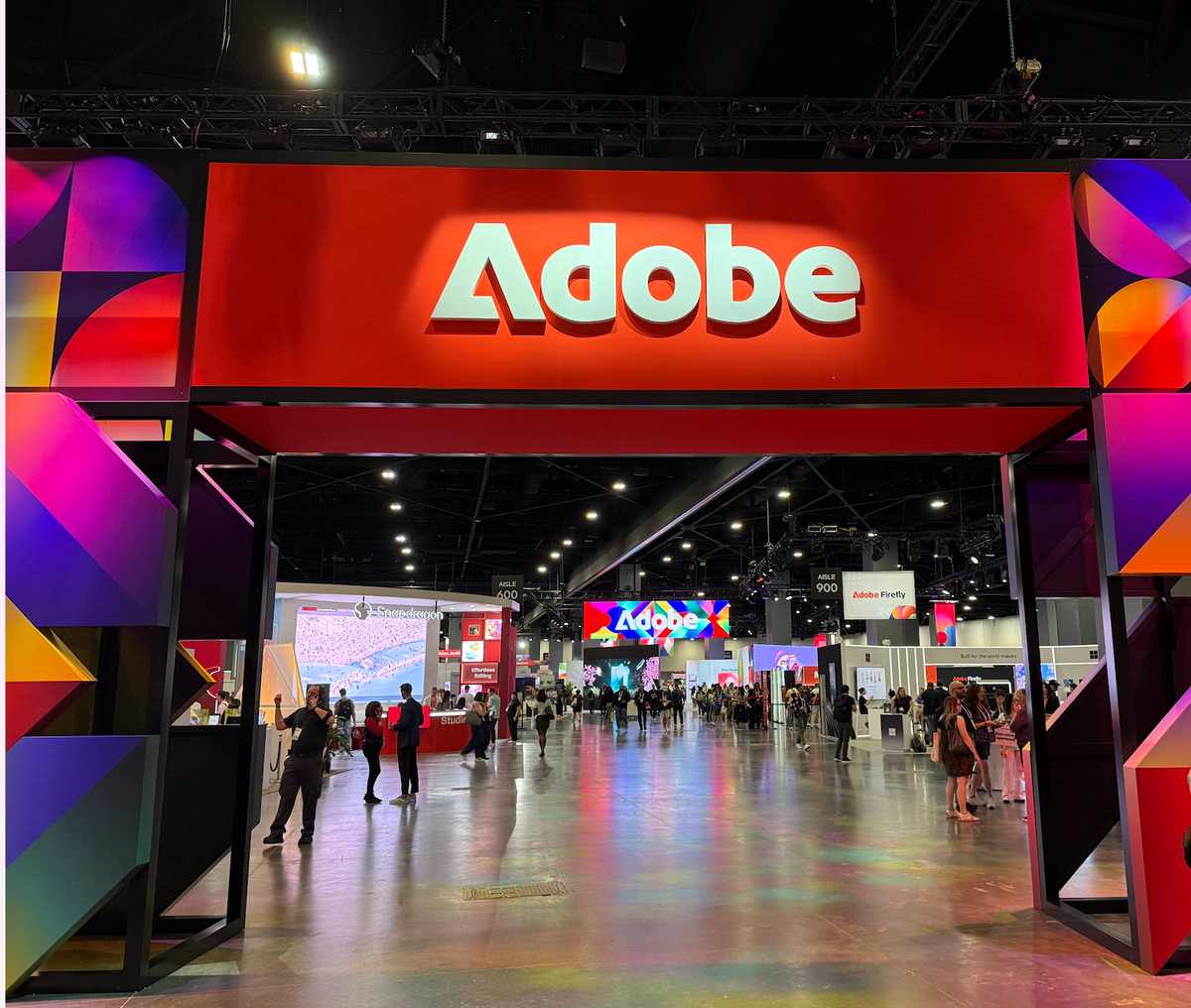
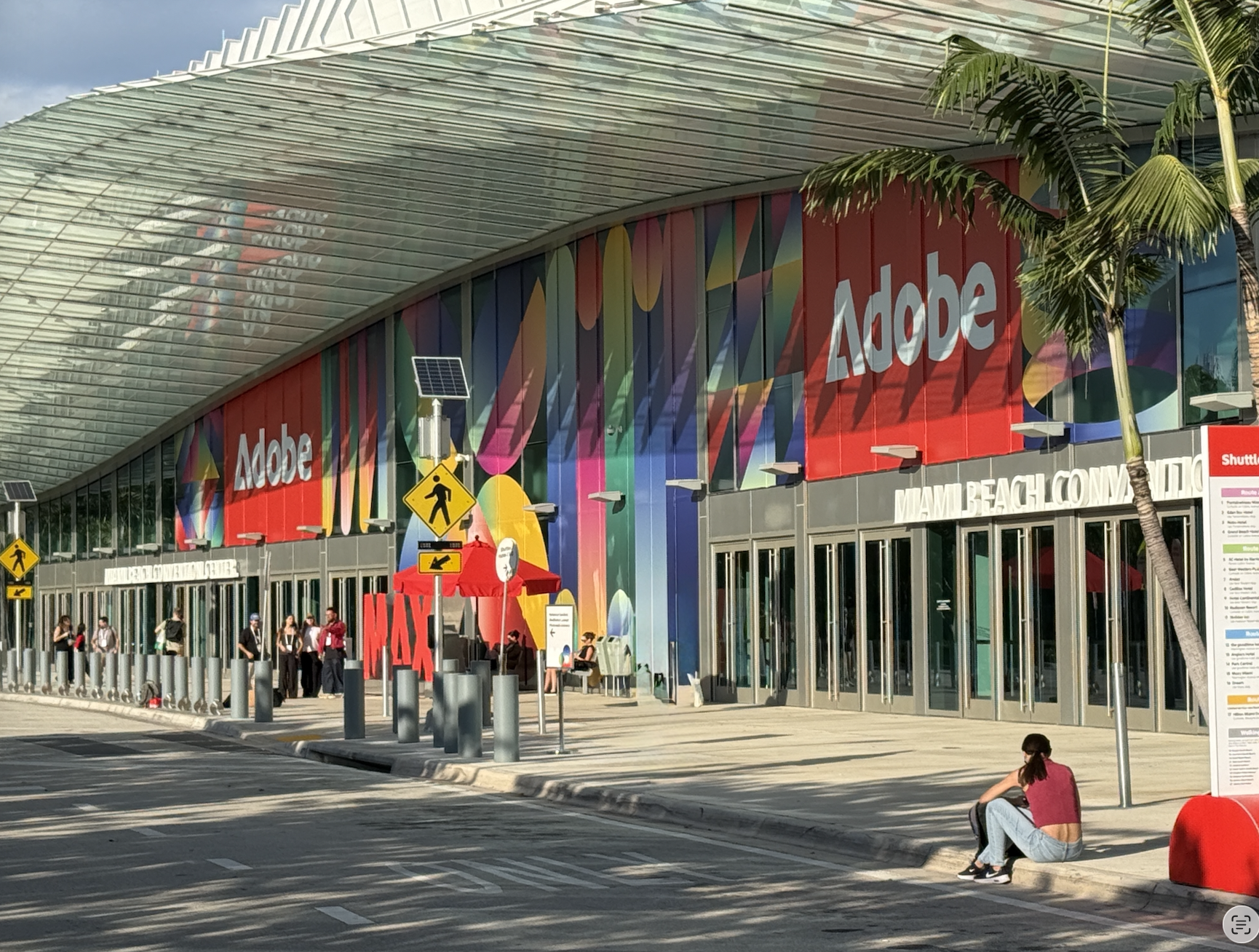
It was my first Max conference and it was bigger and more expansive than I would have imagined. Held in the sprawling Miami Beach Convention Center, a building so confusing I was left confounded and frustrated each time I entered the labyrinth. Even people who worked there didn't seem to know their way around (or even care).
It was only a 10 minute walk from my hotel, but the convention center was so massive, and I got lost so often, I had daily step counts of 11,000 on Tuesday and 16,000 on Wednesday. But the conference was clearly more than wandering through a large building. Here's some things I observed this week.
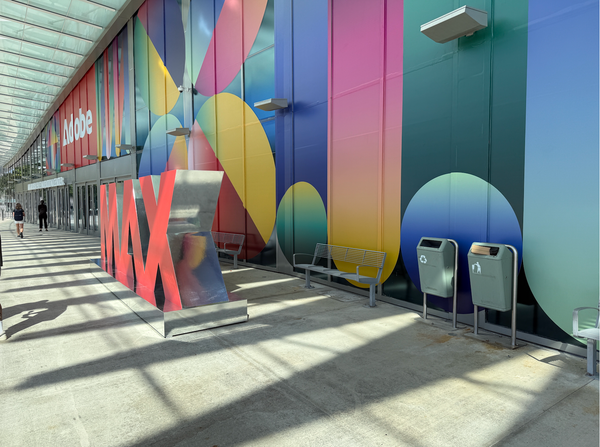
- Adobe Max is not your typical tech conference. Unlike the middle-aged white male geeks who tend to dominate most IT-related tech conferences, this one is focused on creatives and it skewed younger and more diverse. There were more colorful outfits and brighter booths on the show floor. It was much more about pageantry and aesthetics than your average tech gathering.
In fact, most of the folks here were practitioners. They didn't care about the underlying infrastructure or what model was being used or even increased productivity (at least not from a management perspective). They wanted the software to work in service of their creativity, and nothing more. - Yet creatives have a complicated relationship when it comes to AI. Adobe is clearly pushing it hard and embedding it across the entire platform from Creative Cloud to Firefly Enterprise to GenStudio. But during the keynote on Tuesday they went to pains to acknowledge there are people in their creative customer base who want nothing to do with it, and that was fine with them.
Interestingly enough though during the packed Adobe Max Sneaks, part party, part TechCrunch Disrupt Battlefield, part TV talk show, 10 people delivered an incredibly creative array of new features that each individual had created themselves. The best ones could eventually get incorporated into Adobe products. Each one was impressive, solving a tough creative problem inside Creative Cloud software, and the people around me who used Adobe products were clearly impressed. It's worth noting that every last one of them relied on AI. Just saying.
- The enterprise was not forgotten amidst this hoopla and hype. While creative pros may have a choice when it comes to using AI or not, most organizations who rely on the Adobe platform for building brand, marketing and advertising, will have little choice but to embrace it. Tools like Brand Intelligence are designed to sit in the background and ensure that regardless of who builds the creative, a professional or a novice, they adhere to the brand's aesthetic.
The executives I spoke to were careful to point out that this wasn't a rigid rules-based engine, but one that would recognize the nuances of the creative process and understand when it was OK to bend those rules. We'll see. My experience with AI as an editorial assistant is that it's hard to teach the model that kind of subtlety.
Even in a corporate setting, Adobe seems to recognize that creativity is different from most business processes, which tend to follow a more prescribed set of rules. The challenge will be not just the nuance, but allowing creative freedom so that everything doesn't look and feel the same. - Finally, I would be remiss if I didn't point out that this was Shantanu Narayen's final Adobe conference, and you could almost see the torch being passed after almost 19 years at the helm. Anil Chakravarthy, announced as his replacement earlier this year, takes over on December 1st. After a brief appearance, Narayen made his way off stage and Chakravarthy took over, a literal and symbolic changing of the guard.
Looking ahead, it's worth noting that Chakravarthy comes from the enterprise side of the house and it will be interesting to watch if the company remains true to the creatives who continue to rely on tools like Illustrator, Photoshop and Premiere Pro or if its attention tilts towards the enterprise.
In some ways it felt like a more colorful Dreamforce, albeit far smaller, but with the same feel of trying to go big, put on a show, be bold. But beyond the spectacle, what struck me was how Adobe is trying to navigate two different worlds. One celebrates individual creativity and the freedom to work without AI. The other is moving rapidly toward an enterprise future where AI is becoming imperative. The challenge will be making sure the second doesn't overwhelm the first.
~Ron