FastForward #82: Physical AI is having a moment

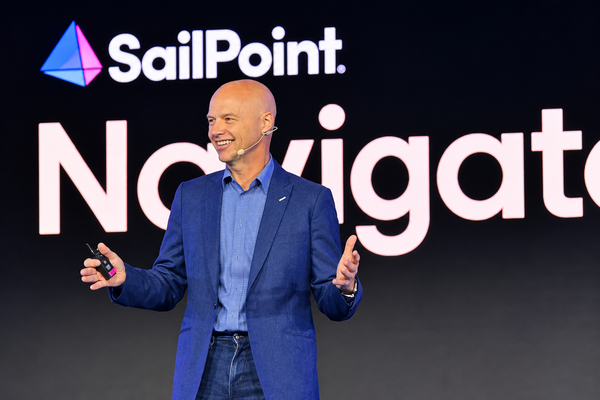
Hi everyone. I spent the first part of this week at the SailPoint Navigate conference in Austin where I learned loads about identity and agentic AI, and I made a sponsored video with the EVP of products and CTO Chandra Gnanasambandam. If you're interested in having me moderate a panel or fireside or produce a sponsored video for your event, please drop me a line at ron@fastforward.blog. If you like what you see, please share this week’s edition with a friend, and encourage them to subscribe. It really helps.💌 Sign up here.
ForwardThinking 🤔
Physical AI is having a moment
Disclosure: I was paid by SailPoint for moderation and video work at its Navigate conference. The company had no input into this commentary, which follows my editorial guidelines.
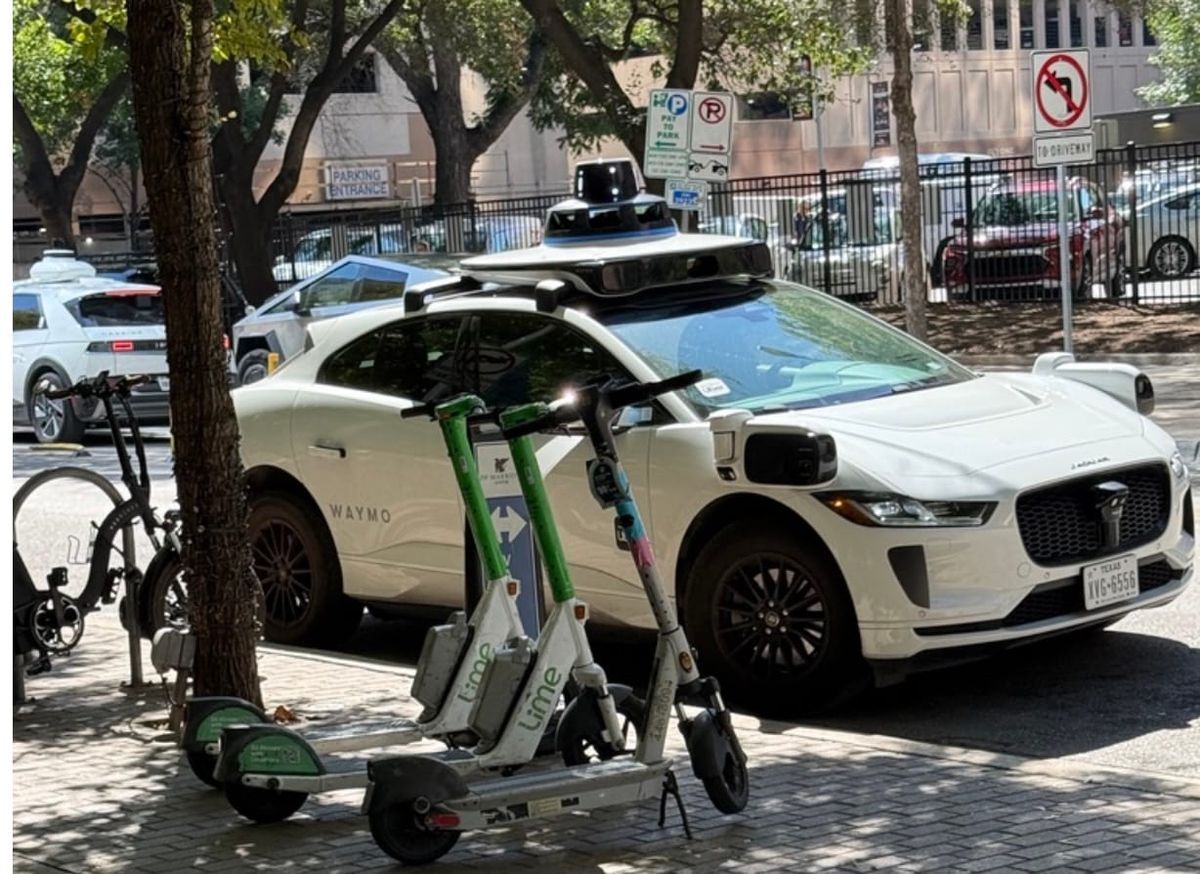
I was in Austin this week at SailPoint Navigate learning a lot about the role of identity in agentic AI, and Austin felt like a particularly apt place to be, a booming city with a distinct high tech flavor. As I strolled the streets in the city center, I couldn’t help but notice all the self-driving Waymos, Teslas and a couple of brands I wasn’t even familiar with.
It brought to mind that physical AI and spatial intelligence, the art of helping a machine/robot/self-driving car understand where they are in the world, is having a moment. It didn’t hurt that AMD announced just last week (and I covered in FastForward #81) an agreement to acquire Fei-Fei Li’s spatial intelligence company, World Labs, for $8.2 billion.
As though to drive the point home even further, at the SailPoint Navigate keynote, Sebastian Thrun, the godfather of self-driving cars, delivered a guest appearance and talked about the shift we are seeing to physical AI and the optimism he is feeling about that at the moment.
As he delivered his presentation, he looked at the history of the self-driving car from the early 2000s to today, and as the man who helped launch Google’s self-driving car project that would become Waymo, who better than him to deliver a positive message about the coming age of physical AI? It developed very slowly and then much faster, and he expects robots and even flying cars to have a similar arc in the coming years.
From digital to physical
While LLMs and agents have dominated our thinking about AI in recent years, Thrun believes that the next big step is going to be to extend intelligence into the physical world, an idea that’s gaining attention in Silicon Valley and around the world, particularly in China.
“Physical AI is the idea of combining what you all do when it comes to virtual AI and cybersecurity and innovation and large language models of agentic AI [and bringing all that] into the physical world,” Thrun said in his keynote. He added that in Silicon Valley, funding for this area is going through the roof as investors look for the next big thing to throw their money at (my words, not his).
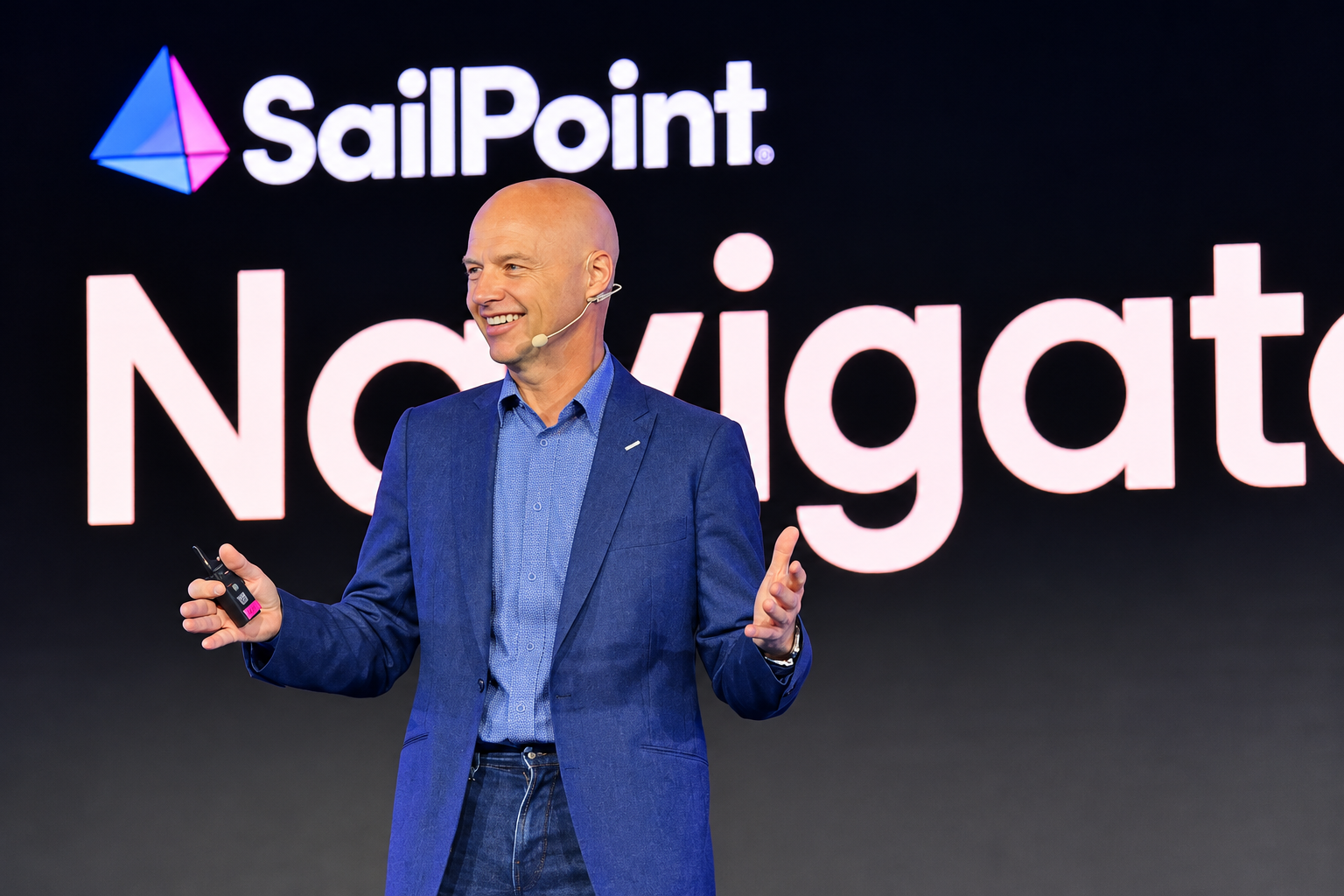
“We've seen a previous explosion before with AI in general with the advent of ChatGPT and GPT-3 all the way to today. That wave now is trailed by a wave in physical AI investments in tens of billions of dollars. So expect this to become real very, very soon,” he said.
He added that Morgan Stanley has forecast that the humanoid robot market alone could reach $5 trillion by 2050. While that's a long way away, and these types of predictions often vanish in the haze of history, it shows the level of optimism around this technology.
Li, who is concentrating on spatial intelligence by trying to build a 3D map of the world that robots can use to understand where they are in space, sees the self-driving car companies as having an important role. As she said in an appearance at HumanX in April, “Tesla is building a world model for self-driving cars. Waymo has built a world model for self-driving cars.” She is trying to build something similar for robots.
While this may feel like something futuristic, we are already seeing evidence of it. As Li said, “Sometimes technology is already happening. We're just not realizing it yet.” In Austin this week, I saw the future driving right past me.
~Ron
What's new on the blog 📰
Your next tough work conversation could start with an AI avatar
I spoke to a couple of Synthesia execs recently about how they are using avatars to teach managers how to have tough conversations with employees. It lets them practice these conversations in a safe way before they meet with the employee.
Read the full story>>
Glasswing's Rudina Seseri says AI has changed the formula for startup success
When I spoke to Glasswing Ventures' co-founder and managing partner Rudina Seseri at TechCrunch Early Stage in 2024, she was already seeing how AI was changing the investing landscape. Today, she says that has become even more pronounced.
"You know, even two or three years ago, if a company went from zero to $1 million in ARR in its first year in the market, you'd be like, I have a unicorn in the making. Now that number looks more like zero to $2.5 million," Seseri said.
Atlassian and Expedia see experimentation as a key part of learning about AI
Last week at HumanX in Amsterdam I had the privilege of interviewing Avani Solanki Prabhakar from Atlassian and Chris Burgess from Expedia on a panel about their company's AI journeys.
A big part of it is understanding that with the rapid rate of change, experimentation is built into the process, and you are never really done.
This quote from Prabhakar kind of sums it up:
"I feel like the speed of change is so fast," she said. "The only way to learn more about AI is just by creating faster learning loops internally, and that's what we are seeing."

As Adobe embarks on a new era, it pushes deeper into AI-powered customer experience
When I interviewed Amit Ahuja, Adobe's SVP of CX products, it was before we knew his boss, Anil Chakravarthy, would be named CEO of the company, demonstrating the company's commitment to the enterprise side of the house.
As Adobe transitions to a new era, creative and enterprise need to work together, and change the investor narrative that Adobe (and other SaaS companies) are less relevant in the AI era. As Ahuja told me, it's not like Adobe just jumped on the AI bandwagon when ChatGPT came out. It had been using prior generations of AI for many years:
"Even before Sensei, we've been using kind of general purpose AI for ages here at Adobe, and we've been doing that obviously across Adobe, whether that's on the creative and professional side, whether it's on a document productivity side, or whether that's on the experience orchestration side."
AI has forced Harness to rethink the roadmap concept
When Harness founder and CEO Jyoti Bansal appeared on the FastForward on PPN podcast recently, he talked about how the speed of AI coding had forced him to completely rethink the notion of a product road map.
"Like if you want to build something, just build it. Why is it sitting on the roadmap somewhere," he asked.
The entire podcast is embedded in the article. Well worth a look.
News of the Week 📣
Harness snags Augment Code assets to extend its reach from idea to shipping
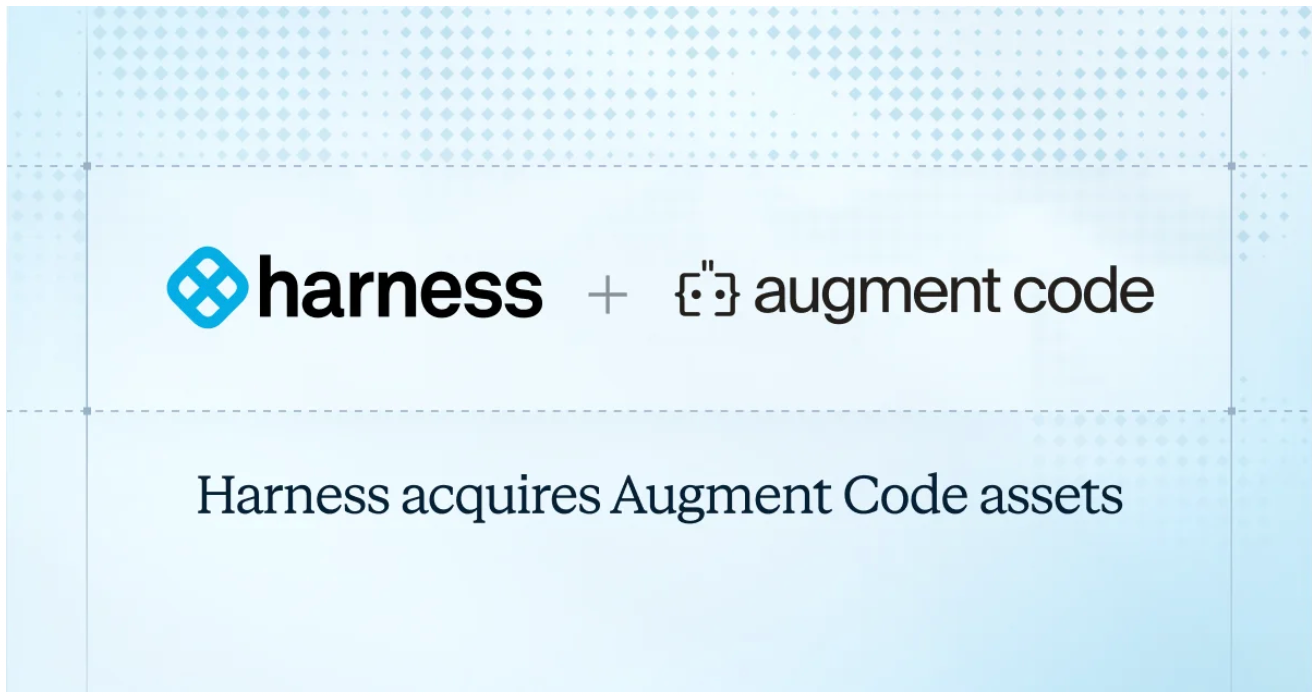
This week Harness announced it was buying some pieces of Augment Code, particularly the Cosmos Software Factory part, giving the company a place in the ideation and code creation part of the software development process. The companies did not share the financial terms.
Jyoti Bansal, founder and CEO at Harness, says the acquisition provides a more complete build pipeline now for customers. "The advantage is the combination of the two contexts. There is nowhere that you can combine the coding context and the delivery context," Bansal told FastForward.
Bansal believes that will ultimately help companies write better code as customers accumulate data about what can go wrong. "If you know what incidents and down times and challenges happen later on, you can write better code to begin with."
The acquisition also fits into Bansal's broader vision for Harness. When I spoke to him recently on the FastForward on PPN podcast, he described how the company was moving away from selling roughly 15 separate software development modules in favor of a handful of AI agents that handle everything from testing and security to deployment. Cosmos extends that vision by adding a software factory that uses AI agents to handle the ideation and coding part of the process.
It's worth noting that Augment Code launched in 2024 building coding models, but pivoted to the software factory idea this year. Harness is buying the software factory technology, but not the models. Forty employees will also join Harness as part of the deal.
The company raised $252 million since launch. Investors include Sutter Hill Ventures and Evolution Equity Partners. Some employees will remain at Augment Code, where Bansal says the legacy products will likely be wound down.
OpenAI's updated revenue figures show substantial gap from previously reported number

OpenAI shocked investors this week when it disclosed a run rate of $50 billion, far below the nearly $70 billion figure widely reported just last month, CNBC and other outlets reported. The Financial Times broke the news.
The $20 billion gap is not trivial, but it appears to reflect a difference in accounting methods. The higher figure reported last month apparently included revenue from cloud partners, an approach investors used to make a more direct comparison with rival Anthropic. OpenAI didn't include that revenue in its own calculations, which could account for the difference.
Regardless, the news had a cascading impact on the stocks of companies tied to OpenAI including Nvidia, Oracle and CoreWeave, which all had down days after the news leaked.
OpenAI and Anthropic have become key companies in the AI ecosystem, yet they don't have the same accountability as public companies, allowing them to play fast and loose with their finances.
As Axios's Dan Primack wrote on X, "This OpenAI/FT stuff is the sort of thing that would be eliminated if both it and Anthropic go public. Apples/apples GAAP accounting for all to see. Rather than drip, drip cherry-picked financial leaks."
He's right, but for now, we have to deal with companies that tend to show whatever cards they feel like. Lest we forget this is a company with an $852 billion valuation and it's using these revenue figures to help justify the massive data center buildout we have been seeing, which could account for the three partners' bad days on Wall Street yesterday as investors questioned the value of the investment.
SAP is buying TechWolf to help AI agents better understand what employees do

SAP announced this week it was buying TechWolf, a company that helps identify and track employee skills. The companies did not disclose the financials.
In an age when companies are building agents to work alongside humans, it's going to be increasingly useful to be able to understand how employees do their jobs to ground the agents in real-world activities.
The tech includes a context graph and models that TechWolf built to track this valuable information, and of course the team that helped build it. Increasingly, the AI talent component is as important as the tech the companies are purchasing.
Manoj Swaminathan, president and chief product officer for SAP Autonomous Suite says that SAP believes it can put the tech to work to help customers better understand employee activities. "TechWolf’s proprietary context graph for skills and work provides an excellent grounding layer for agent queries regarding work and skills planning and talent management,” he said in a statement.
TechWolf was founded in Belgium in 2018 and raised over $55 million in venture capital. The plan is to incorporate the company's technology into the SAP platform, while leaving TechWolf as an independent entity, meaning it will continue to work with existing customers, even as it becomes part of SAP and all that entails. The deal is expected to close by the end of the year.
What I'm reading 📚

The Best AI Advice I Gave Was Don't Buy It
~By Satish Chandra Gupta, ML4Devs
Margaret Hamilton, computing pioneer who led software development for the Apollo program, dies at 90
By Janine Liberty, MIT News
Pretend you’re sitting at Elizabeth Holmes’ desk on this weirdly detailed website
~By Amanda Silberling, TechCrunch
What I'm watching 📺
Anthropic says its IPO could herald the end of the world as we know it
~The Register's Kettle Podcast
Look who's talking 👄
"AI is a tool, okay, and the person using the tool for good or bad deserves to be credited or punished for whatever they do."
~Sebastian Thrun at the SailPoint Navigate keynote this week.