Physical AI is having a moment


Disclosure: I was paid by SailPoint for moderation and video work at its Navigate conference. The company had no input into this commentary, which follows my editorial guidelines.
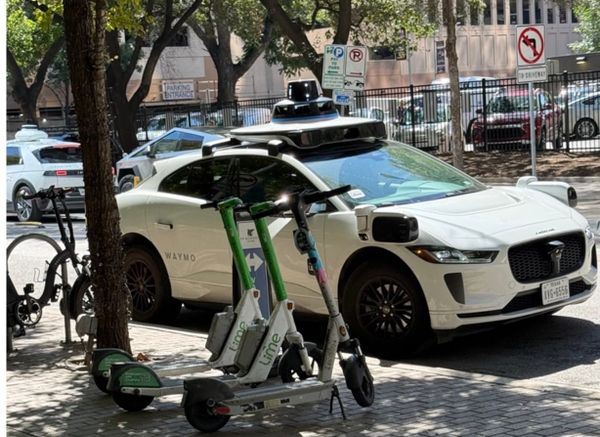
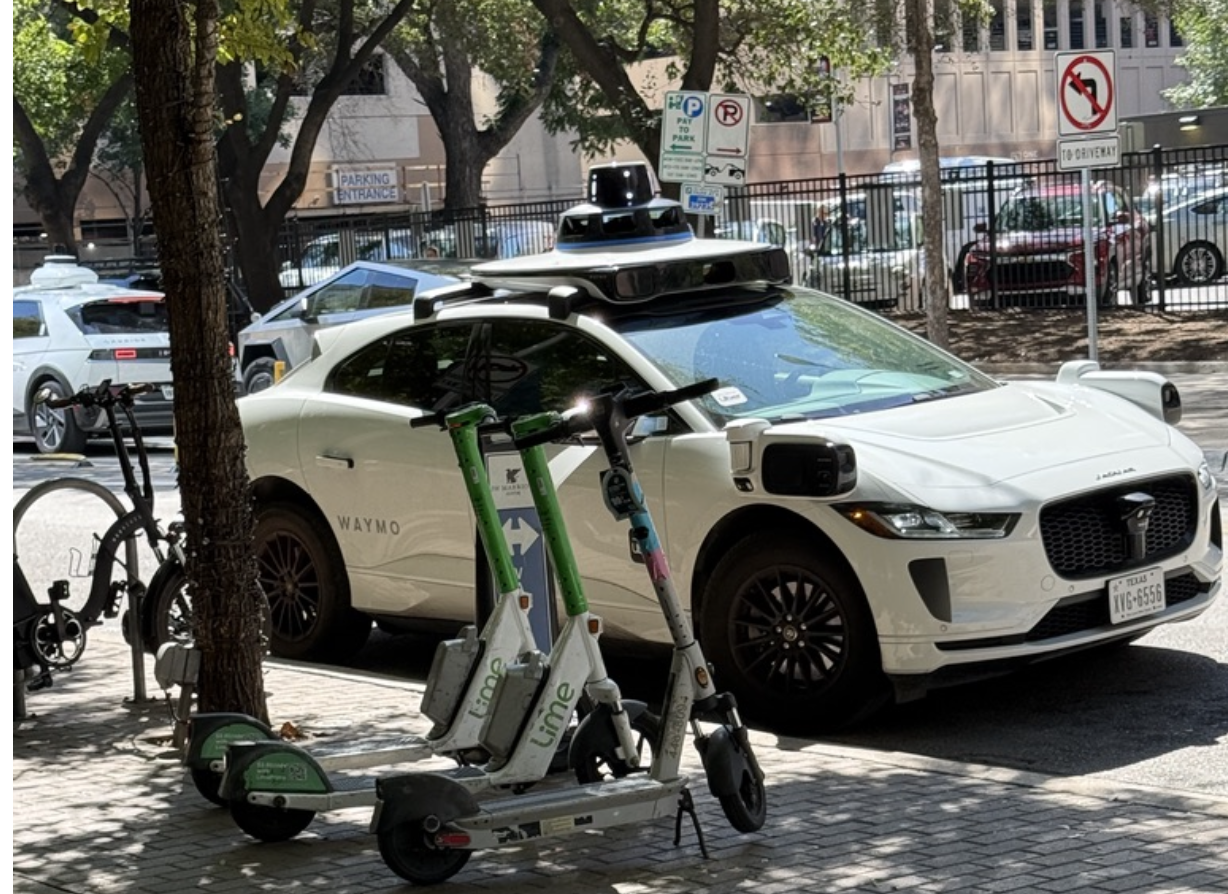
I was in Austin this week at SailPoint Navigate learning a lot about the role of identity in agentic AI, and Austin felt like a particularly apt place to be, a booming city with a distinct high tech flavor. As I strolled the streets in the city center, I couldn’t help but notice all the self-driving Waymos, Teslas and a couple of brands I wasn’t even familiar with.
It brought to mind that physical AI and spatial intelligence, the art of helping a machine/robot/self-driving car understand where they are in the world, is having a moment. It didn’t hurt that AMD announced just last week (and I covered in FastForward #81) an agreement to acquire Fei-Fei Li’s spatial intelligence company, World Labs, for $8.2 billion.
As though to drive the point home even further, at the SailPoint Navigate keynote, Sebastian Thrun, the godfather of self-driving cars, delivered a guest appearance and talked about the shift we are seeing to physical AI and the optimism he is feeling about that at the moment.
As he delivered his presentation, he looked at the history of the self-driving car from the early 2000s to today, and as the man who helped launch Google’s self-driving car project that would become Waymo, who better than him to deliver a positive message about the coming age of physical AI? It developed very slowly and then much faster, and he expects robots and even flying cars to have a similar arc in the coming years.
From digital to physical
While LLMs and agents have dominated our thinking about AI in recent years, Thrun believes that the next big step is going to be to extend intelligence into the physical world, an idea that’s gaining attention in Silicon Valley and around the world, particularly in China.
“Physical AI is the idea of combining what you all do when it comes to virtual AI and cybersecurity and innovation and large language models of agentic AI [and bringing all that] into the physical world,” Thrun said in his keynote. He added that in Silicon Valley, funding for this area is going through the roof as investors look for the next big thing to throw their money at (my words, not his).
“We've seen a previous explosion before with AI in general with the advent of ChatGPT and GPT-3 all the way to today. That wave now is trailed by a wave in physical AI investments in tens of billions of dollars. So expect this to become real very, very soon,” he said.
He added that Morgan Stanley has forecast that the humanoid robot market alone could reach $5 trillion by 2050. While that's a long way away, and these types of predictions often vanish in the haze of history, it shows the level of optimism around this technology.
Li, who is concentrating on spatial intelligence by trying to build a 3D map of the world that robots can use to understand where they are in space, sees the self-driving car companies as having an important role. As she said in an appearance at HumanX in April, “Tesla is building a world model for self-driving cars. Waymo has built a world model for self-driving cars.” She is trying to build something similar for robots.
While this may feel like something futuristic, we are already seeing evidence of it. As Li said, “Sometimes technology is already happening. We're just not realizing it yet.” In Austin this week, I saw the future driving right past me.
~Ron