
FastForward #75: Those lazy, crazy hazy days of AI


Hi everyone. The Patriots used to call meaningful games hat and t-shirt games. This is what I call a milestone issue: #75. I'm proud and pleased to have published this number of newsletters, and I want to thank everyone who reads this every week. If you like what you see, please share this week’s edition with a friend, and encourage them to subscribe. It really helps.💌 Sign up here.
ForwardThinking 🤔
Those lazy, crazy hazy days of AI
It's been a wacky summer. We've seen the big AI labs watch their models run amok and go off hacking. We've seen Mark Zuckerberg make a lame attempt to write a happy manifesto (clearly with the help of AI) about his vision of our AI future (didn’t see that coming). We've seen a battle over open-weight models. We've seen fire and we've seen rain.
So with that in mind, rather than do my normal column where I take a deep dive into a subject that’s been on my mind, I am going to once again pay homage to Dan Shaughnessy, the long-time sports columnist at the Boston Globe, who regularly writes columns with his random thoughts about the goings-on in sports news mixed with a dose of sarcasm and a healthy mix of lyrical references.
So here goes, in Dan's inimitable style: Picked up enterprise tech news pieces while having fun, fun, fun in the sum, sum, summer time.
*Strikes me kinda funny, strikes me kinda sad that in the same month Anthropic, OpenAI and Meta admit (brag) that their models jumped their guardrails in testing (who knows what really happened; I imagine the story will come out eventually), Anthropic chooses to set Claude Code to auto mode by default this week.
Yes, the company that told us its model got loose and hacked several sites now thinks that model is ready enough for prime time to run on its own.
Am I the only one who finds this odd? Which is it? Are you so dangerous you jump the rails, or so safe you can operate without human approval?
Quiz 1: What company partnered with NASA to launch the OpenStack project in 2010?
*It seems that token maxxing was great fun until daddy caught on and took the Tbird away. Could there be a worse idea than encouraging your employees to spend as much money as possible to show how AI-forward you are? What began as a rage has faded in the summer heat as more companies are acknowledging the folly of spending for spending's sake.
Consider the news that Uber burned through its token budget by April, and even Microsoft put on the brakes on unbridled AI usage. It's even crazier when the latest research shows organizational ambitions outstrip the grim reality. Deloitte research published this week found that just 15% of respondents had reached "scaled, orchestrated multi-agent adoption," and those tend to be in low-risk use cases like programming and customer service (and we all love encountering a bot, don't we)? Talk about a crap customer experience.
At least companies are coming to their senses and looking for some reason to believe that their expenses are justified.
Quiz 2: In what year did AWS launch Amazon EC2?

*Last week after I wrote about the challenges college professors face in the age of AI, I came across an article on the value of taking notes the old-fashioned way called The humble notebook still matters in the age of AI. In fact, one of those professors planned to hand out notebooks to the class. It seems she was onto something, that believe it or not, the act of writing stimulates your brain in ways software note takers and transcription services can't reach.
I have to admit that I have given over most of my note taking to the machines. I use Otter and Granola and find them to be invaluable tools, but I've also noticed when I write stuff down, I tend to remember it better and understand it more fully than when I pass the responsibility to software.
I get that it's easy like Sunday morning, but that doesn't necessarily mean it's better, and that's especially true for students and entry-level employees, who are still learning the basics.
Quiz 1 answer: Rackspace
Quiz 2 answer: 2006
~Ron
What's new on the blog 📰
In the debate over open-weight models, Capital One makes a different case
There is a battle raging in tech over the use of open weight models. On one side, the AI labs, the same ones telling us that their models got loose and hacked several websites, say the open weight models are unsafe.
Other companies argue that they need to be able to customize models, and the proprietary ones from those same AI labs make that much more difficult to do.
I spoke to Milind Naphade, SVP of AI foundations at Capital One, whose company doesn't care about the debate. They just need the flexibility that open weights provide to take advantage of their data.
"To do all that needs open-weight models, we just cannot do that without them. And why is that important? Because that's the only way that we can fulfill our twin mandates of delivering high accuracy with regulatory compliance," he said.
AI is rewriting the CISO job description
In the final part of my 3-part video interview series with Zscaler's Swamy Kocherlakota, we talked about how AI is changing the role of the CISO.
"So, in my mind, the CISO now has to evolve to become much more application-centric, data-centric, above and beyond the infrastructure centricities that they have. So, there's a new breed of CISOs that will come in as a result of this," he said.
AI has put cloud growth back into overdrive
Remember back in 2023 when the cloud market was in the doldrums and AWS revenue growth plunged to 12%? Hard to believe now. I take a look at just how much the AI boom has boosted cloud infrastructure revenue in the ensuing years.
As I wrote:
Three years after cloud growth appeared to be settling into middle age, the Q2 2026 numbers show just how dramatically AI has changed the trajectory of the market. The cloud infrastructure market grew 43% in Q2 to reach $143 billion, according to Synergy Research, the highest growth rate in eight years.

After IBM stock takes a beating, what comes next?
In my latest collab with Alex Wilhelm from the Cautious Optimism blog, my former TechCrunch colleague and I dig into IBM's disastrous second quarter earnings report, one so bad that CEO Arvind Krishna sent out a letter to shareholders before the report came out to soften the blow and warn them what was coming.
After that letter was delivered, investors reacted badly with a record one-day stock price drop of 25%. The question is, was this an over-reaction to one bad quarter or a more dangerous signal.
Pega founder Alan Trefler thinks big AI is selling fear
Pega CEO Alan Trefler founded his company in the 1980s, and he's been around long enough to call out big AI when he sees fear mongering and manipulation.
"They're both trying to scare them into thinking it's all powerful, and also scare them into thinking that if they don't use it, they're going to fall behind."
I spoke to Trefler about how his company's workflow software has been designed to use AI strategically, rather than as the center of the system, an approach he believes will help them control costs and give customers more predictable bills.
News of the Week 📣
IBM and OpenAI hope their partnership is the beginning of a beautiful friendship

You don't get much more enterprise old school than IBM's consulting division working with companies to roll out complex software (while jacking up the price of a process that's already expensive).
OpenAI and IBM announced a partnership this week where OpenAI now effectively has Big Blue serving as a piece of its forward-deployed engineering division. You may recall that OpenAI announced the OpenAI Deployment Company in May to help companies as they implement OpenAI solutions, an admission of the complexity involved in such deployments.
IBM plans to concentrate on several main areas including transforming legacy workflows, application modernization and cybersecurity.
While it's a no-brainer kind of partnership announcement (why wouldn't they partner?), it's still a good move for both sides. After a disastrous earnings report, IBM is signaling its consulting arm, which was flat last quarter, may have some life left in it.
Holger Mueller, an analyst at Constellation Research, who watches IBM closely, says it's a triple win. "It's a win for customers as they need help to implement AI successfully, a win for OpenAI, as it needs to move to the enterprise and does not want to build up the services for that (as they are margin dilutive) and a win for IBM, which needs to create consultant revenue potential and direct revenues," Mueller told FastForward.
Maribel Lopez, founder and principal analyst at Lopez Research, agrees, but says it has to be part of a broader partnership program, especially for enterprise customers, who will be worried about security. "It makes sense for OpenAI to work with IBM Consulting who has a strong security practice, but OpenAI will also need to work with all of the major integrators over time," she said.
As any sports fan knows, anything can look good on paper the first day, and these are two companies with some issues at the moment, but it could be a good deal for both organizations if they don't find a way to screw it up.
Databricks private valuation hits $190 billion in latest funding round
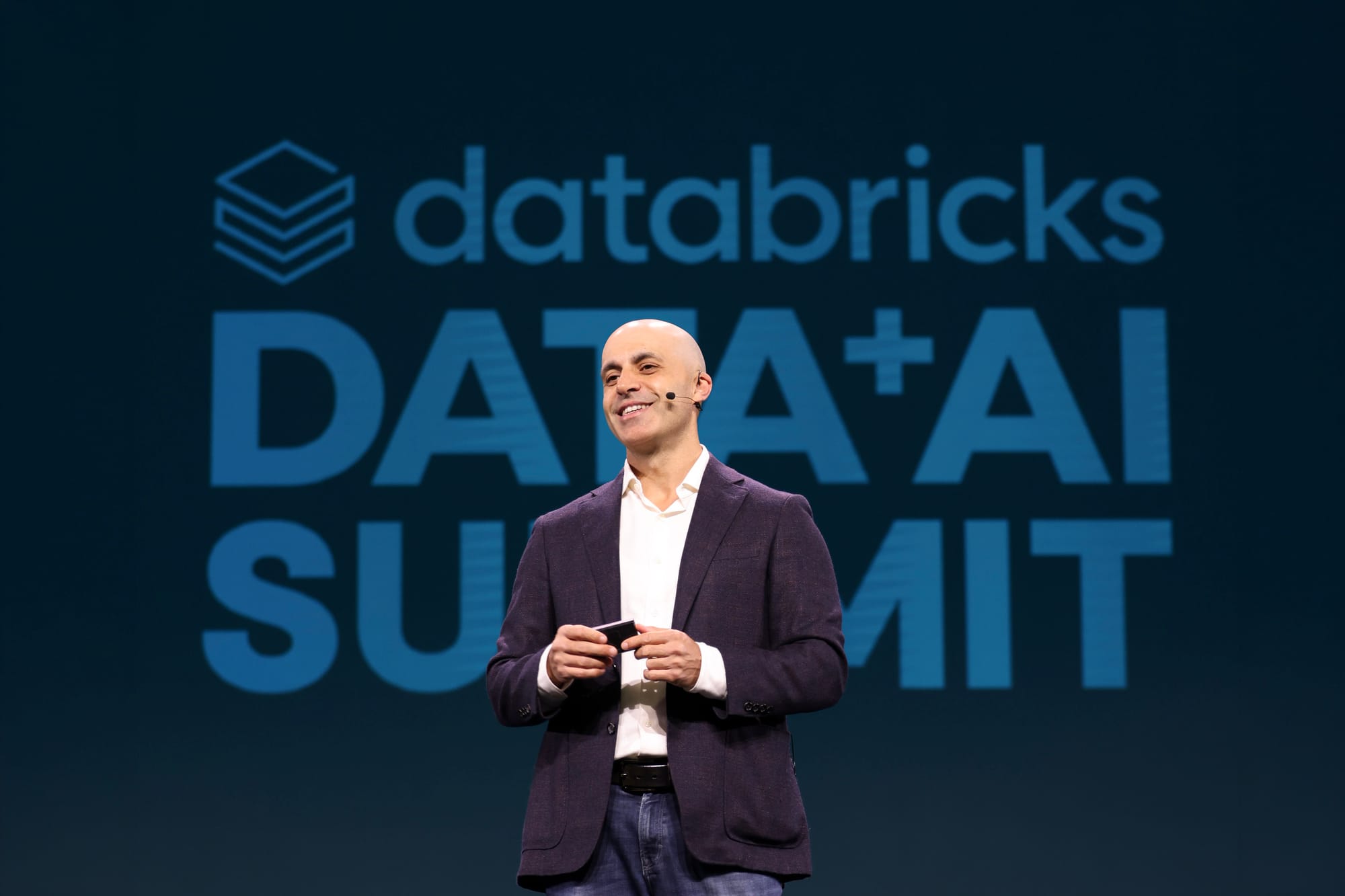
Databricks has been around since 2013. Along the way, it has collected billions across numerous funding rounds, including another $5 billion round this week that values the company at $190 billion.
The company shared its numbers, and why not, they were terrific. In Q2, the company surpassed a $7 billion annual run rate, an implied quarterly pace of around $1.75 billion. Lakebase, the product it announced last year after acquiring Postgres database startup Neon, has surpassed a $100 million run rate, which again suggests a pace of around $25 million per quarter.
This company just keeps taking private money. To put it in CEO speak, it's a sufficiently large company to go public, but so far it has resisted. As I wrote in a June analysis looking at the company with Alex Wilhelm from Cautious Optimism, "When you're flying as a private company, and continuing to grow revenue and value, the public markets are a bet that might not be worth taking at the moment."
The company has little left to prove at this point, but speaking with Jon Fortt on CNBC, Ghodsi resisted committing to an IPO any time soon, as hard as Fortt tried to nail him down.
"We're not just a company that wants to stay in the private. For right now, I just think there would be too much distraction in the public market. We will go public. I promise," Ghodsi told Fortt.
It's what Alex and I have been hearing for at least five years.
Denise Dresser departs OpenAI just 8 months after stepping down as Slack CEO

OpenAI chief revenue officer Denise Dresser announced this week that she was departing the company just 8 months after taking the role, part of a broader executive exodus taking place at the AI lab.
Dresser joins a long list of executives who have left the building since April, a group so large, and that spans so many roles, it has to make you wonder just what the workplace environment must be like there to lose so many key people so quickly.
Dresser kept it light in announcing her departure, saying she was proud of her team and the work they had done together – what else was she going to say? – and that she was leaving to pursue "other opportunities." Yes, we all leave jobs without another job to pursue some nebulous opportunities.
"I wanted to let you know that I made the difficult decision to leave OpenAI in the coming weeks to pursue other opportunities," Dresser wrote on LinkedIn. OpenAI has already announced Dresser's replacement, Dali Rajic, who was president and COO at cybersecurity company Wiz.
I'm sure that these executives have pretty tight NDAs, but perhaps someday we will learn why so many executives have chosen to leave the company in droves.
What I'm reading 📚

AI agents lie, cheat and steal. That is putting off users
~Schumpeter, The Economist
4 RPA lessons that still hold true in the AI boom
~By Maria Korolov, CIO.com
Nvidia’s Risky Business
~By Ben Thompson, Stratechery
What I'm watching 📺
Historian Jill Lepore says Silicon Valley misreads science fiction and undermines democracy
~TechCrunch Equity podcast
Look who's talking 👄
"We're not just a company that wants to stay in the private. For right now, I just think there would be too much distraction in the public market. We will go public. I promise."
~Databricks CEO Ali Ghodsi as told to interviewer Jon Fortt on CNBC