FastForward #66: Face computers face the same old problems

This week on the FastForward on PPN podcast, I spoke with Box CEO Aaron Levie. Please have a look and let me know what you think at feedback@fastforward.blog. And if you like my newsletter, please share this week’s edition of FastForward with a friend, it really helps.💌 Sign up here.
ForwardThinking 🤔
Face computers face familiar problems
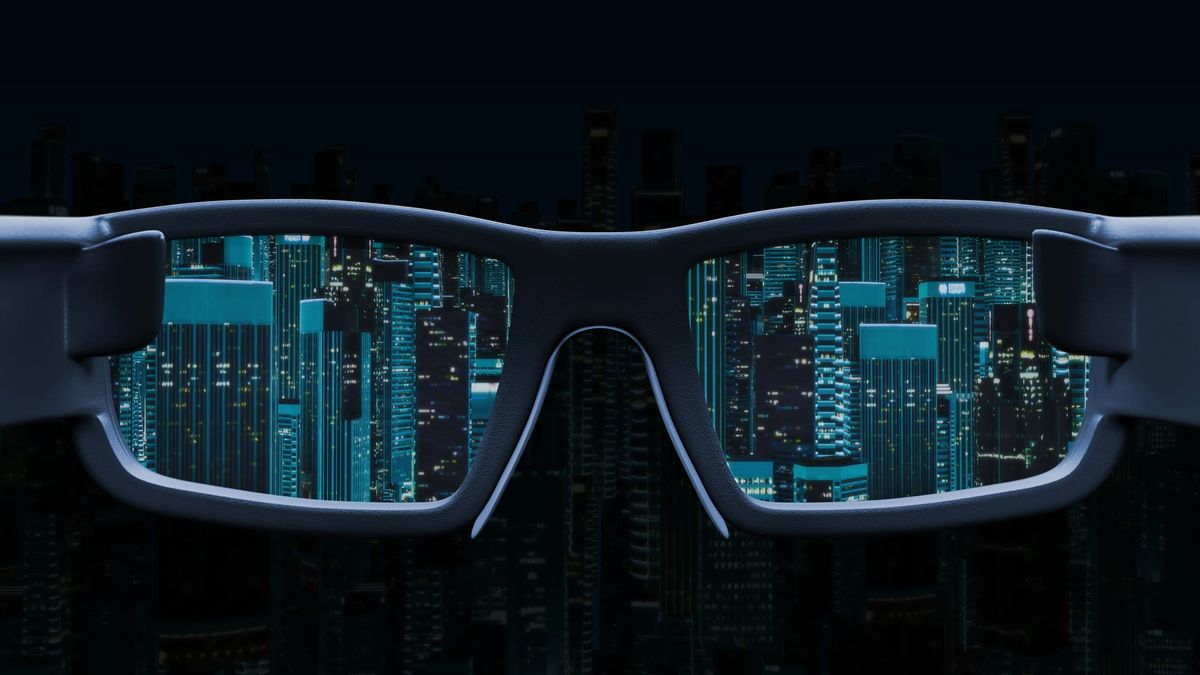
I watched this week’s unveiling of Google’s latest smart glasses with a sense of déjà vu. I was among the early participants in the Google Glass Explorer program back in 2013, an initial experiment in smart glasses that in hindsight was well ahead of its time.
I ended up returning the device. Not because I thought the idea was bad, or because of the steep $1500 price tag, but because the form factor was incredibly awkward and didn't really work well with my prescription eyeglasses.
In that first version, you had to look up to see the interface and read text, which was uncomfortable to the point of giving me a headache. I found that rather than wanting to use the device, it was easier and more comfortable to take out my phone and read the content.
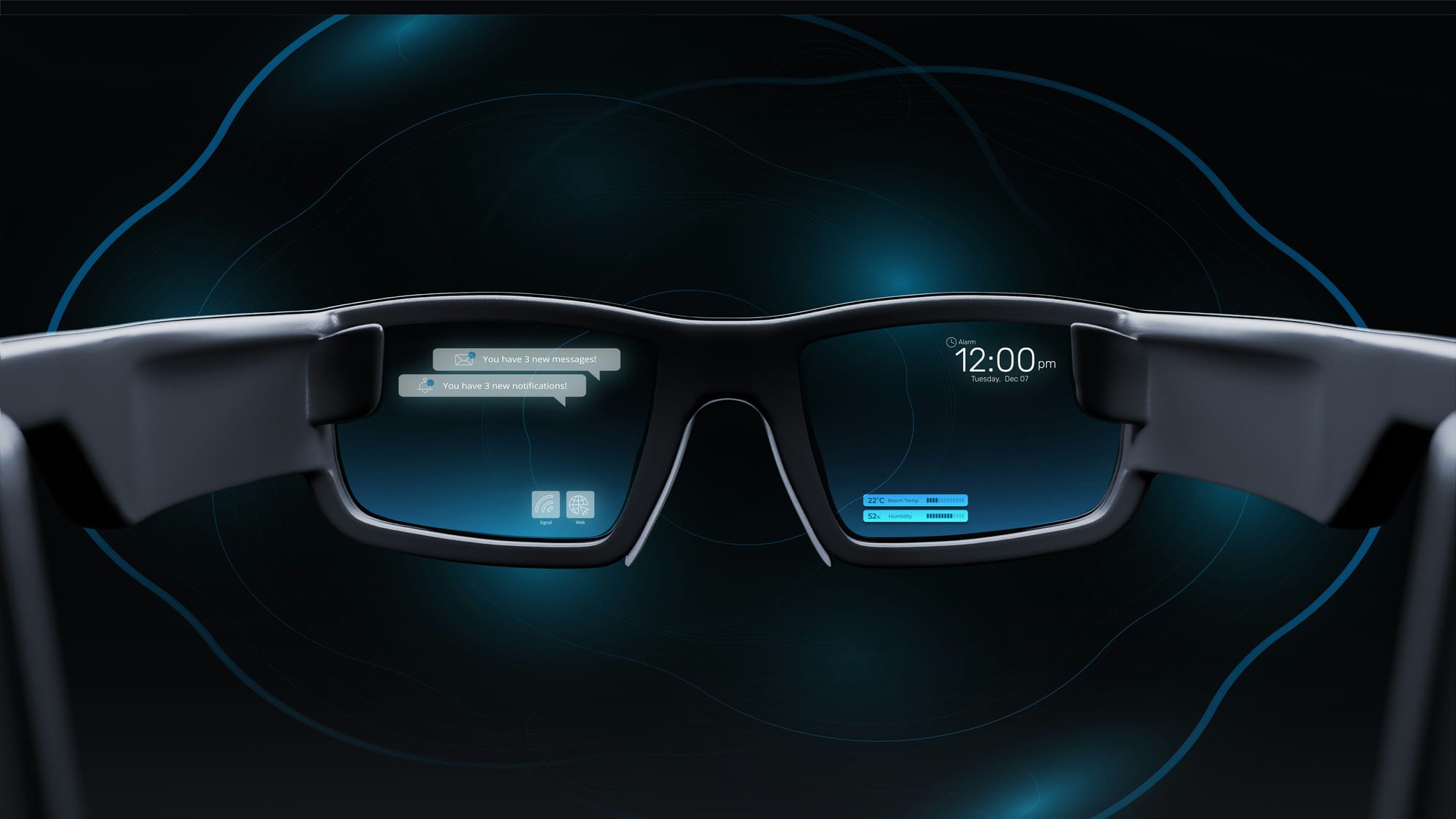
The new versions project what you're doing directly in front of you on the lens, certainly a major improvement over that first iteration, but no less distracting. It would take some getting used to, and I’m not sure that, for something like say getting directions, a quick glance at your smartwatch isn't good enough.
But that first generation didn't just stumble on design. It ran into much bigger social concerns, ones a company like Google with an engineering mindset, likely didn't see coming.
No photos, please
In particular, people didn't like the idea of being photographed without their knowledge. With a smartphone, you usually see a person holding up the phone and aiming the lens at you. While it's possible to do that surreptitiously, it's much easier to do so with a camera that's built into the frame of your glasses that you can access with a quick tap.
The public jumped on that. People who wore Google Glass in public were considered pretentious. The word Glasshole entered popular culture as a way to describe people who wore them, and the devices were even banned from some establishments.
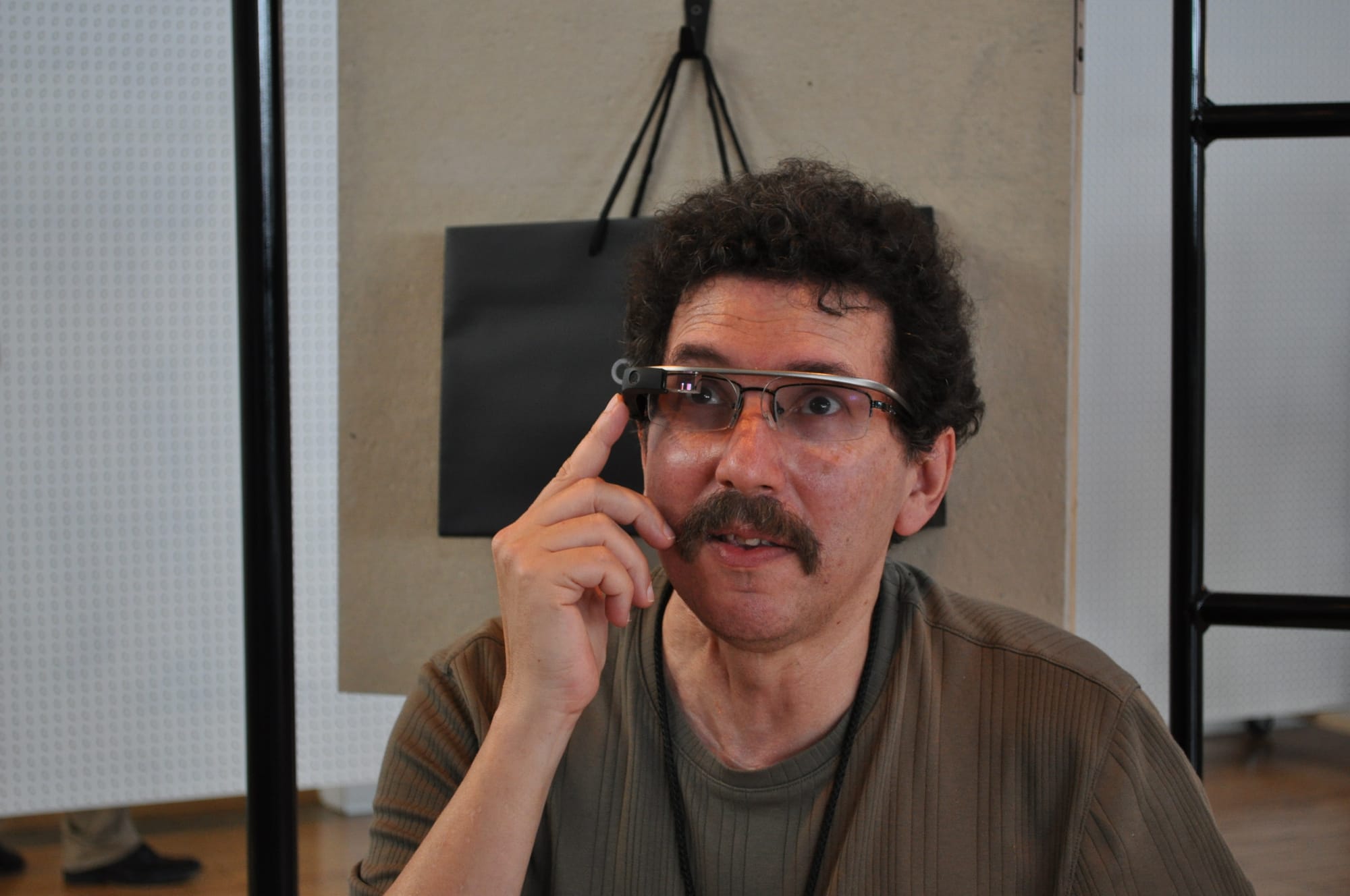
I wrote about the phenomenon in a 2014 TechCrunch article, Why we hate Google Glass -- and all new tech. That same year, the backlash around Glass came into focus at SXSW, where the conversation was about privacy, social norms and what it feels like to be around someone wearing a camera on their face. Even a representative from Google acknowledged we needed to be having that discussion, but he argued that while privacy is important, the right approach depends on local norms and expectations.
That was a convenient way for Google to be looking at it, but there were no good answers then and there aren't really any now, either. If anything, the problem is only worse. Back in the day, you knew someone was wearing a weird gadget, today it looks like glasses.
Do we want smart glasses?
Today, Google is framing these devices in much more practical terms aimed at mainstream consumers, giving you hands-free access to Gemini.
Yet even with the design upgrade, they can still look awkward, and kind of scream you're a tech nerd. And if you think about it, as a society we've been trying to get glasses off our faces. Hence the big contact lens and lasik surgery business. Now they want to convince us to put things back on our faces, and not always in an elegant way.
Unless you're a major gadget geek and you have to own them, other devices take care of just about everything the smart glasses do with better battery life. You definitely can't wear them for a full day without recharging, which is a real limitation, especially if you use prescription lenses.
While Meta's smart glasses built in a partnership with Ray-Ban have sold decently with reports pegged at around 7 million pairs in 2025, that is small potatoes compared to analysts' estimates of 34–37 million Apple Watches sold by Apple the same year.
Teaming up with glasses makers certainly solves some of the design flaws, but with Meta and Google both eventually offering versions that include a camera, microphone and speakers in the frame, the privacy concern from 2013 rears its ugly head. And with these two major AI companies involved, there's a legitimate worry about handing two of the world's most data-hungry companies access to everything they see, say and hear.
Smart glasses have clearly come a long way from the early days of Google Glass, but they still run into the same fundamental problems. They have to overcome a set of practical and social objections that hardware improvements alone can’t erase.
~Ron
.
What's new on the blog 📰
As developers shift to AI coding, the nature of engineering is changing
AI is inevitably going to have a huge impact on just about every job, but perhaps none more so than the developer role where it is already being widely used.
I spoke to execs at Intuit, Amazon and MetLife to understand just how much the role is shifting and what it could mean moving forward in how we think about engineering.
"From a philosophical change, the skills that are required by the builders, the software engineers, are to really understand software architecture, to know what great software actually looks like, and how you make sure that the coding agent builds software that actually solves the problem, is high quality, can scale, and is not full of defects," Intuit CTO Alex Balazs told FastForward
Why Chen Goldberg walked away from Google to help build CoreWeave’s AI cloud
Chen Goldberg walked away from a prestigious role on the Kubernetes team at Google in 2024 to join neocloud CoreWeave. She saw the opportunity to build the next generation of infrastructure around AI, a challenge any engineer would relish, and she took the leap.
"I joined CoreWeave in August of 2024 with the realization that we were at the edge of yet a new era where infrastructure matters even more than before," Goldberg told FastForward.

When it comes to AI, IBM heads for its happy place in the middle
Earlier this month, I spent some time in Boston at IBM Think. I learned that IBM is trying to position itself firmly as the orchestration piece for companies trying to implement AI in the enterprise.
"They don't fail because of the AI [technology]. They often fail because of what's underneath: siloed data, fragmented infrastructure, multiple clouds with no coherent operating models. The models don't really matter unless the foundation is correct."
~IBM CEO Arvind Krishna
IBM recognizes it can't compete with the AI Labs around models or the cloud hyperscalers for infrastructure, so it's staking a place in the middle, a spot where the company has comfortably resided in the past, a happy place if you will.
Twilio finds its place in the AI stack
Twilio CEO Khozema Shipchandler took over in 2024 when the company was under pressure from activist investors.
He knew there was a lot of work to do, and he wanted to run the company with more rigor and discipline. He's positioned Twilio squarely in the AI stack and has seemingly righted the ship. In its most recent quarter, reported this month, revenue was up 20% YoY and the activists? They're long gone.
"I think this is what we were always meant to build. We may not have known it every step of the way because we couldn't see AI five or seven years ago, but now that we're here, it's ours to go get and we're going to get it."
AI gives cloud vendors a major second act
In mid-2023, the cloud market was in the doldrums. Companies were cutting back on cloud spending and growth was slowing across the board. Then generative AI came over the horizon and gave cloud computing vendors a major second act.
I dug into the cloud numbers to see just how dramatic the turnaround has been.
News of the Week 📣
Nvidia announces another ridiculous quarter
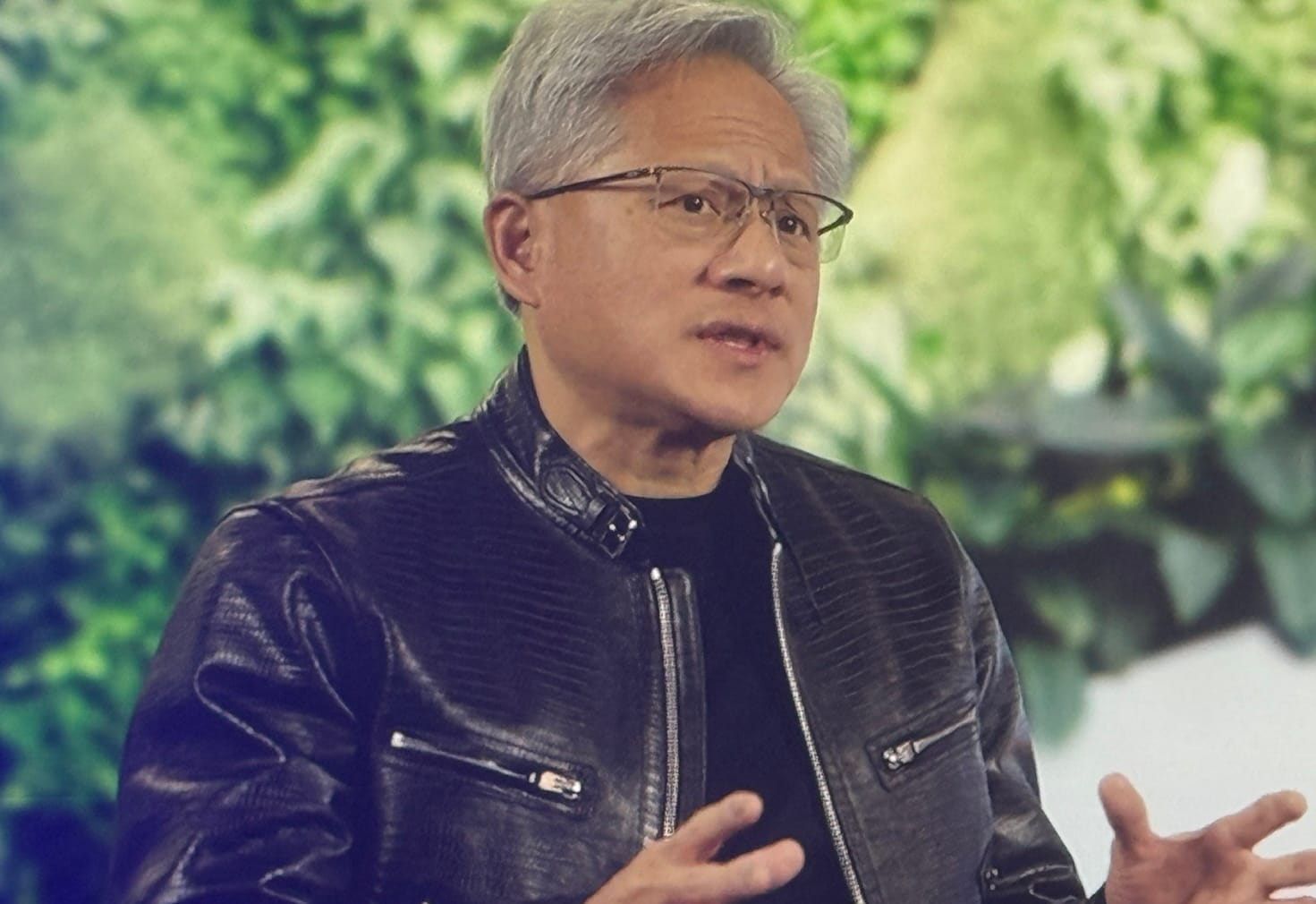
We're running out of superlatives to describe the run Nvidia has been on in recent years. But if there were ever a company historically aligned with product and the current need in the market for powerful GPUs, it's Nvidia. And its monster numbers quarter after quarter, year after year as it rides this AI high-speed train we're on, reflects this reality for the company.
I suspect even Jensen Huang can't believe his company's good fortune. The train kept a rollin' this quarter with the company reporting $81.6 billion in revenue, up 85% over the prior year. If you're just looking at data center revenue, it accounted for $75.2 billion of that number, up 92% year over year.
And what about guidance for next quarter? The arrow is expected to keep pointing upward with another increase to around $90 billion expected, according to the company. It's a number that's even more impressive when you consider it's not expecting to get any data center revenue from China in Q2.
It's so flush in fact, that it also announced that it returned $20 billion to shareholders in the form of buybacks and dividends.
Anthropic launches MCP tunnels for private AI service access
Anthropic announced an improved way to securely connect to MCP servers inside private networks this week. It's called MCP tunnels and it enables companies to securely access internal MCP services running behind the company firewall.
The primary value here is that developers can now connect to internal services without exposing traffic to the public internet or opening inbound firewall ports, which could create security holes.
Previously, developers often had to expose internal MCP services to the public internet or configure external access rules to enable remote connections. Now they can create a secure tunnel directly to the service without directly exposing it outside the company firewall. It's worth noting that the company is using Cloudflare as the underlying network provider for this service.
For now, this is in Research Preview and developers need to request access. Even with that, Anthropic warns, “It is provided ‘as-is’ without any uptime, support, or continuity commitment, and it depends on a third-party network provider (Cloudflare) that makes no availability commitment for the underlying transport. Anthropic may modify or discontinue MCP tunnels at any time.” That's a lot of hedges, but it's a start at least.
OpenAI introduces more certainty with guaranteed compute capacity
While reports suggest that OpenAI is preparing to confidentially file for an IPO, it's still hard at work creating products, spinning out new companies and generally keeping its name in the headlines as much as possible.
This week it ripped a page from the cloud hyperscalers’ playbook with a new guaranteed capacity product, giving customers assured access to compute for critical workloads in much the same way they buy reserved capacity from Amazon or other cloud providers.
Companies select a term from 1-3 years, and they get a discount based on the length of the contract. It’s not fixed pricing, but it does provide cost certainty and more reliable access to compute for critical workloads.
What I'm reading 📚

America’s dangerous, messy deepfakes crackdown is here
~By Lauren Feiner, The Verge
Kelly Johnson, Skunk Works And The Days When America Did The Biggest Things
~By Josh Dean and Ashlee Vance, Core Memory
AI backlash becomes a real business risk
~By Madison Mills, Axios
What I'm watching 📺
From Cloud Pioneer to AI Visionary: Aaron Levie's 21-Year Journey with Box
~FastForward on PPN
Look who's talking 👄
"A lot of the labs and the more doomer mindset misses this idea that we're just going to take the current fixed amount of work and AI is going to eat into that. But what I tend to see is that the work just expands based on the tool capabilities we have, and I've seen no evidence at any kind of macro scale where that doesn't happen."
~Box CEO Aaron Levie as told to FastForward on PPN podcast this week.