
FastForward #65: AI is replacing jobs — with more jobs


We hear so much about the impact of AI on jobs, but is AI killing jobs or is the cost of the infrastructure forcing companies to find ways to pay for it? If you like my newsletter, please share this week’s edition of FastForward with a friend, it really helps.💌 Sign up here.
ForwardThinking 🤔
AI is replacing jobs — with more jobs
I wouldn’t blame you for being confused about AI’s impact on jobs. One minute, big tech says AI will replace workers; the next, it’s hiring thousands to implement it. So which is it, or could both be true?
Let's start with the premise that AI is hard for everyone and few companies are effectively deploying it. Study after study, including one from McKinsey in March, confirms that roughly a third of companies are able to scale AI across their organizations. Most others are struggling to find value except in pockets. Many projects continue to be stuck in proof of concept or experimentation phases.
Last month, GitHub, which is owned by Microsoft, suspended new signups for Copilot Pro, its AI coding tool, because it was too expensive to operate on a subscription model. A week later, it announced it was switching to a usage-based pricing model. But perhaps it's not surprising when you look at the CapEx numbers required to build the infrastructure to support AI, and the cost required to run it.
The big three alone – Amazon, Google and Microsoft – collectively projected around $250 billion in infrastructure spending in 2025, and actually blew past that figure. Their investment is expected to balloon to almost $600 billion this year. What's really wild here though is that these companies are making the biggest infrastructure bet in history, yet their enterprise customers still can't figure out how to use AI well.
Then consider the big AI labs (OpenAI, Anthropic, Google and Meta) are all subsidizing usage well below cost, essentially paying you to use their products, at least for now. Clearly subscription fees aren't paying the cost of operating the underlying infrastructure. If you doubt it, I have a monthly Claude subscription, and still get throttled regularly, where I am shut off for hours at a time with the invitation to pay for extra tokens to keep running uninterrupted (no thank you).
Yes, subsidizing early usage to build market share is a time-honored tech playbook, but the massive ongoing infrastructure investment required to run these models makes the path to profitability far less certain than it was for traditional software companies.
And that subsidy could be short-lived anyway as more companies follow GitHub's usage pricing lead. No big surprise that the cost floats downstream to the consumer eventually. Any way you slice it, the current approach is unsustainable.
So how are companies paying for these huge costs? Meta, Microsoft, Oracle and Amazon have slashed tens of thousands of jobs. While they claim the jobs are a victim of AI efficiency, it's more likely they are actually a victim of AI inefficiency. It costs a fortune to run this technology, and someone has to pay for it.
Hiring to fix what AI was supposed to fix
So we are losing jobs with executives claiming it's AI that's causing the job loss, that they are so much more efficient, they need fewer people to do the same amount of work. Even if that's true, and it's a debatable claim, how does it explain why tech companies are suddenly hiring thousands of engineers to…wait for it…help implement AI.

AI is so hard, and companies are finding it so difficult to demonstrate ROI, that the vendors have decided the way to resolve this is to build their own mini Deloittes and Accentures and send out an army of "forward deployed engineers." OpenAI just launched a separate consulting company called OpenAI Deployment Company with $4 billion in funding, and acquired a startup with 150 of these specialists. And OpenAI isn't the only company taking this route. These are essentially consultants who they hope can march in and save the day. The problem is that those engineers, like those big consulting firms, cost a pile of cash.
The good news is there are a bunch of new jobs for engineers who actually communicate with customers, hear about their problems, and maybe get to the root of the consistent AI project failure. The bad news is the price tag for these projects gets even more expensive, and it doesn't solve the jobs issue for non-engineering roles.
So if you take a cool look at what we have here, it’s ghastly expensive, few deployments are actually successful, and massive numbers of employees are paying the price of deploying it. None of this makes sense, and it raises a hard question: how long can we keep cutting jobs to pay for a technology that then forces us to hire even more expensive people just to get it to work?
~Ron
What's new on the blog 📰
Why Chen Goldberg walked away from Google to help build CoreWeave’s AI cloud
Chen Goldberg walked away from a prestigious role on the Kubernetes team at Google in 2024 to join neocloud CoreWeave. She saw the opportunity to build the next generation of infrastructure around AI, a challenge any engineer would relish, and she took the leap.
"I joined CoreWeave in August of 2024 with the realization that we were at the edge of yet a new era where infrastructure matters even more than before," Goldberg told FastForward.
When it comes to AI, IBM heads for its happy place in the middle
Earlier this month, I spent some time in Boston at IBM Think. I learned that IBM is trying to position itself firmly as the orchestration piece for companies trying to implement AI in the enterprise.
"They don't fail because of the AI [technology]. They often fail because of what's underneath: siloed data, fragmented infrastructure, multiple clouds with no coherent operating models. The models don't really matter unless the foundation is correct."
~IBM CEO Arvind Krishna
IBM recognizes it can't compete with the AI Labs around models or the cloud hyperscalers for infrastructure, so it's staking a place in the middle, a spot where the company has comfortably resided in the past, a happy place if you will.
Twilio finds its place in the AI stack
Twilio CEO Khozema Shipchandler took over in 2024 when the company was under pressure from activist investors.
He knew there was a lot of work to do, and he wanted to run the company with more rigor and discipline. He's positioned Twilio squarely in the AI stack and has seemingly righted the ship. In its most recent quarter, reported this month, revenue was up 20% YoY and the activists? They're long gone.
"I think this is what we were always meant to build. We may not have known it every step of the way because we couldn't see AI five or seven years ago, but now that we're here, it's ours to go get and we're going to get it."

AI gives cloud vendors a major second act
In mid-2023, the cloud market was in the doldrums. Companies were cutting back on cloud spending and growth was slowing across the board. Then generative AI came over the horizon and gave cloud computing vendors a major second act.
I dug into the cloud numbers to see just how dramatic the turnaround has been.
How Google Cloud’s head of startups thinks about building companies in the AI era
Ahead of Google Cloud Next, I interviewed Darren Mowry who runs their global startup program. Mowry has a unique perspective having also worked at AWS and Microsoft in his career.
He says that AI coding has changed the speed at which companies can build, but it hasn't altered the fundamental requirements of building a business.
"There have been moments during the hype cycle where people were saying, let's throw the fundamentals out, but there's always a return to, do you have clarity of vision? Do you know who your customers are? Do you know what problem you're solving, and do you have a pathway to profitability? We always come back to that," he said.
News of the Week 📣
OpenAI launches new consulting firm to help customers deploy more successful AI projects
Because OpenAI doesn't have enough going on, this week it announced it was launching a separate consulting company called the OpenAI Deployment Company. The company launched with $4 billion in funding and a valuation of $10 billion. While investors own a piece of the action, reports suggest that OpenAI owns a majority of the new venture.
The new company also announced it was acquiring Edinburgh-based Tomoro, a startup with 150 forward deployed engineers and deployment specialists. As I wrote in today's commentary, you can think of this new company as a mini Deloitte or Accenture designed to help design, build and deploy AI projects successfully.
The venture, and others like it, is a tacit admission that companies are having a hard time scaling AI inside businesses. Companies like OpenAI Deployment are supposed to ease the burden, while presumably also raising the cost of projects that are already pretty expensive.
Still, companies like Bain & Company, Capgemini and McKinsey believe in the project enough to throw some cash at it. Like most OpenAI investments, it's more about potential than substance, at least for now.
SAP wants to redefine itself as an agent company – like ServiceNow and Salesforce
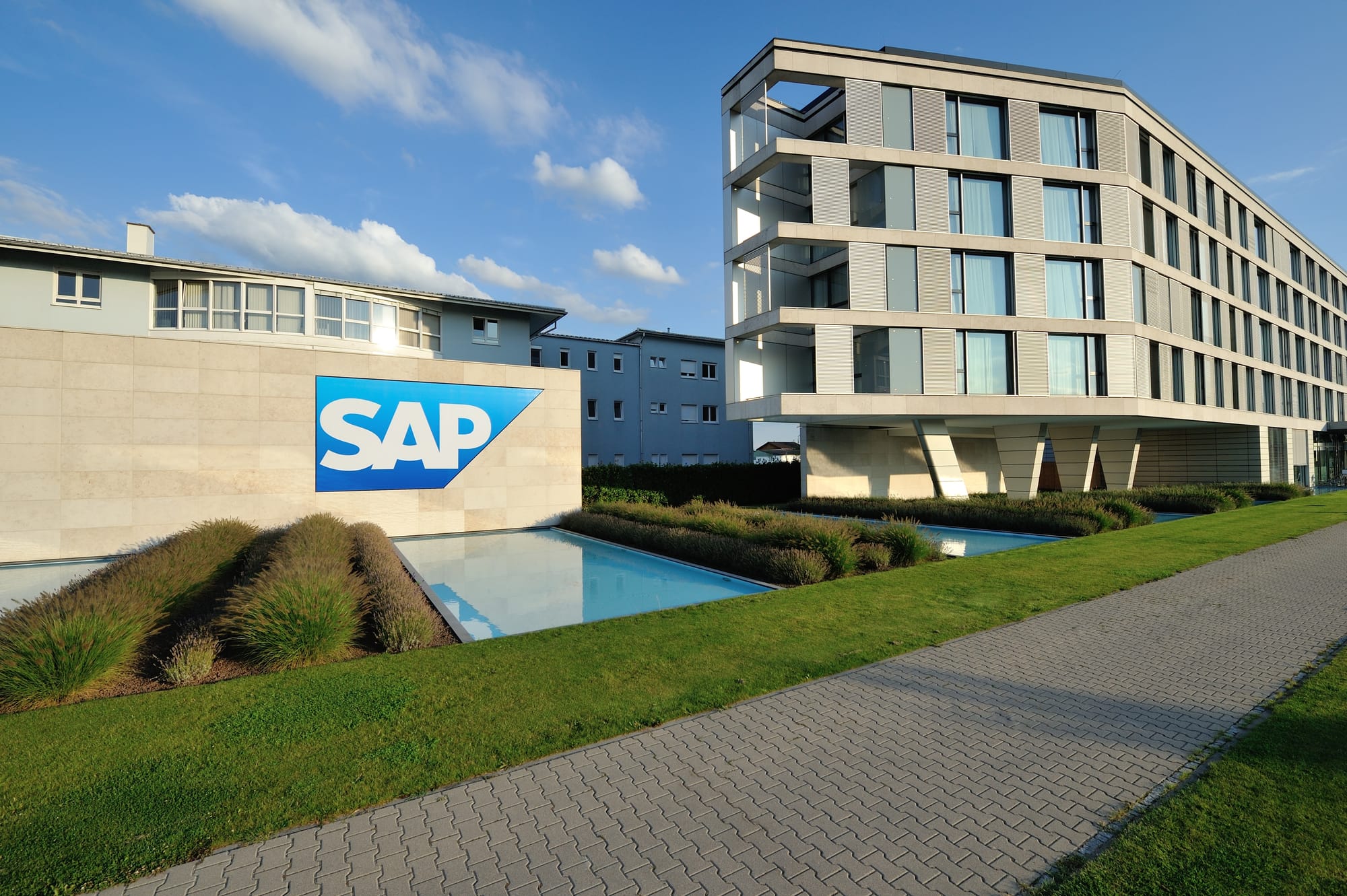
SAP held its annual Sapphire customer conference this week, and it came out with a bold new vision. The ERP giant is repositioning itself as an agentic enterprise company, one that doesn't just assist employees, but automates entire business processes. To be clear, this is really the ultimate vision for all agentic AI, so SAP is just co-opting it.
Nor are they the first enterprise software company to go after this market. We have previously heard from other enterprise juggernauts like Salesforce and ServiceNow, which similarly want to fill every enterprise with agents, taking over complex processes and running them autonomously.
Specifically, SAP announced a unified Business AI Platform with over 50 domain-specific Joule Assistants orchestrating more than 200 specialized agents along with a €100 million partner fund.
The company wants to focus on areas where its software already stores many large organizations' key business data including finance, supply chain, procurement, HR and customer engagement.
SAP is doing what it needs to do to survive in an agentic future, but the stock is down 30% this year amid worries around slowing cloud growth, AI disruption and the limits of per‑seat licensing. The company has responded to the latter by moving towards a usage-based model like many of its peers.
The problem with its agentic vision overall is the more complex a process gets, the more difficult it is for agents to execute all of the steps successfully, so it's one thing to articulate the vision, but it's another to pull it off.
Figma has itself a dandy quarter as SaaS companies defy Wall Street negativity

Figma reported quarterly earnings this week, and it was all good news with revenue up 46% year over year, pouring cold water on those folks arguing that SaaS is dead. The company also had healthy forward-looking projections, and at least for the short term, investors rewarded the stock, which was up almost 7% overnight.
Figma isn't the only company doing well this earnings cycle, with DataDog up 32%, HubSpot up 23% and Twilio up 20%, suggesting that the projected SaaSpocalypse was overstated, as I have suggested.
Complacency could kill any disrupted sector, but as Figma CEO Dylan Field sees it, design is a defensible moat in a time when coding is cheap and easy. "The bottleneck has shifted away from can we build it and toward can we imagine something that's worth building," Field said in the earnings call.
Clearly SaaS companies are shifting their focus and some of the numbers suggest that products are resonating with enterprise buyers. Maybe it's time to tone down the "SaaS is dead" language and look at the data instead.
What I'm reading 📚

Is the AI bubble about to burst, or is it recalibrating?
~By Kinza Yasar, TechTarget
Americans Widely Oppose AI Data Centers in Their Area
~By Jeffrey M Jones, Gallup
Cool picture of spiral galaxy from space
~James Webb Space Telescope
What I'm watching 📺
Waymos stopped on flooded roadway in Austin, TX
~KXAN News, YouTube
Look who's talking 👄
"When we started seeing more workloads on GPUs and how the type of workloads have changed, for me it was a realization that this is all happening all over again and probably at a bigger scale."
~Chen Goldberg, EVP product & engineering at CoreWeave as told to FastForward.