
AI is making scammers smarter and helping Visa fight back


Visa faces a monumental battle when it comes to fighting fraud, and the volume it deals with is staggering. The company handled 257.5 billion transactions and processed more than $14 trillion in payments last year. AI is only exacerbating the problem by giving scammers more sophisticated ways to fool consumers.
Consider that last year, for the period July through December, the company identified nearly $1 billion in scam-related activity. Sure, that's a lot of money, but when you compare it with trillions in payment volume, it also shows how difficult it must be to find fraudulent transactions among legitimate ones.
Paul Fabara, Visa's chief risk and client services officer, says it can be pretty daunting, but Visa also has AI at its disposal and has for quite some time, long before it was popular to do so. "Essentially, we're looking for a needle in the haystack, but what AI is allowing us to do is to comb through rows of data much faster, with a lot more accuracy in terms of looking for transactions that don't fit the profile of the consumer," Fabara told FastForward.
I spoke to Fabara about the challenges his company faces, what he sees as his data advantage and how the weakest link now is the consumer.
Visa's data advantage.
While Visa can control what it can, it obviously can't control the behavior of consumers, or prevent them from making bad decisions about transactions that seem too good to be true. As Fabara said, the consumer is often the weakest link, but that doesn't mean Visa doesn't have some tricks up its sleeve to help prevent them from seeing the fraudulent links.
When it comes to AI, the more data you can feed the models, the better, and assuming you have your data house in order, you can use that data to your advantage. With hundreds of billions of transaction data points, Fabara points out that Visa has a tremendous data advantage over the bad actors out there.
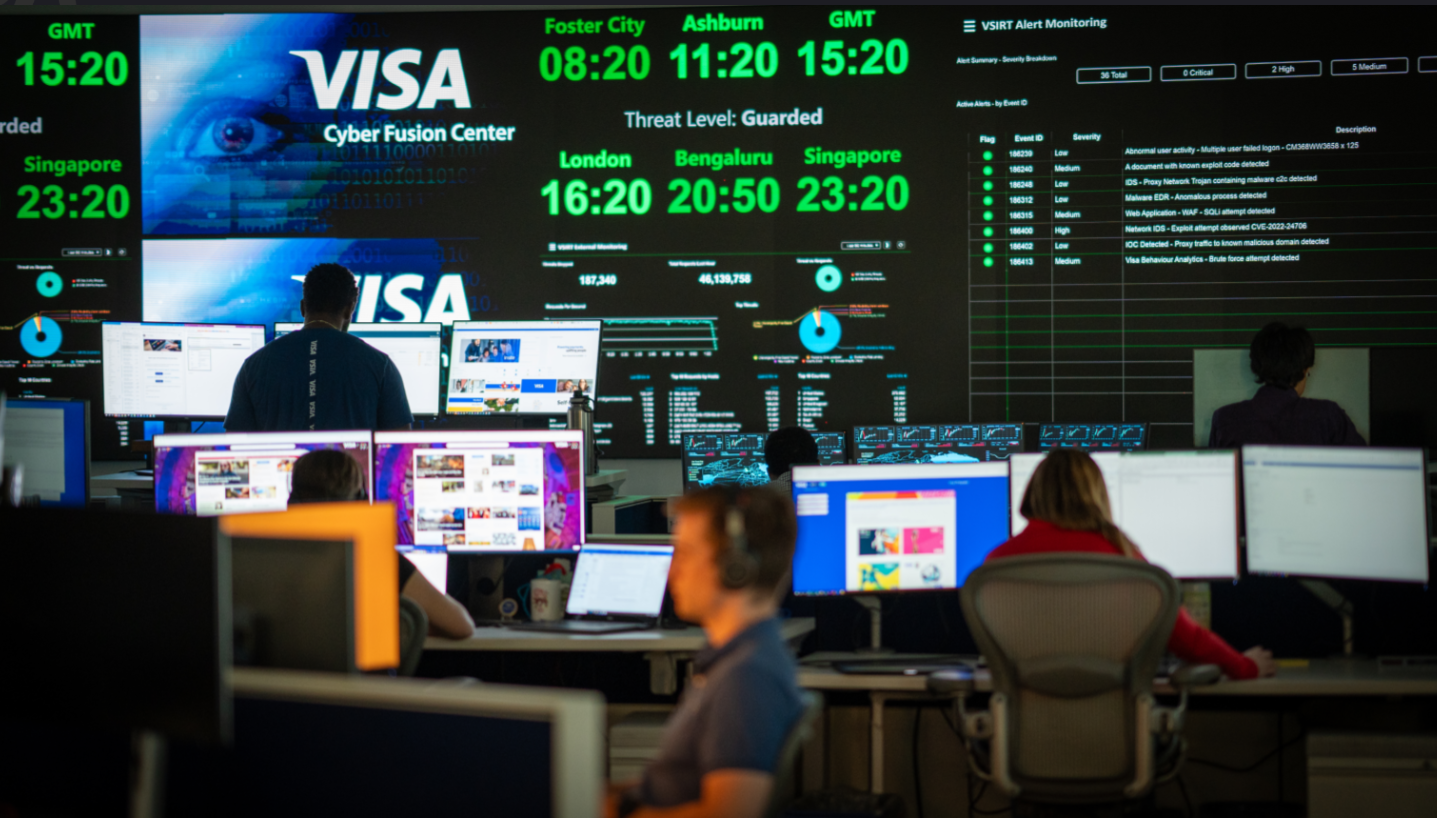
"One of the things that crooks don't have access to is the same level of data that we do. And so that makes a tremendous difference when it comes to looking for that fraudulent transaction," he said. There was a point not that long ago that they were limited by the amount of data they could process at any one time, but today AI tooling has increased the processing speed threefold, according to Fabara.
The high cost of AI
Having all that data is one thing, but putting AI to work at Visa's scale doesn't come cheap. Visa has invested approximately $13 billion since 2021 to keep its network safe, and AI is an increasingly large percentage of that budget. Fabara admits the cost is high right now, but he believes the benefit of using AI quickly outweighs the expense, especially when it's their financial institutions that ultimately have to pay for fraudulent transactions.
"When you compare productivity numbers with the cost of licenses, and per prompt cost, and however you get charged by either one of those companies that produces these models, the reality is that it doesn't come close to the amount of fraud that you could potentially have in the system," he said. In other words, it's worth every penny.
That said, Fabara thinks the cost will be coming down over time, as the compute power and software get more efficient because even with the savings he sees factored into the cost of tokens, he believes that the current cost structure is not going to be sustainable long term.
While he sees Visa's approach saving money in the long run for its financial institution customers, consumers will also benefit because they will hit fewer fraudulent sites. Visa can now use AI to identify a contaminated URL in 15 to 20 minutes, rather than potentially waiting months for the fraud to surface due to consumer complaints. "More importantly, the consumer experience [should be improved] because the more we use AI to take all these bad actors out of the system, the better off we are going to be."