FastForward #84: Salesforce is buying its way into a bigger fight


Hi everyone. We are making our way more firmly into fall here in New England with crisp cold nights, warm days and the ground full of fallen leaves crunching underfoot. Just a reminder if you're interested in having me moderate a panel or fireside or produce a sponsored video for your event, please drop me a line at ron@fastforward.blog. If you like what you see, please share this week’s edition with a friend, and encourage them to subscribe. It really helps.💌 Sign up here.
ForwardThinking 🤔
Salesforce is buying its way into a bigger fight
For a company that put the brakes on acquisitions just a few years ago in the face of activist investor pressure, Salesforce has been pretty busy lately making deals. Since the beginning of 2025, it has announced plans to buy 18 companies. That's a lot of M&A action.
The latest is this week's proposed $5.7 billion purchase of customer engagement platform Braze, bringing the disclosed value of its acquisitions over that period to approximately $22 billion. And that doesn't include several deals where the price wasn't disclosed.
While the Braze deal has clear cross-over with what Salesforce is doing already, it's fair to ask just what Salesforce is up to with all these acquisitions. Let's start by looking at the companies that the CRM giant has scooped up recently.
It's quite a range, but the focus clearly is on agents and improving its AI position in the marketplace, a point I made in a June FastForward article when I noticed an uptick in the company's acquisitions. My theory at the time was that it was to fill in the agentic holes in the platform faster by using the power of its checkbook, a tried and true strategy for any large company. See ServiceNow, Oracle, Microsoft, Amazon -- need I go on?
As I thought about this piece though, I looked at the company's most recent earnings report and something stuck out to me. While they reported over $11 billion in revenue for the quarter, up 11 percent YoY, roughly 4.5 percentage points of that growth came from Informatica, meaning if you subtracted that, we would be talking single-digit growth, a very different story.
That got me thinking that perhaps the reason for buying all these companies was good old-fashioned growth hacking. If you can't get there organically, spend some money to give your growth a boost.
Yet there are several reasons for going the acquisition route including filling in platform holes, buying talent (a big reason these days when AI talent is so scarce) or chasing growth. But as Constellation Research analyst Holger Mueller told me recently, it's hard to judge the entire acquisition package as a single strategy. "You really have to judge from acquisition to acquisition. It makes a difference," he said.
And now for something completely different
Jason Andersen, an analyst at Moor Insights & Strategy, sees a bigger picture. As he told me recently, revenue isn't going to be a big needle mover for a number of these acquisitions, and while talent is a good reason, it's not the only one. He has a different idea.
He thinks this is more about a platform shift to position the company to compete better with both the big AI labs and more traditional competitors. "But the real thing is that Salesforce is doing everything it can to be seen as a platform for customer interactions via a set of business apps," Andersen told me.
And more importantly in his view, "They are repositioning to compete more effectively with AI players and unicorns. By rushing a stronger breadth play, they mitigate the threat of AI natives while setting up plays to take on Microsoft and Google."
Maybe Mueller is right and every acquisition has its own logic. But Andersen could be onto something too. The question is whether all these acquisitions will add up to something that can compete on that level. Buying its way into that fight is one thing. Winning it is another.
~Ron
What's new on the blog 📰
Zurich US chief data officer recognizes that AI isn't the answer to every problem
I recently interviewed Kristen Bessette, chief data officer at Zurich North America. As an insurance company that deals primarily with business customers, it has to be particularly sensitive when it comes to introducing new technology like AI agents.
But Bessette said something super interesting during our conversation: The solution to every problem isn't necessarily AI.
"I told my team when I came in, listen we don't need a sledgehammer to kill a fly. Sometimes you just swat it, right? So if it's a swatable solution, just swat it."
Qualcomm CIO Atilla Tinic is rethinking the IT playbook for the AI era
I spoke to Qualcomm CIO Atilla Tinic recently. We talked about how AI is forcing him to question long-held assumptions about how to run IT, including how companies use their data.
“I've done a 180 now, and I really believe your data lake or lakehouse is really your source of record for unified data going forward. And when you start to incorporate AI agents on top, they are more powerful in their capabilities when they have unified data that's trusted and curated that they can leverage.”
Your next tough work conversation could start with an AI avatar
I spoke to a couple of Synthesia execs recently about how they are using avatars to teach managers how to have tough conversations with employees. It lets them practice these conversations in a safe way before they meet with the employee.
Read the full story>>

Glasswing's Rudina Seseri says AI has changed the formula for startup success
When I spoke to Glasswing Ventures' co-founder and managing partner Rudina Seseri at TechCrunch Early Stage in 2024, she was already seeing how AI was changing the investing landscape. Today, she says that has become even more pronounced.
"You know, even two or three years ago, if a company went from zero to $1 million in ARR in its first year in the market, you'd be like, I have a unicorn in the making. Now that number looks more like zero to $2.5 million," Seseri said.
Atlassian and Expedia see experimentation as a key part of learning about AI
Last month at HumanX in Amsterdam I had the privilege of interviewing Avani Solanki Prabhakar from Atlassian and Chris Burgess from Expedia on a panel about their company's AI journeys.
A big part of it is understanding that with the rapid rate of change, experimentation is built into the process, and you are never really done.
This quote from Prabhakar kind of sums it up:
"I feel like the speed of change is so fast," she said. "The only way to learn more about AI is just by creating faster learning loops internally, and that's what we are seeing."
News of the Week 📣
Salesforce nabs Braze for $5.7 billion in latest acquisition
As I mentioned in the ForwardThinking Commentary this week, Salesforce has been on a bit of a spending spree of late, and it continued this week when it announced its intent to acquire customer engagement platform, Braze, for a cool $5.7 billion. A billion here, a billion there and pretty soon you're talking real money.
In a press release, Salesforce described the company as helping "marketers build deeper customer relationships by responding to customer behavior in real time, coordinating personalized experiences across mobile apps, websites, email, SMS, WhatsApp, and more." Those multi-platform, real time capabilities were probably key factors in Salesforce buying the company.
Interestingly enough, Braze marketed itself as a less complicated alternative to Salesforce Marketing Cloud. Now it becomes part of that entity. Talk about irony. It's not unlike when Adobe tried to acquire Figma some years ago. Figma was the anti-Adobe alternative, until it wasn't, then was again when the deal was scuttled by regulatory oversight.
As IDC analyst Roger Beharry Lall told me, it doesn't really fill in a hole, but it's still beneficial for the company. "Salesforce already has many similar features. Across the landscape, this category is mature, with lots of feature and function parity. The differences and the gains are more around go-to-market and user experience. In the case of Braze, they also include really solid mobile engagement," he said.
This is not a startup, it was founded in 2011, raised $175 million and went public in 2021. Its public market performance has been mixed at best. The announcement caused the share price to spike over 50%, but even that wasn't enough to bring it back to the original IPO price of $65 a share. It was sitting around $45 a share as of this writing.
The deal is expected to close sometime after February. Salesforce was rather vague with timing, only saying it was expected to close in FY 2028, which begins in February.
As hackers rush to exploit PHP flaws, websites scramble to respond
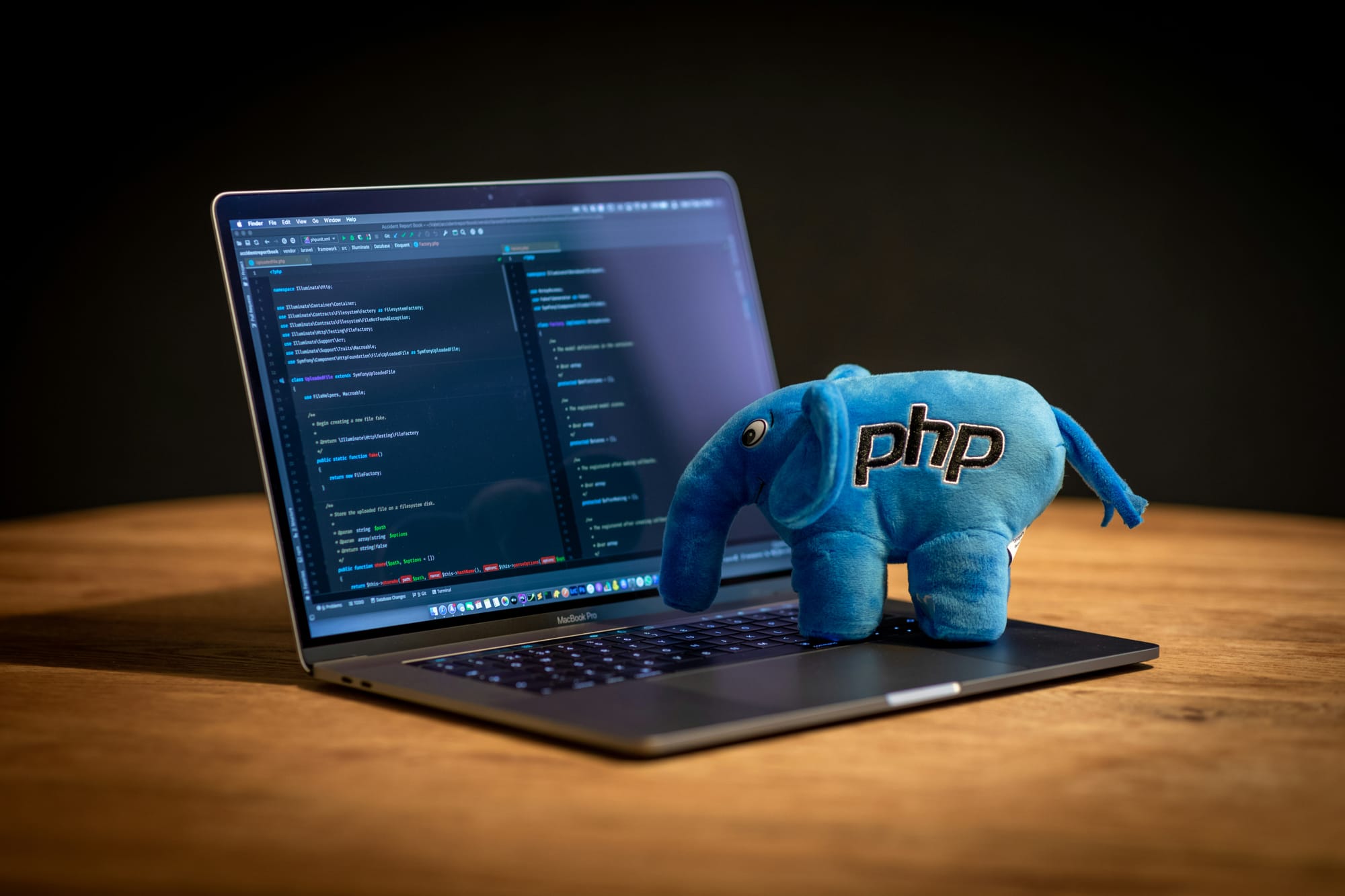
On Wednesday, security researchers revealed two serious flaws in PHP, a programming language used by a huge portion of the internet, including websites built with WordPress. The flaws could allow hackers to break into vulnerable websites, steal information or take control of the servers running them.
Amazon reported detecting an attempt to exploit the flaws four days before they became public. As details emerged Wednesday, some companies and governments began taking down sites as a precaution against possible attacks.
AI had an interesting role here both from an offensive and defensive perspective. Bad actors moved quickly, and AI may well have helped. Cloudflare CEO Matthew Prince reported that in the ten hours before public disclosure, his company saw thousands of attempts to exploit the flaws. Within two hours of the announcement, that number had reached hundreds of thousands and by later that day it was in the millions.
That kind of growth makes me wonder whether AI agents were part of the rush to exploit the vulnerabilities. There's no direct evidence that agents were involved, but given what they are capable of, why wouldn't hackers be putting them to work to accelerate their attacks?
That was the bad news. The good news was that researchers at Wiz and Calif, using advanced AI models, were able to help uncover and demonstrate the vulnerabilities. OpenAI also chipped in, helping to coordinate the response with PHP maintainers and security companies, including Cloudflare.
With help from these researchers and AI tools, PHP maintainers were able to develop and release patches on Wednesday. It's proof that AI giveth and AI taketh away too.
Microsoft expands its sovereign cloud as customers demand more control

It may be a small world after all, but that doesn't mean countries don't want to have control over their own data and where it is stored and processed, and that is particularly true in Europe.
Perhaps that's why in the same week that Jensen Huang told European leaders that they have to do more to embrace AI, Microsoft announced an expansion of its existing sovereign cloud offerings that the company hopes will allay some European companies' fears about relying on U.S. cloud providers. It's not just about trusting them with their data, but also maintaining control over critical systems when political circumstances change.
Douglas Phillips, president and CTO of Microsoft Specialized Clouds, outlined the expanded capabilities in a blog post this week, writing that where data resides matters, but it's much more than that. "For some workloads, digital sovereignty also means maintaining critical operations as connectivity, geopolitical and operating conditions change."
Among the additions are a new panel for monitoring sovereignty controls and expanded capabilities for running AI applications and other services locally, even when disconnected from Microsoft's public cloud.
While sovereign clouds are not a new concept by any means, they are taking on greater significance in the age of AI, when questions about who controls sensitive data, where AI runs and whether critical systems can operate independently of a cloud provider are becoming increasingly important. Microsoft is attempting to address those concerns by adding new capabilities to its existing sovereign cloud offerings.
What I'm reading 📚

AI Isn't Coming for My Job. I'm Coming for Its Job.
by Keegan Henckel-Miller, keeganhenckelmiller.com
People are using AI to make their smart TVs dumb again
by Sarah Perez, TechCrunch
How one hacker used AI agents and a few thousand dollars to break into scores of sites
by Raphael Satter, Reuters
What I'm watching 📺
Inference Can Wait. The Grid Can't – with Chris Dunlap
~The Adil Wali Show
Look who's talking 👄
"I told my team when I came in, listen we don't need a sledgehammer to kill a fly. Sometimes you just swat it, right? So if it's a swatable solution, just swat it."
~Kristen Bessette, chief data officer at Zurich US as told to FastForward on why AI isn't the answer to every problem.