FastForward #67: Lies, damned lies and AI


Welcome back to the latest issue of FastForward, and thanks for reading. If you like my newsletter, please share this week’s edition with a friend, it really helps.💌 Sign up here.
ForwardThinking 🤔
Lies, damned lies and AI
When Mark Twain popularized the phrase 'lies, damned lies and statistics,' he was referring to the practice of using statistics to unduly influence public opinion. These days, you can swap statistics for AI. That’s because tech's big AI execs have been trying to convince the public that AI is more powerful than it actually is — and that it’s out for your job.
It turns out, maybe that's not the best message to be putting out there. People are growing increasingly hostile toward AI. Some have even physically attacked self-driving cars and AI infrastructure. Earlier this month, college graduates booed commencement speakers who even mentioned AI. Even the Pope weighed in on the subject this week in Magnifica Humanitas, sticking it to capitalists with this statement: "The pursuit of greater profits cannot justify choices that systematically sacrifice jobs…," he wrote.
In fact, just about everyone, except CEOs looking to cut payroll, take a dim view of a technology that is purported to be so powerful it is going to replace every professional on the planet (whether it's true or not).
Data backs up people's general disdain about AI and jobs. More than half of respondents in a YouGov-Economist poll reported being worried or somewhat worried about AI replacing their jobs. It's no wonder when CEOs cutting tens of thousands of jobs at places like Amazon, Oracle and Meta point to AI as the reason for job cuts. What’s worse, AI isn’t replacing most of these jobs, at least not directly. It's actually the cost of the underlying infrastructure in many cases leading to the cuts. It's an excuse that is increasingly becoming known as AI washing.
When you look at the studies of AI success rates, they tell a very different story with most companies struggling to get AI to work in broad deployment. Agents sound good on paper, but besides coding, there isn't a lot of evidence they are actually working at scale. The technology has great promise, and there have certainly been pockets of success, but so far it's more aspirational than reality.

Mixed messages abound
So if you're a CEO at a big AI lab, and you wake up one day to a bunch of headlines about mounting public backlash against AI, especially when they believe your rhetoric that their livelihoods are being threatened, maybe you conclude you should stop saying AI takes away jobs. You should actually say it doesn't.
Just this week Sam Altman suddenly had a change of heart about the whole jobs thing. According to a Reuters report, Altman told the Commonwealth Bank of Australia (CBA) conference in Sydney that he was "delighted to be wrong" about his prior bleak predictions that AI would take jobs.
Dario Amodei and Anthropic are giving more mixed messages on jobs with the CEO telling a financial services briefing earlier this month that they just don't know. Great. But his co-founder Chris Olah, appearing at the Vatican's AI ethics conference this week, came right out with this gloomy warning, per Axios reporting: "There is a real possibility that AI will displace human labor at a very large scale."
So let me see: it's going to take jobs, no, it's not, we don't know and there's a good chance it will. Got it.
These executives sound a lot like their models, stating something with conviction, then backtracking when you push back — 'Yes, you're right, it doesn't take jobs' — before finally admitting they don't actually know.
While it seems unlikely that there will be widespread job loss directly from AI in its current state, the mixed messages, the reversals and the hedging show that the folks building AI models can't even keep their stories straight, leaving the general public to sort out the truth.
~Ron
What's new on the blog 📰
Confluent's Jay Kreps returns to his large company roots with acquisition by IBM
I caught up with Confluent CEO Jay Kreps at IBM Think earlier this month in Boston. We chatted about what it was like being back inside a large company after being acquired by Big Blue at the end of last year.
As IBM tries to leverage acquisitions like Confluent to help orchestrate AI, capturing data in real time becomes a critical component for models using data to understand context.
"We bring the ability to do these very rich transformations for processing of that data, and the last mile in the chain is the ability to plug that into these AI models and serve up context off of that."
Aaron Levie's take on how AI moves the work goalposts — and what that means for jobs
I connected with Box CEO Aaron Levie recently on the FastForward on PPN podcast. We covered a lot of ground. I pulled this part where Aaron talks about his theory on why AI actually expands work and increases the need for humans, and turned it into an article.
"What I tend to see is that the work just expands based on the kind of tool capabilities that we have, and I've seen no evidence at any kind of macro scale where that doesn't happen," Levie told me on the podcast.
As developers shift to AI coding, the nature of engineering is changing
AI is inevitably going to have a huge impact on just about every job, but perhaps none more so than the developer role where it is already being widely used.
I spoke to execs at Intuit, Amazon and MetLife to understand just how much the role is shifting and what it could mean moving forward in how we think about engineering.
"From a philosophical change, the skills that are required by the builders, the software engineers, are to really understand software architecture, to know what great software actually looks like, and how you make sure that the coding agent builds software that actually solves the problem, is high quality, can scale, and is not full of defects," Intuit CTO Alex Balazs told FastForward

Why Chen Goldberg walked away from Google to help build CoreWeave’s AI cloud
Chen Goldberg walked away from a prestigious role on the Kubernetes team at Google in 2024 to join neocloud CoreWeave. She saw the opportunity to build the next generation of infrastructure around AI, a challenge any engineer would relish, and she took the leap.
"I joined CoreWeave in August of 2024 with the realization that we were at the edge of yet a new era where infrastructure matters even more than before," Goldberg told FastForward.
When it comes to AI, IBM heads for its happy place in the middle
Earlier this month, I spent some time in Boston at IBM Think. I learned that IBM is trying to position itself firmly as the orchestration piece for companies trying to implement AI in the enterprise.
"They don't fail because of the AI [technology]. They often fail because of what's underneath: siloed data, fragmented infrastructure, multiple clouds with no coherent operating models. The models don't really matter unless the foundation is correct."
~IBM CEO Arvind Krishna
IBM recognizes it can't compete with the AI Labs around models or the cloud hyperscalers for infrastructure, so it's staking a place in the middle, a spot where the company has comfortably resided in the past, a happy place if you will.
News of the Week 📣
Drew Houston saying good-bye to Dropbox after 19 years at the helm
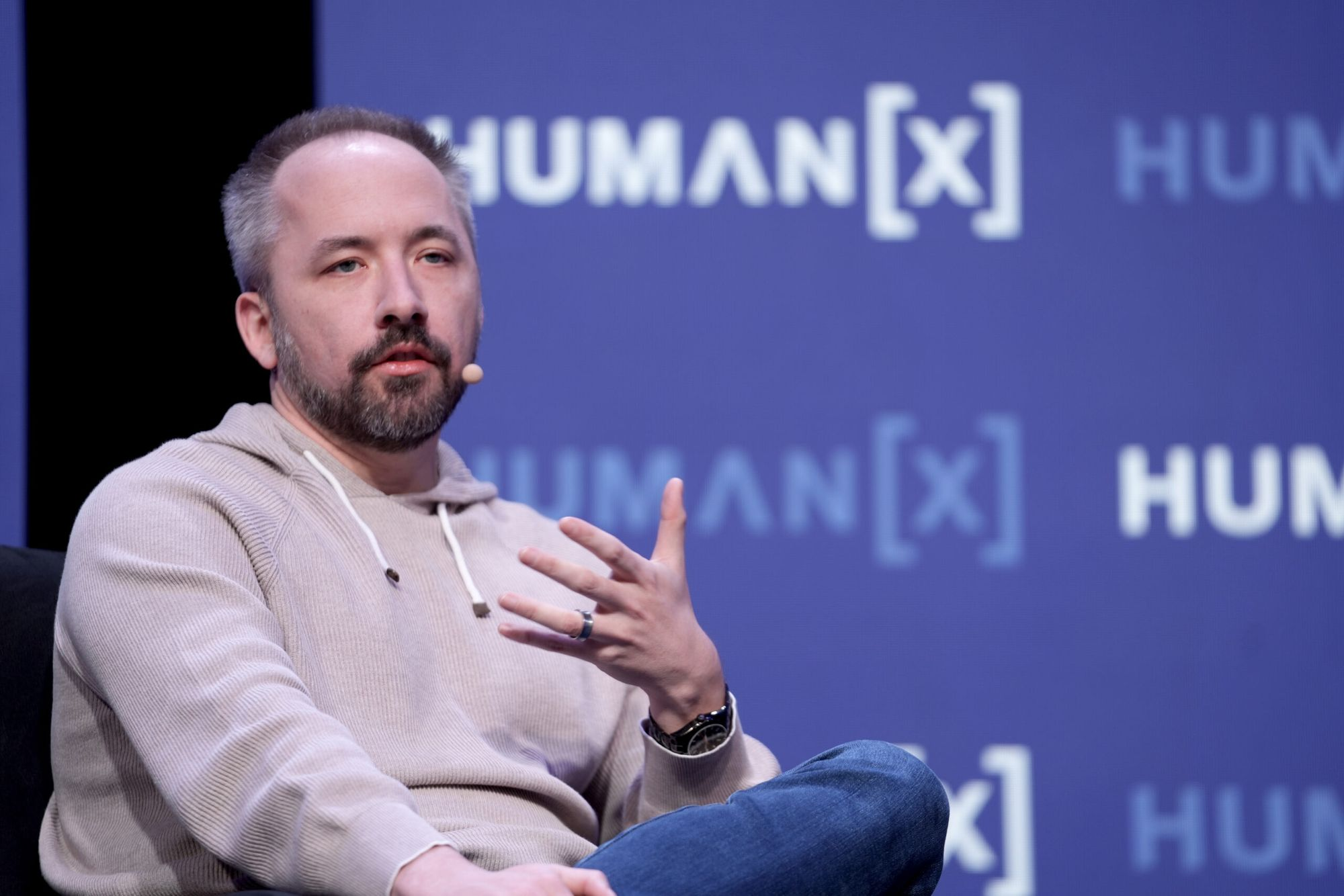
Drew Houston co-founded Dropbox in 2007, launching the company at TechCrunch 50 startup competition the following year. His startup didn't win, but 19 years later, it's clear he built a successful public company. This week he dropped the bombshell that he was stepping down from the company he helped build from the ground up, ready to try something new.
Ashraf Alkarmi, who joined Dropbox in 2024 from Vimeo to run product will be moving into the corner office. The two will share the title of co-CEO for the time being. Houston will remain board chair, but is ready to move on from the day-to-day running of the company.
As Houston, who gained great wealth from his company told CNBC, at 43 he's not ready to go off and race sail boats. In fact, he wants to build a new AI startup, just not inside Dropbox. Maribel Lopez, founder and principal analyst at Lopez Research says he has the opportunity to help improve enterprise SaaS.
"Houston wants the opportunity to create a fresh take on software for the agentic AI era. Going forward software needs to be redesigned to work with people and agents. Right now, we don’t have that," she told FastForward.
Dropbox wasn't only an early participant in TechCrunch 50, it was also the first company to go from Y Combinator to public company. In a year when SaaS stocks have been slammed, his company is down just 2.71% with a market cap in the neighborhood of $6 billion.
As AI coding bills escalate, Harness adds new cost-monitoring modules to the platform

As companies introduce AI coding into the software development process, it introduces a number of problems including cost containment. As an example, Microsoft recently announced it was removing access to Claude Code licenses for large swaths of its engineering teams in an effort to control spiraling costs. This week, Harness introduced a couple of tools to its software development tools platform to help monitor those escalating expenses.
They say you can't control it if you can't measure it, so Harness is introducing AI DLC (development lifecycle) Insights, which builds on the Software Engineering Insights module, to provide data that links "every AI-generated line of code to the PR, ticket, and deployment it produced," according to the company. This data helps engineering management understand how effective token spending is, and if it turns into shipped code or not.
Trevor Stuart, SVP & GM at Harness says the idea isn't about restricting how developers use AI, but making sure the spend is delivering real value. "A consistent problem we’re seeing is that nobody has visibility into where their money is going," Stuart told FastForward. "If an engineer burns tokens on code that gets rejected in review, or uses a certain model for a task that didn't need it, it’s not a freedom problem, it’s a visibility problem and optimization problem."
The other piece is Cloud & AI Cost Management, which builds on the cloud cost control module to help figure out if agents are worth the cost of running them, a worthy goal for any company. You shouldn't just be running agents because it's the cool thing to do right now. It should be able to demonstrate real value.
With Cloud & AI Cost Management, "Harness connects directly to your AI providers and production agents, capturing spend at the level of each individual request and tying it to the agent, session or workflow that triggered it," according to the company. This enables management to understand agent performance versus the cost to run it.
Both modules are generally available now.
Snowflake's quarter offers further proof that quality data matters more than ever

If AI is about the quality of your data, the company managing the underlying data should be doing pretty well, and it turns out, that's exactly what happened for Snowflake, which reported earnings this week with one of its best quarters ever as a public company, per Runtime.
How good? The company generated $1.39 billion in revenue, up 33% over the prior year. Even better, was the positive guidance for next quarter, which usually pleases investors. And indeed it did with the stock up an astonishing 46% the last five days. Even looking more broadly, it's up almost 14% year to date. This week's push brought them back from being down 19% for the year, a significant swing, per The Motley Fool.
But Snowflake didn't just have good news for shareholders, it also rewarded AWS with a $6 billion commitment to use Amazon's Graviton chips and AI services over the next five years, giving Amazon a boost too.
It's worth contrasting this with Salesforce, which also reported this week, and had decent numbers, coming in at around $11 billion in revenue, up 13% over last year. Pretty good, but the CRM giant delivered guidance that was below expectations. While Salesforce was down slightly after the report, it has recovered, up over 8% for the last five days, but still down 25% year to date, as the investors continue to punish systems of record like Salesforce.
Speaking of SaaS performance, you can argue that it was a good quarter from an earnings perspective for both companies. While Salesforce continues to rely primarily on the traditional per-seat licensing model, investors seem to prefer the shelter of Snowflake's data platform and its consumption, pay-as-you-go approach.
What I'm reading 📚

Tech CEOs are apparently suffering from AI psychosis
~By Julie Bort, TechCrunch
The Canvas Hack: The New Logic of Cyber Extortion
~By Keegan Henckel-Miller, DeleteMe Blog
Craigslist Made Me Rich. Giving the Money Away Is Easy
~By Craig Newmark, New York Times
What I'm watching 📺
Why Enterprise AI Economics Are Changing
~Enterprise AI Show
Look who's talking 👄
"One benefit of perspective is you see the cyclical nature of things, and with each cycle you have to relearn the same lessons. Whenever there are these new explosions where a new era of computing shows up, like with AI, they follow a similar kind of hype path."
~Dropbox CEO Drew Houston, who announced he was stepping down this week, in a 2025 FastForward interview.