
Reports find agentic AI is running into limits of how work is organized

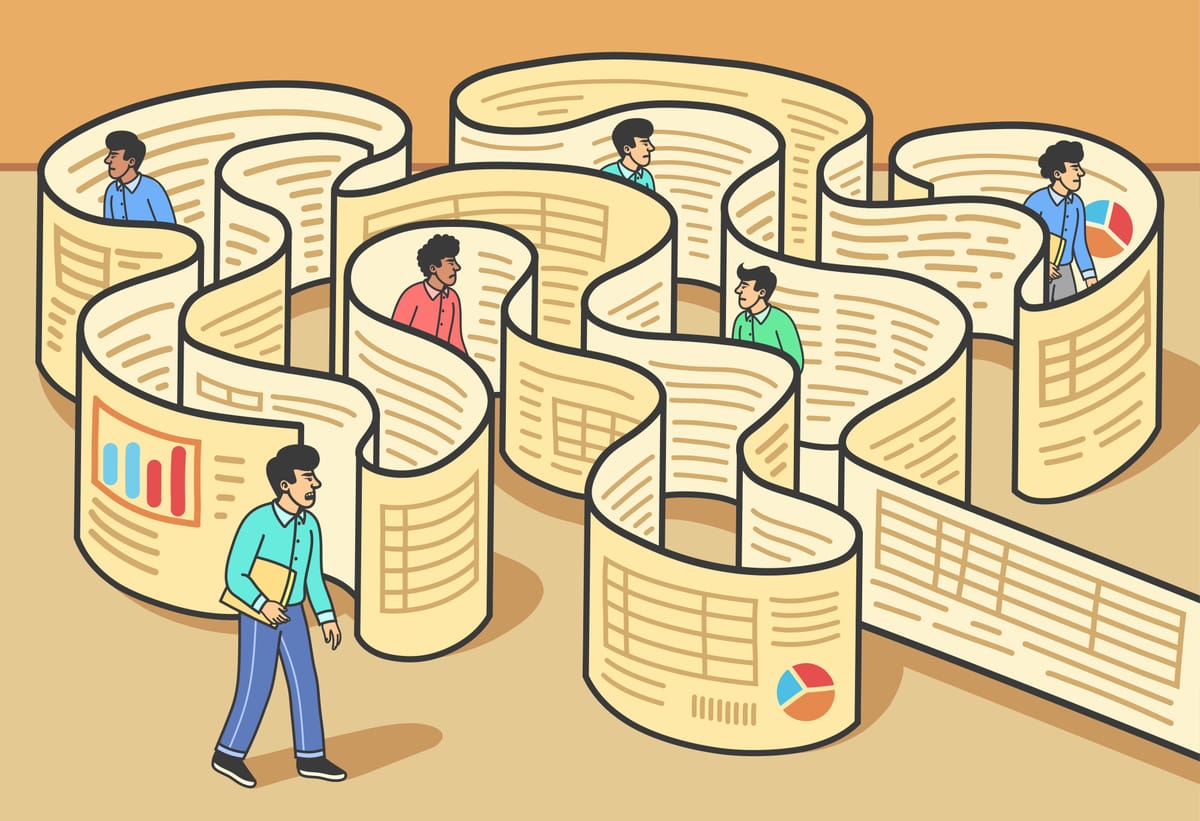
As we move deeper into the agentic AI era, this should be the moment when companies rethink how work flows through their organizations, not just train agents to replicate existing processes, inefficiencies and all. A new report from Deloitte suggests that isn’t happening.
And it’s not just a few outliers failing to reimagine their workflows. It’s a staggering 84% of respondents. “Despite high expectations for automation, 84% of companies have not redesigned jobs or the nature of work itself around AI capabilities,” the report found.
Deloitte surveyed 3,235 senior IT and business leaders in 24 countries and six industries, all directly involved in their companies’ AI operations. The results show most respondents don’t expect big changes anytime soon. About a third think that around 10% of jobs will be fully automated within a year. Three years from now, that jumps to 82%, yet they still predict only around 10% of tasks will be automated.
It’s mind-boggling that respondents think progress will be that slow. Even worse, most companies are still stuck in pilot purgatory with only about a quarter saying they’ve pushed a meaningful chunk of AI experiments into production.
The question is what's holding them back? Jim Rowan, US Head of AI at Deloitte, says that in conversations with enterprise leaders, he finds that they are under pressure to produce fast ROI from their AI investments, and incremental automation gives them quick bang for the buck.
"I'm seeing a lot of our clients that are having a hard time getting away from just doing the [incremental] automation work because the automation work generates an immediate return in the quarter, and the reimagination work, I think, is harder to do and is a longer term fix," Rowan told FastForward. And he believes that this piecemeal approach can lead to bottlenecks because companies can't see the end-to-end big picture.
Getting more visibility
But you can’t redesign work if you can’t see how work actually flows through the organization.
That’s where process intelligence tools like Celonis, SAP Signavio and IBM Process Mapping come in. These tools attempt to map how work really moves across systems and teams, not just how leaders assume it moves.
Celonis itself recently released a report looking at agentic roadblocks. The report found that a big part of the problem is that departments were never designed to work together in this way. For agentic AI to truly take off, it's going to require that agents can cross departments and systems, and in many companies, departments work mostly in isolated silos. If they merely design agents to reproduce the siloed processes, they won't get the full potential advantage that agents promise.
In fact, the Celonis report found that 52% of respondents say their departments still work in silos, and 54% say departments don’t share a common view of how the business runs or how to improve it. That structural challenge is real and aligns with Deloitte's findings.
Part of the challenge is technical. Patrick Thompson, Celonis global SVP of customer transformation and a former CIO, says the problem is finding a way to build agents that can cross technically complex systems, including legacy platforms, mainframes, proprietary software and older systems weighed down by technical debt. It’s not easy to do, but he suggests that the key is understanding context.
"You need to put a layer on top of [those systems] that contextualizes the data and then solves for those gaps that are happening with the inefficiencies of those systems, but also [enables you to see] the systems and how they're integrated with other systems. So it actually helps you with horizontal integration as well," he said. He argues that Celonis can help reduce that operational complexity.
But Deloitte's Rowan doesn't think technology alone can solve this. Instead, he calls for enterprises to organize AI efforts differently with one team looking at short-term, quick wins and another tackling longer-term, unified solutions across the board. “Enterprises really need to have a second team that's looking at the reimagination of the entire set of work that's out there,” he said.
Perhaps Rowan’s second team with its broader mandate could help knock down these departmental silos, but fifteen years of digital transformation efforts show how stubborn they can be, often leaving the boldest plans stuck in perpetual pilots and experiments and tangled in technical debt. Companies that want the full benefit of agentic AI will have to find a way to overcome that.