FastForward #61: Wall Street keeps falling for AI hype


Hi everyone, spring finally sprung here this week, and I launched the FastForward on PPN podcast. You can watch the pilot episode here. If you like my newsletter, please share this week’s edition of FastForward with a friend, it really helps.💌 Sign up here.
ForwardThinking 🤔
Wall Street keeps falling for AI hype
Investors are a fickle bunch. They just need to hear a whisper of a rumor, or spy a flash of a headline crossing their Bloomberg terminals, and off they go on a hard sell-off, sure that whatever they heard is going to blow up their positions, when it's just as likely it's their reaction doing the damage.
We have seen this play out over and over, where one of the big AI labs makes an announcement, or even strategically leaks a rumor, and it sends established tech stocks plummeting. It's important to remember AI announcements are often full of PR bluster, making it easy for people outside the tech bubble to blow them out of proportion, and investors for some reason appear to be particularly vulnerable to this.
As someone who regularly pushes back against the conventional AI narrative, I find it particularly frustrating that people who should know better accept what they're being told at face value without questioning it.
Perhaps the best example of investor overreaction was earlier this month when Anthropic announced Mythos, an AI model that can autonomously find and exploit software vulnerabilities. As I wrote in last week's column, it was a perfect combination of overexuberance and gloom playing out in one announcement. It was going to end all software bugs; it was going to help create super bugs at scale.
For Wall Street though, it was another example of seeing an announcement, hearing the hype around it and overreacting in a big way by punishing all cybersecurity stocks. It's ridiculous on its face to suggest that this announcement is a major threat to established cybersecurity companies at this juncture, and probably ever, but that didn't prevent a swift sell-off.
Falling for Mythos myths
In fact, in the days following the Mythos announcement, stocks like CrowdStrike, Palo Alto Networks and Zscaler got hit hard on the news, with stocks already suffering this year, down around another 5-8% depending on the company.
Mythos may end up being all it's hyped up to be, and still not be a substantive threat to these companies, which do much more than root out software vulnerabilities. They are full‑service cybersecurity platforms, and a tool from Anthropic, a company that has almost no security track record, is going to struggle to compete with vendors that have spent decades stopping attacks across networks, endpoints, identities and cloud environments.

And it's not as though these vendors are just sitting still when it comes to agents and generative AI. They're building and buying fast and furiously to provide protections for the new kinds of security problems that AI brings. In fact, Anthropic itself chose CrowdStrike and Palo Alto Networks as founding partners in Project Glasswing, its program to deploy Mythos, a pretty clear signal that even Anthropic doesn't see its model as a replacement for these companies.
Just a week earlier, Anthropic was dealing with a major leak of its own involving large swaths of Claude Code's source code. That’s a colossal real-world mistake that will very likely lead to further security failures down the road, yet it barely registered compared to the reaction to a new product announcement that hardly anyone has used yet. Reports suggest that the same dynamic is showing up in private markets with investors reportedly offering Anthropic an astronomical $800 billion valuation in its next round of funding.
Dragging down entire sectors
This isn’t just about one announcement or one company. It’s shaping how investors are thinking about entire sectors. We have seen many other examples play out in similar fashion since the dawn of the generative AI era with investors acting like sheep simply reacting and selling (or buying) without thinking through how much is hype and how much is real.
It's not exactly a secret that SaaS stocks have taken a big hit over the last 18 months over fears that a combination of agents and vibe coding are going to somehow drive large, established enterprise vendors out of business. You would think the analysts on Wall Street would learn to take a more nuanced view on these announcements instead of jumping at every press release.

I've written about this a lot (here, here and here), and my point is clear: the large SaaS vendors, for all their faults, do things that it's not possible for a single company to do on its own, and frankly, in most cases wouldn't want to because they have a business to run.
Look, I get that investors have to always be looking forward and searching for any news that could potentially impact their investments. I also understand that just because a company is on solid footing today, is not a guarantee of future returns. Nor can established companies simply rest on past successes. They have to be constantly on alert for disruptive forces in the market and change with the times.
But it doesn't help anyone to be knee-jerk selling every time the big AI labs report a new feature. Investors need to stop treating announcements as outcomes and start looking for real evidence of disruptive change.
~Ron
What's new on the blog 📰
PagerDuty ditches per-seat pricing as AI rewires its business
When I was at HumanX earlier this month in San Francisco, I sat down with PagerDuty CEO Jennifer Tejada to chat about the changes AI is bringing to her business, including the way the company prices its services.
"We have a customer who says every hour costs them a million dollars during a major incident. And if we can help them compress a major incident from lasting two hours to 20 minutes, that's a massive value. Well, that's a performance-driven use case," she said.
CrowdStrike CTO faces two-way challenge when it comes to AI
CrowdStrike CTO Elia Zaitsev was initially excited by the possibilities of large language models until he realized the attackers would have the same tools. I talked to him about the two-way challenge of building AI defenses while the adversaries use AI to rewrite the rules.
"Once the initial euphoria wore off, I started thinking, man, the adversaries are going to be using this stuff too."
Vibe coding won't kill SaaS, but complacency could
Everyone's talking about vibe coding killing SaaS, but the enterprise leaders I spoke to from Zuora, ServiceNow, LaunchDarkly, Forrester and SAP say it's not that simple. The real risk isn't where most people think it is.
"There have been a lot of lessons learned, and those lessons can't be vibe-coded."
~Cameron Etezadi, CTO, LaunchDarkly

Databricks takes on security and a whole new buyer
Databricks leapt into the cybersecurity market this week. While it technically makes sense to think about security as a data problem, the question is whether the company can shift buyer personas successfully.
Former Gartner analyst Sanjeev Mohan says it will require a different sales motion: "Selling to infosec, DevOps and SRE teams is very different from selling to analytics or business users. That's something they would need to develop."
How one person is securing all of Amazon from front door to firewall
Amazon is a huge company and when you consider subsidiaries like Whole Foods and MGM Studios, it's even bigger. That's why it's so hard to believe that one person is in charge of integrated security across the company for everything from badges to cyber.
His view on how most companies handle it? "I'm really not interested in taking a colander, blocking a few of the holes and calling it a bucket. That's called security theater."
News of the Week 📣
Adobe and Canva make dueling announcements as creative agents take center stage
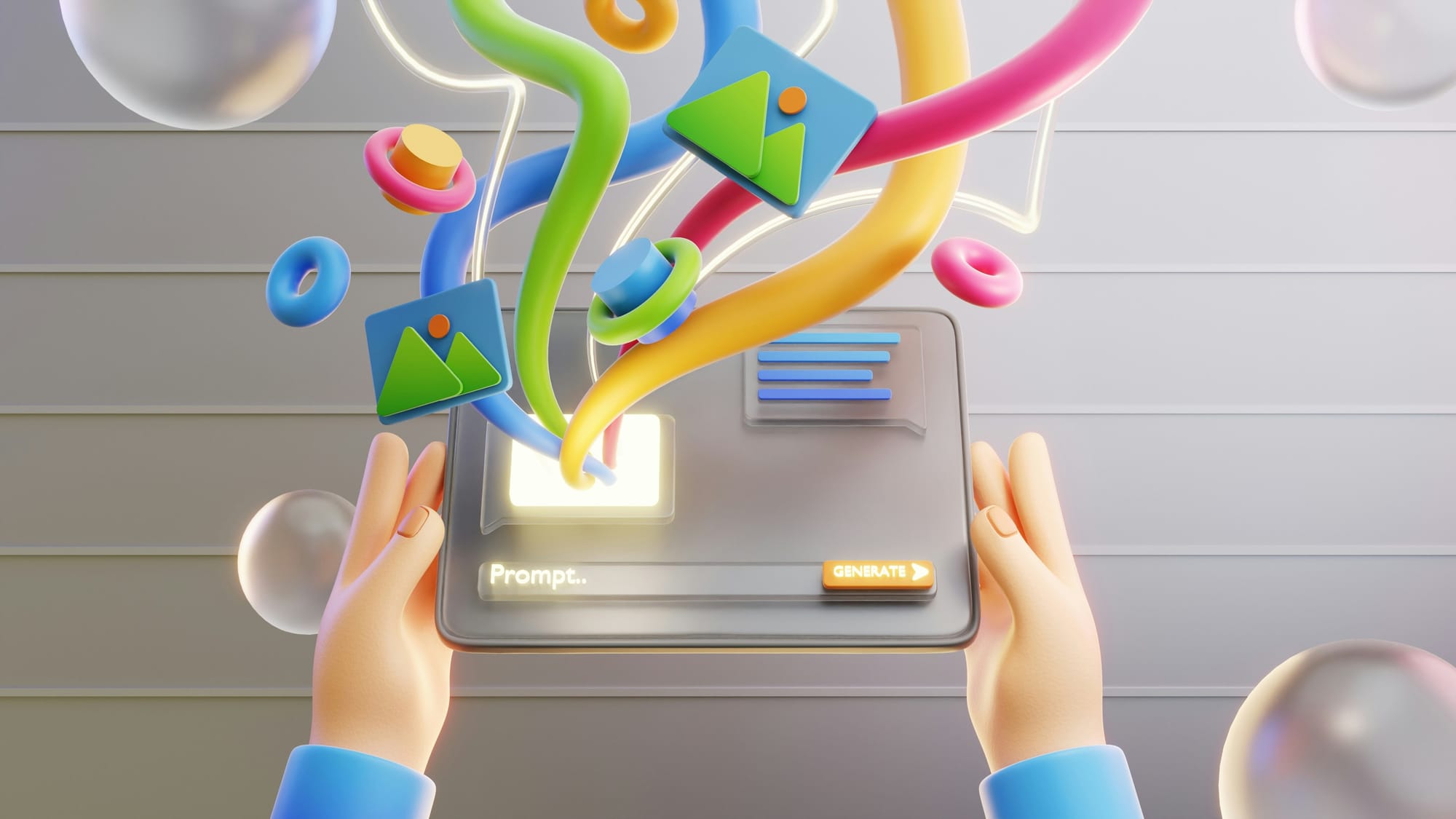
This week was apparently the week for big creative agent releases as both Adobe and Canva made major announcements. Each company's agents enable creatives to write prompts that move work through complex workflows across each company's family of products.
Where they differ is that the Canva agent is designed to connect to other enterprise software like Slack, Gmail and Notion to extend its capabilities to move work outside the boundaries of its suite of creative products.
Both companies clearly recognized this is a pivotal moment. The AI labs are offering tools that let creative and non-creative people alike generate images and video. In a world where Canva and Adobe's value proposition is being directly threatened, agents like this take their tooling and position them into a much more professional, workflow-driven process that the image generators can't match.
These announcements are about these companies clapping back and giving professional creatives more reasons to stay with these platforms. They are also an acknowledgement that enterprise work doesn't happen in a vacuum and generating pretty images from a prompt is a long way from having the professional sense to recognize what's good, or managing a multi-channel campaign across a dozen tools.
Maine data center ban could be a warning shot for hyperscalers

Maine's legislature recently passed a temporary ban on certain data center construction in the state, a move that could open the regulatory floodgates for companies hoping to keep their data center expansion plans flowing.
CNBC reported that it's part of a growing movement with more than a dozen states introducing similar legislation along with numerous localities, which could make it more difficult for companies to fulfill their growing AI ambitions.
Under the terms of the bill, it would ban new data center construction, targeting projects consuming 20 megawatts or more of electricity, in the state for 18 months until November 2027. But this is far from a fait accompli as Governor Janet Mills has asked for some carve outs of her own before she would sign it. But the fact it passed both houses shows that there is growing discontent among politicians regarding runaway data center construction.
Companies like Amazon, OpenAI, Oracle, Microsoft and Google have been building and budgeting like crazy to meet anticipated demand from AI workloads. But there is growing political backlash that spans both sides of the aisle and bears watching.
Intel is suddenly hot again
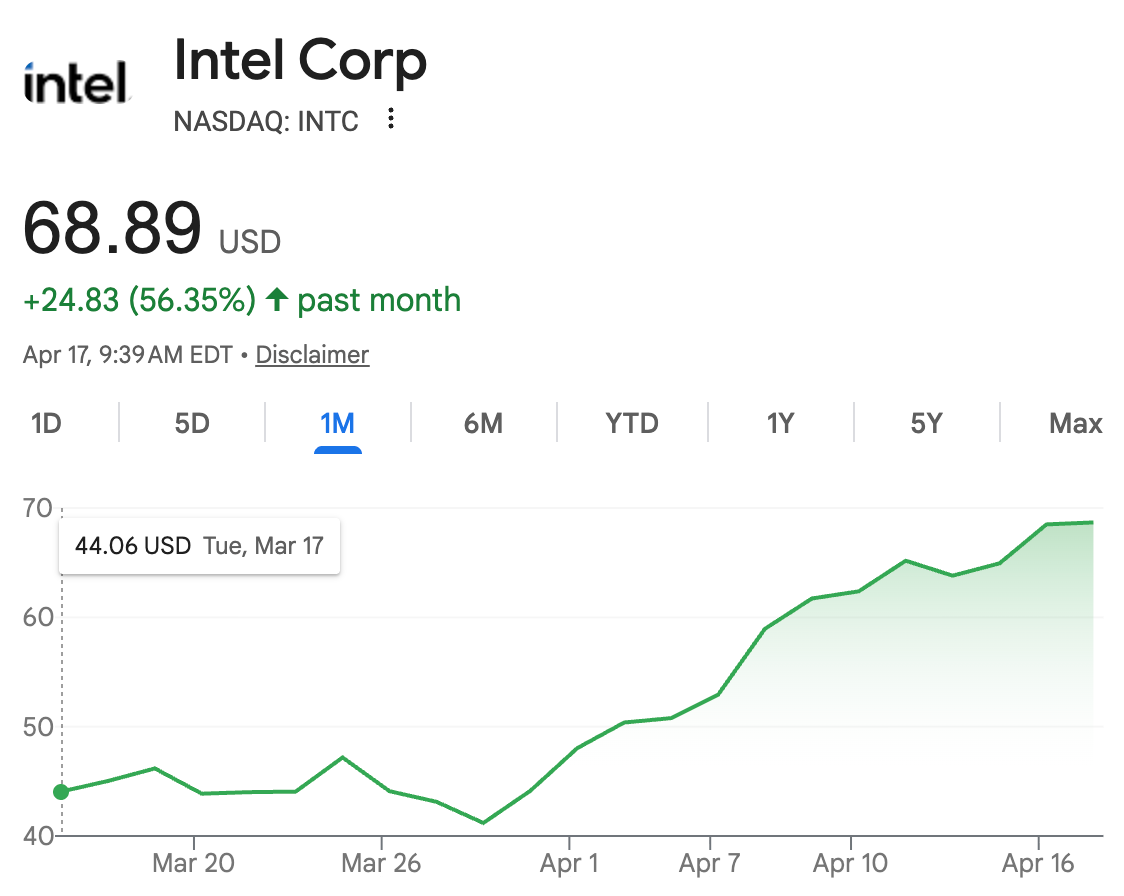
Intel finds itself in the unusual position of suddenly being a hot stock. The company has been in the doldrums for several years now, as it failed to make a smooth transition to the AI era, all but ceding its once dominant leadership in the chip market to Nvidia and its powerful GPUs.
How hot is Intel? It's up 76% year-to-date and had a nine-day streak this month where it added a ridiculous $100 billion in value, a streak unseen since the company went public in 1971.
Is it another case of Wall Street reacting to press releases? Partly, but that doesn't tell the whole story. Instead of trying to compete directly with Nvidia, the company is trying to carve its own niche in the manufacturing and foundry side of the business, helping others build chips instead of relying on just their own chip products.
Time will tell whether investors will be rewarded for their exuberance over this new approach or live with regrets for backing the building and manufacturing strategy.
What I'm reading 📚

The AGI Lie: Why Big Tech Is Selling You an AI Fantasy
~By David Linthicum, Cloud Computing Insider on YouTube
AI’s next big chip bet may be biological
~By Nat Rubio-Licht, The DeepView
What is ARR Anyway
~By Romain Dillet, Hypertext
Sam Altman promised billions for AI safety. Here’s what OpenAI actually spent.
~By Meredith Shubel, The New Stack
Look who's talking 👄
"[Many of our customers] are only part way along in their cloud adoption cycle, and now they're learning and finding ways to leverage AI, but also having to manage a lot more risk than they have in the past."
~PagerDuty CEO Jennifer Tejada in her FastForward profile this week.