
FastForward #55: Been a long cold lonely winter


ForwardThinking 🤔
Been a long cold lonely winter
As the winter snow keeps accumulating in the Northeast and the tech news continues to pile up with it, I thought it would be fun to once again pay homage to Dan Shaughnessy, the long-time sports columnist at the Boston Globe, who regularly writes columns gathering his random thoughts about recent sports news.
So here goes: Picked up enterprise tech news pieces while waiting for the next snowstorm to hit.
*Wall Street dumping and running every time one of the LLM vendors makes an announcement that steps on an established software company's territory is frankly getting a little annoying. Investors have been in abject panic over the impact of AI on SaaS companies and the stocks have taken a vicious beating this year.
As Salesforce CEO Marc Benioff said in this week's earnings call, "This is not a rational market." Benioff, who is generally prone to hyperbole, was never more understated than with that line. A quick look at several recent major SaaS company earnings reports shows they appear to be doing quite well, thank you very much:
Part of the problem is that investors are trying to guess the estimated impact of AI without taking into account a company’s corresponding ability to evolve and roll with the changes. Sure, it's clear that software will be forever changed by AI, but that doesn't mean it's going to destroy every software company on the planet.
As Tien Tzuo, an early Salesforce employee and founder at subscription management platform Zuora, told me in a profile this week, SaaS vendors have to recognize the real threat AI brings: "Let's assume that we're all under existential threat, and let's work through it." The 'working-through-it' part is the crucial piece that investors seem to be missing. These companies aren't sitting back helplessly hoping, and the numbers seem to reflect that.
Quiz: What was the dominant CRM vendor with 45% market share in the late 1990s.
*If you ever wanted proof of the complexity involved in implementing AI at scale in the enterprise, you got it in droves this week when OpenAI announced it was partnering with major systems integrators McKinsey, Boston Consulting Group, Capgemini and Accenture to help organizations get out of the dreaded proof of concept phase.
The whole idea behind implementing AI inside large firms is to increase efficiency, lower costs and produce a positive return on investment as quickly as possible. The problem is that when you bring in these outside firms, even if they help you get there faster, these firms rarely come cheap, which somewhat ironically means, even if you get more projects to production, it's going to take all that much longer to achieve payback.

Frontier model companies like OpenAI are struggling to show their value inside the enterprise, with survey numbers continually stuck at around a third success rate, defined by getting an AI project from proof of concept into production. That has led to increasing frustration and threats of cutting AI budgets. OpenAI is betting that by aligning with these firms, it could help organizations get to the AI promised land faster. Perhaps. But it just might come with a hefty consulting bill attached.
*Anthropic is feuding with Defense officials, who are balking at the AI company's insistence that its models have guardrails to safeguard them from harmful activities like mass surveillance or control over weapons without human oversight. Based on my personal use of LLMs, this seems like a prudent demand.
In the “you can’t make this stuff up” department, Defense officials would love to force the issue and require Anthropic to let them use the models however they wish. Except, I kid you not, the powers that be think the LLM maker’s models are too good to resist. “The only reason we’re still talking to these people is we need them and we need them now. The problem for these guys is they are that good,” a Defense official told Axios.
Their PR and marketing departments must have been doing backflips after hearing that kind of endorsement.

On Thursday afternoon, Anthropic CEO Dario Amodei published a blog post saying the company would not back down. He wrote, "Regardless, these threats do not change our position: we cannot in good conscience accede to their request."
But in a case of interesting timing, this fight comes the same week Anthropic announced it was dropping its signature safety pledge, making the stance look just a little more opportunistic.
So much for PR and marketing’s short-lived feel-good moment.
Quiz Answer: Siebel Systems
~Ron
What's new on the blog 📰
A SaaS pioneer confronts the rise of AI
As the SaaS relevancy debate in the age of AI rages on, I spoke to a SaaS pioneer, Tien Tzuo. He's CEO at subscription billing platform Zuora, and was employee #11 at Salesforce.
He doesn’t sugarcoat the threat AI poses to SaaS when he says, "Can AI versions of an enterprise software category replace a non-AI version? It's absolutely going to happen. How could it not?"
But he also argues that SaaS companies still have distinct advantages that vibe coding alone can’t match.
AWS takes an open source turn in its agent-building strategy
AWS released an open source agent experimentation framework this week to help developers move fast and break things in a safe way when it comes to building agents.
Presumably, the hope is that some of those experiments will eventually make their way into production — running on AWS infrastructure, of course.

AI's not gonna kill SaaS, but it will force some changes
I sat down with good friend Alex Wilhelm and we wrote a post together, as we often used to when we worked together at TechCrunch. We took a look at the recent SaaS stock beat-down and looked at whether SaaS is getting what it deserves, or if, maybe, just maybe investors are overreacting a wee bit. Hope it's the first of many. Please let us know what you think of this collab at feedback@fastforward.blog.
Reports find agentic AI is running into limits of how work is organized
Anyone who has looked at digital transformation efforts over the last 15 years knows that older systems, institutional inertia and resistance from management and rank and file employees can undermine the best of intentions.
Perhaps it's not surprising then that two recent reports found that companies trying to implement agentic AI are running into broad organizational and technical challenges, and the vast majority of AI projects still remain stuck in experiment and PoC purgatory.

News of the Week 📣
Nvidia shares sink despite another stellar earnings report
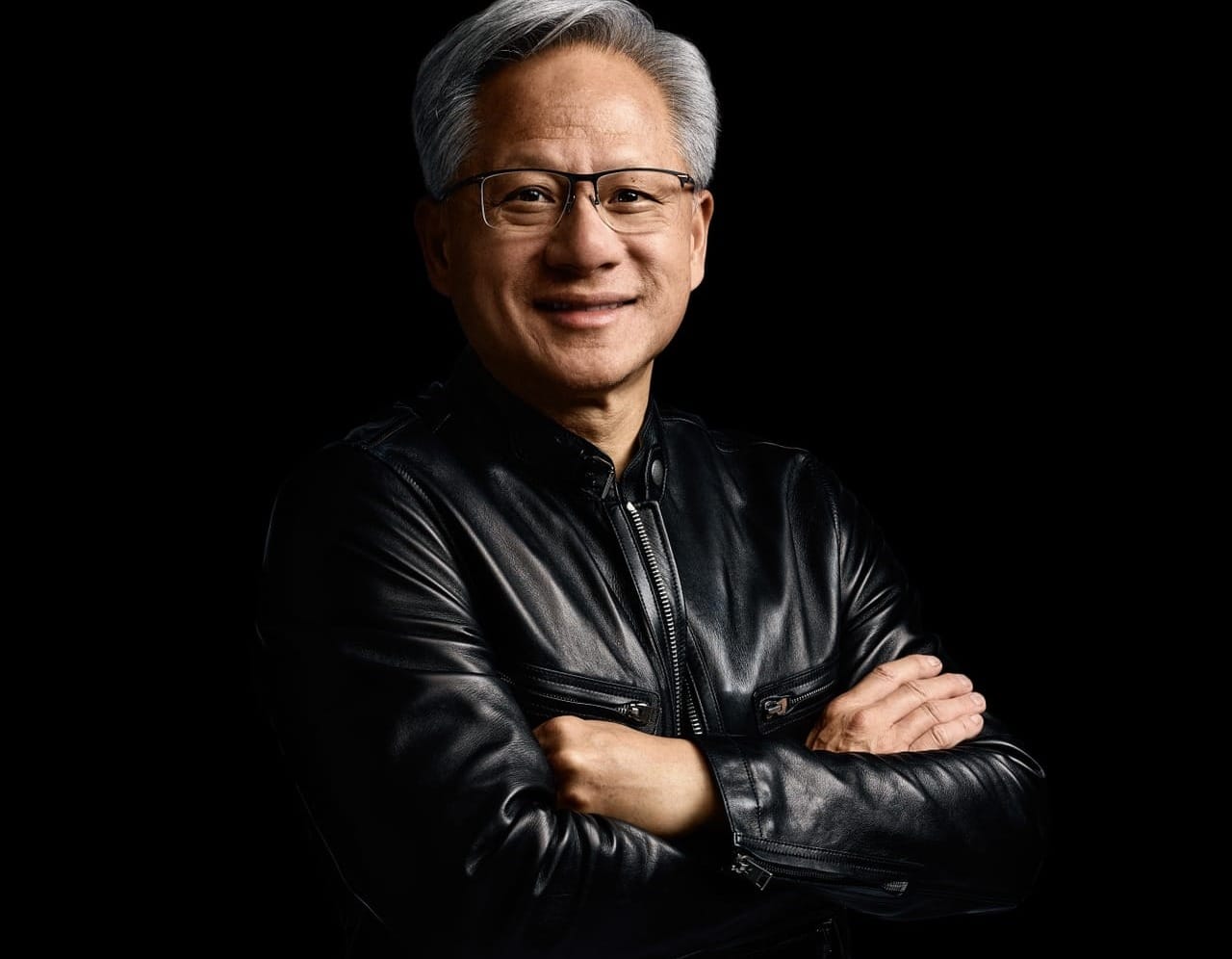
As we mentioned in the ForwardThinking commentary above, Wall Street is having a bit of anxiety about how AI is going to impact tech. That has translated into massive stock losses for SaaS companies. But you would think the hardware vendors like Nvidia would be spared. Apparently not.
Nvidia reported earnings yesterday. It beat street estimates with $68.13 billion in revenue for the quarter. In a sensible, logical market, investors would be screaming with joy from the rooftops, but this is not a logical market and investors are not behaving sensibly.
So instead of rewarding the company for a job well done, the stock price was down 1.8% this morning, as investor anxiety over AI saturation continued. In yesterday's earnings call with analysts, CEO Jensen Huang tried to get people to accentuate the very real positive.
"This new world of AI, compute is revenues. Without compute, there is no way to generate tokens. Without tokens, there is no way to grow revenues. So in this new world of AI, compute equals revenues," Huang told investors.
As he sees it, the more AI people use, the more money his company is likely to make. Wall Street didn't agree.
Anthropic accuses DeepSeek and other Chinese AI companies of misusing its platform

Anthropic has generated a lot of news this week from new products to its battle with Defense officials to intensifying competition with Chinese AI companies, including DeepSeek, the LLM that came out of nowhere last year claiming it had been developed at a fraction of the price of bigger models from rivals like Anthropic.
This week Anthropic accused Chinese labs including DeepSeek, MiniMax and Moonshot AI of running “industrial‑scale” distillation attacks in order to transfer Claude’s capabilities into their own models. The company says its Chinese rivals issued millions of queries from tens of thousands of fake accounts in violation of its rules.
“These labs generated over 16 million exchanges with Claude through approximately 24,000 fraudulent accounts, in violation of our terms of service and regional access restrictions," Anthropic wrote in a blog post this week.
While the accusations sound serious, some people on X have fixated on the irony of a major model maker that, like its rivals, trained on vast swaths of the internet without individual consent, now complaining that a competitor is doing something similar to it.
Perhaps the most hilarious reaction came from Elon Musk, whose rival AI firm xAI almost certainly relies on similar training methods; tweeting, “How dare they steal the stuff Anthropic stole from human coders??”
Regardless, this will likely continue to play out against the backdrop of global politics and US-China AI tensions.
This week in startups
I added this section recently: a rollup of startup news worth reading about. If you don't like it I can make it disappear, but if you do, I'll make it a regular thing. Let me know what you think at feedback@fastforward.blog.
- I know it's hard to think of Stripe as a startup these days, more a mature private company that refuses to hit the public markets. And who can blame them? It's certainly not for employee liquidity purposes. Just this week, the company announced a liquidity event, which valued the company at $159 billion, up from $91.5 billion a year ago. Current and former employees holding stock got a big payday, as the company continues to perform astonishingly well and appears to be positioning itself for the changing AI world.
- Callosum, a London-based startup, is at the opposite end of the startup spectrum from Stripe, emerging this week with a modest $10.25 million in funding. Founded by Cambridge neuroscientists Danyal Akarca and Jascha Achterberg, the company is building an orchestration platform designed to run AI inference across a variety of chips and multiple models from diverse vendors, rather than tying itself to any one.
- Hermetiq, another early stage startup emerged this month with a set of services to address an emerging problem for developer teams. The company provides observability for software build pipelines, helping teams spot cache failures and performance issues to ship code faster as AI-generated code volumes surge. The company emerged this month with early seed funding from Jason Calacanis' LAUNCH Venture Fund.
My adventures in AI 🤖

I have never kept a running list of my moderation activities, so I put Claude to work to try to track them down, first across a range of conferences like TechCrunch Disrupt, Web Summit and Human X, and then, when that proved a little too difficult, just my work at TechCrunch.
It did a decent, but not great job at compiling a list, leaving out many key ones like Aaron Levie at the SaaS Session in 2019, or Dylan Field, Matthew Prince and Michelle Zatlyn, and Tracy Young at various TechCrunch Disrupts. It had particular problems with multi-person panels.
Worse, it tended to conflate articles where I covered other Disrupt panels, or where I simply interviewed an executive for an article, with actually doing it on stage in the moderator role.
Gemini and ChatGPT were not better, and Gemini was far worse, basically making up large parts of the list. I tried Deep Research in ChatGPT, and that was actually worse than the regular search.
I’ll try again at some point, but it’s a complex task, and it didn’t do a great job even with massaging the prompt to get closer to what I wanted.
This post originally appeared on my LinkedIn.
What I'm reading 📚

Data centers are the enemy we’ve all been waiting for
~By Liza Featherstone, New Republic
Big Tech Is Hiring GenZ After ‘AI-Washing’ Failed
~By Sasha Semjonova, Salesforce Ben
What really caused that AWS outage in December?
~By Evan Schuman, Computerworld
It’s time to pull the plug on plug-in hybrids
~By Tim DeChant, TechCrunch
Look who's talking 👄
"I haven’t felt this energized since the early days of Zuora and the early days of Salesforce. It’s just really, really exciting. This is a time of enormous change."
~Zuora founder and CEO Tien Tzuo, whom I profiled this week on FastForward.