
FastForward #54: The true cost of easy-peasy AI


ForwardThinking 🤔
The true cost of easy-peasy AI
I was at an event recently where I had an interesting discussion with a college dean about preparing young people for the changing world AI is creating. When I asked about his students' interest in AI, he surprised me with his answer: he said they were more concerned about the environmental impact.
Last weekend, I was fooling around with AI by getting Claude, my favorite bot of the moment, to write me a manual on how to install OpenClaw, the open source agent builder of the moment. It did a stand-up job, but when I told my wife about my project, she blithely replied, "How much would you have to work out to make up the energy for that?"
I actually think about the environmental impact of AI quite often. It's hard not to picture those electrons popping around data centers as it spits out an answer for me. Unfortunately, my curiosity doesn't exist in a vacuum. It's one of the reasons that companies like Amazon, Meta, Microsoft, Google and OpenAI are pouring hundreds of billions into building data centers to satisfy the growing interest in AI.
There's the land, the trees they knock down, the chips they fabricate, the bricks and mortar, the energy to run the place and the water to cool it down. Consider that Microsoft spent $16 billion in a deal to bring the Three Mile Island nuclear power plant back online.

For those of you too young to remember, Three Mile Island Unit 2 partially melted down on March 28, 1979. Unit 1 remained online for another four decades before being shut down in 2019. The Microsoft deal is to bring back Unit 1 to feed its growing AI ambitions.
But Microsoft isn’t the only one flirting with nuclear power to fuel our growing love affair with AI. AWS cut a deal to buy 1.9 GW from the Susquehanna nuclear station, and Google signed an agreement with Kairos Power to deploy small modular reactors.
Crusoe, an AI infrastructure startup helping build the ginormous data center in Abilene, Texas for Oracle (pictured above), is taking a different approach. The company is taking advantage of a huge supply of untapped wind power in the area.
The content ownership problem
But it's not just power or water, there's also the pesky copyright problem, which seems to rear its ugly head from time to time, only to disappear again from the public consciousness. The last time we had this discussion was last April when OpenAI released ChatGPT 4o. It set off a big debate about content ownership after people started releasing Ghibli-style images at a viral rate.
I thought about that ownership issue this weekend when I posted on LinkedIn about my experience creating my OpenClaw starter's guide. One commenter wondered whose work was pilfered to produce that guide, an honest question I hadn't considered until he brought it up. While I got very specific about what I was looking for in the prompt, Claude didn't pull the manual out of thin air, and probably didn't try to install OpenClaw itself, then figure out how to explain it to me. It very likely found existing documentation and built on that.
That, friends, is an uncomfortable truth. As happy as I was to be able to generate a document, the ownership issue is as real as the environmental concerns. Technologists tend to sweep these issues under the rug as pesky legal stuff to be worked out at some point.
But in the end, whether we acknowledge it or not, the answers we get from AI come at a steep price, be it environmental, legal or moral. The convenience is real. So is the bill.
~Ron
What's new on the blog 📰
AI's not gonna kill SaaS, but it will force some changes
I sat down with good friend Alex Wilhelm and we wrote a post together, as we often used to when we worked together at TechCrunch. We took a look at the recent SaaS stock beat-down and looked at whether SaaS is getting what it deserves, or if, maybe, just maybe investors are over-reacting a wee bit. Hope it's the first of many. Please let us know what you think of this collab at feedback@fastforward.blog.
Reports find agentic AI is running into limits of how work is organized
Anyone who has looked at digital transformation efforts over the last 15 years knows that older systems, institutional inertia and resistance from management and rank and file employees can undermine the best of intentions.
Perhaps it's not surprising then that two recent reports found that companies trying to implement agentic AI are running into broad organizational and technical challenges, and the vast majority of AI projects still remain stuck in experiment and PoC purgatory.

As AI reshapes infrastructure, Cisco responds to a changing data center
AI represents a tremendous opportunity for networking equipment vendors like Cisco as it requires a new generation of equipment to run these workloads. I spoke to chief product officer Jeetu Patel, whom I have known for many years, about how the company is trying to seize the moment. "We had set a target of a billion dollars in AI infrastructure product orders for the year, and we ended up doing over $2 billion, about double our original target," he said.
Exclusive: Kilo Code bets on agentic engineering with a model-agnostic CLI spanning 500 AI models
This is our first FastForward exclusive: Kilo Code, an early stage startup co-founded by GitLab chair Sid Sijbrandij, is rolling out a new model-agnostic CLI that works across more than 500 AI models. The startup is betting that the next phase of AI development is about managing agents and workflows, not just chatting with models.
News of the Week 📣
OpenAI scoops up OpenClaw founder in latest talent acquisition coup
OpenClaw, the open source agent creation tool, became the darling of the AI developer community with lightning speed. But on Sunday night, OpenAI CEO Sam Altman announced on X that he had lured OpenClaw founder Peter Steinberger to join the company.
It's more evidence, as though we needed any, that AI companies are not just sparring over functionality, they are also battling for talent.
"Peter Steinberger is joining OpenAI to drive the next generation of personal agents. He is a genius with a lot of amazing ideas about the future of very smart agents interacting with each other to do very useful things for people. We expect this will quickly become core to our product offerings," Altman wrote.
Maybe so, but what becomes of the open source project he created and nurtured into a shooting star? Well, in somewhat careful language, Altman said it will move to a foundation that OpenAI will support.
"OpenClaw will live in a foundation as an open source project that OpenAI will continue to support. The future is going to be extremely multi-agent and it's important to us to support open source as part of that."
Presumably, if it's truly open, it will continue to support multiple models, but we won't know until the details come out.
Some like Om Malik think it was a brilliant coup on Altman's part, undercutting Anthropic, which OpenClaw was originally built on top of. But Futurum Group analyst Dion Hinchcliffe worries whether the project will remain truly open, or if OpenAI will become "first among equals."
It's impossible to know how this will play out in the future, but I would bet that OpenAI will lean towards protecting its turf, and as Hinchcliffe suggests, nuance the open in open source.
Figma pushes back against anti-SaaS stock sentiment with strongest quarter ever
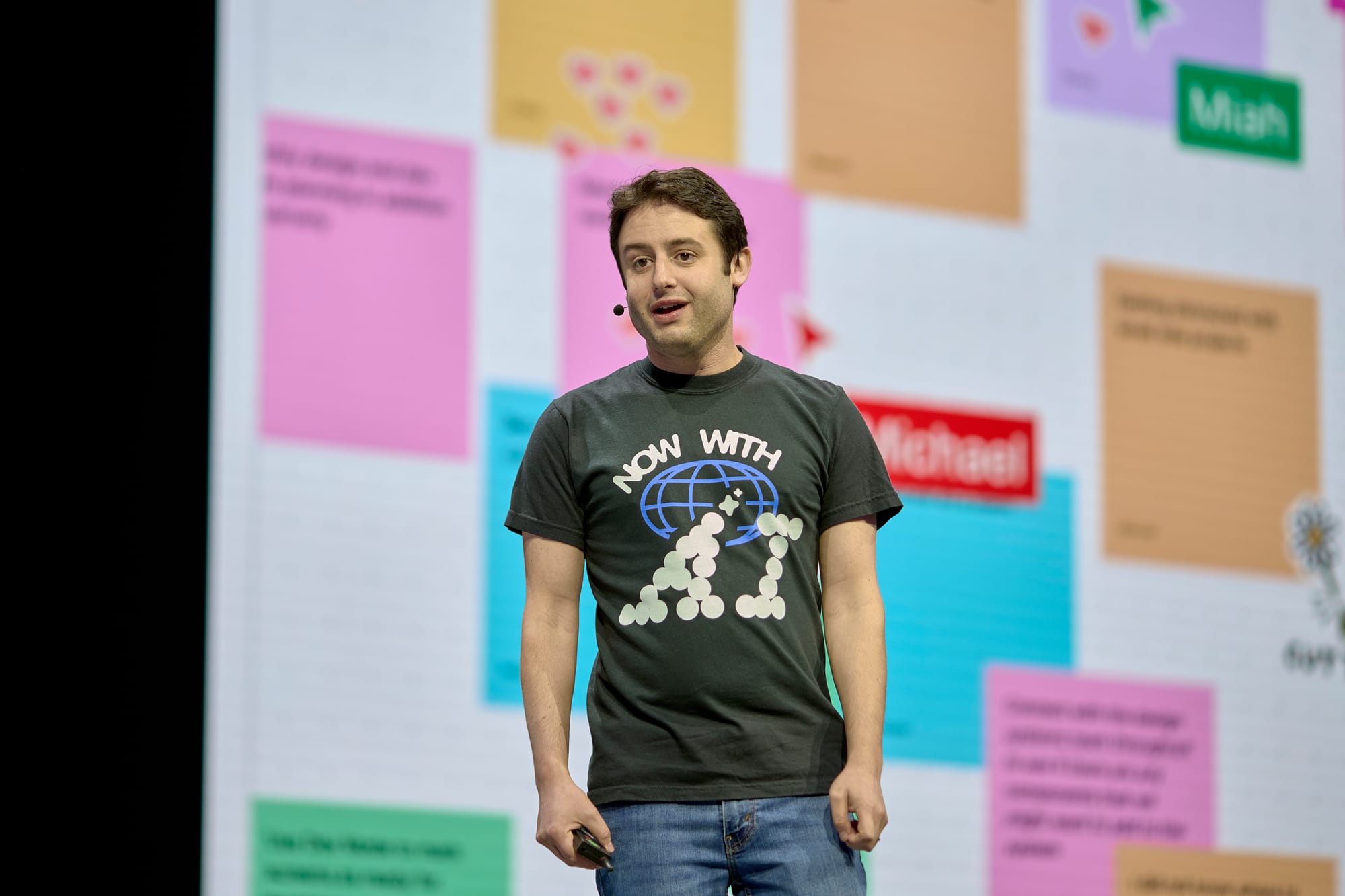
Figma, the browser-based collaborative design platform, has had a rough time over the last 12 months, as it has watched as its stock tumble from a high of $140 per share all the way down to around $24 earlier this week.
But the company punched back against this negativity with its strongest quarter ever, with $303.8 million in revenue pouring into its coffers, up 41% year over year. That doesn't sound like a company that deserved the beating it got over the prior year period.
CEO Dylan Field didn't pull any punches in the call with analysts, and he didn't have to. "2025 was a massive year for Figma, and the fourth quarter was our best quarter yet," he said.
Field sees the agentic future coming like everyone else, even if he doesn't think it's quite there yet. "I think it is the case that humans will continue to use software, and increasingly, agents will too. And I'm excited about that. I think that this creates more surface for designers to work with and design and think through," he told analysts.
Software companies like Figma are not going to sit back and let agentic AI take over their turf. Agents may help with the design and be part of the collaborative process in the future, but Figma pioneered that process, and as its numbers showed this week, it continues to own it.
This week in startups

I added this section last week: a rollup of startup news worth reading about. If you don't like I can make it disappear, but if you do, I'll make it a regular thing. Let me know what you think at feedback@fastforward.blog.
- Battery Ventures announced a new $3.25 billion fund this week that it plans to invest at every stage from early to late and even buyouts. Perhaps the biggest surprise is the firm plans to keep betting on software startups, AI disruption be damned, including data/AI, developer tools and cybersecurity, which puts it firmly in my wheelhouse.
- Here's something you don't see every day: a startup that launched two months ago announcing a $300M Series A at $4B valuation. That's a lot of dough for a company this early, but Ricursive Intelligence was founded by Dr. Anna Goldie and Dr. Azalia Mirhoseini, a pair who created AlphaChip at Google. The startup uses AI to speed up the design of AI chips, something that investors obviously put a lot of value on, and these two women know a thing or two about.
- Palo Alto Networks, the cybersecurity giant, was back to its acquisitive ways this week, announcing the acquisition of Koi, a startup founded in 2023, that helps secure agentic AI. When combined with last year's Protect AI acquisition, it shows the company is buying innovative startups to enhance its AI protection capabilities. Reports pegged the deal at $400 million.
My adventures in AI 🤖

One thing I've noticed about my own work habits, and I suspect this true for many of us who interact with AI bots regularly, is that it has changed the way I think about searching completely.
I search in complete sentences now, asking for exactly what I need. This has changed so quickly and without me even thinking about it. Whereas before too much information wasn't the optimal way to search, now you can just spell it out, and if you don't get what you want, you can continue the conversation until you do.
This does lead to some rabbit holes sometimes, but it's far more effective than the search methodology I had been using for over 20 years in terms of getting at the information I need, at least most of the time.
This post originally appeared on my LinkedIn.
What I'm reading 📚
Vibe coding is passé. Karpathy has a new name for the future of software
~Darryl K. Taft, The New Stack
Most CIOs regret AI vendor, platform decisions
~Makenzie Holland, CIO Dive
Pentagon-Anthropic battle pushes other AI labs into major dilemma
~Dave Lawler, Maria Curl, Axios
The RAM shortage is coming for everything you care about
~Sean Hollister, The Verge
Look who's talking 👄
"One of the things we’ve been telling guys, and I think this goes in every profession, even in life. The feedback, most of the time, is right in front of you. It’s not behind you. It’s not in the iPad, the Trackman or the ABS system, whatever. It’s right in front of you."
~Boston Red Sox manager Alex Cora talking about the role of analytics in baseball and in life.