
FastForward #53: With a little help from my bots


ForwardThinking 🤔
With a little help from my bots
Conventional wisdom suggests that using AI tools makes us more productive. Think about it: you've got this bot that can do stuff for you, whether that's writing code, conducting research or editing this commentary. In theory, that should save time and reduce the administrative busy work most people don't enjoy. That sounds like a good thing. But according to a recent Harvard Business Review article, AI doesn’t actually reduce work — it intensifies it.
"One of the promises of AI is that it can reduce workloads so employees can focus more on higher-value and more engaging tasks. But according to new research, AI tools don’t reduce work, they consistently intensify it," the authors of the HBR article wrote.
While the HBR article points out the long-term ramifications of intensifying our workloads, I’ve found the impacts to be more immediate. Consider my experience the other day. I had to create an invoice to get reimbursed for airfare. I uploaded my logo, the receipt and the name and address of the company paying me. I then instructed ChatGPT to write an invoice using these three elements and generate a PDF. As Bruce Springsteen once wrote, "ought to be easy, ought to be simple enough," but it wasn't.
In spite of clear instructions, and the fact it had created a PDF for me a few days before, ChatGPT couldn't create a downloadable PDF and claimed it didn't know how. I tinkered with it for 20 minutes. In that time I could have easily opened Google Docs and done it myself, but I was determined to make it work. I finally dropped the same instructions into Claude and it produced a professional-looking invoice on the first try. Yeah, just a little bit of work intensification to do a simple task.
But what about programmers?
The strongest AI use case so far may be programming, where a code generator like Claude Code or Cursor can create a program for you from a plain-language prompt. You may have heard about a viral blog post this week from a programmer named Matt Shumer who claimed that using AI programming tools, applications practically write themselves. Gary Marcus, a guy like me who tends to have a skeptical view when it comes to the limits of today's tooling, wasn't convinced it was quite that easy.
I tend to lean more toward Marcus' skepticism than Shumer's hype.
If you read my Adventures in AI section in this newsletter and on LinkedIn (and if you don't, you should), you know that AI is more complex than 'it just works.' It sometimes feels magical, sometimes obstinate and frustrating. Case in point: while fact-checking this very piece, ChatGPT confidently told me the Bruce Springsteen lyric I quoted earlier was from Hungry Heart. It is actually from Tunnel of Love. Sure, you could let it go and produce stuff, but that is probably going to come back to bite you sooner rather than later.

Does it help me move faster in some ways? It absolutely does, but that doesn't mean that you can set it and forget it. If you use it every day and you're being honest, you know that. As Jim Rowan, US head of AI at Deloitte, told me this week, using research as an example, it helps you get there, but it doesn't produce a finished product on the first try. You still need human intervention. "It helps you do the research. It’s not the research product,” he said.
I've found that AI is a force multiplier for me, especially as a solo publisher. I can do research faster. I can pressure test ideas. I can get advice on word choice, sentence construction, accuracy, clarity and flow. I would be lying if I said it hasn't changed the way I work for the better.
But that doesn't mean I think we are all about to be replaced by our AI overlords. Tech people love to overstate what tech can do, or how quickly we can go from point A to point B in terms of usage and capability. This is unquestionably a big leap forward in terms of how we get work done, but ultimately I'm getting by with a little help from my bots. They don't do everything.
~Ron
What's new on the blog 📰
Cloud infrastructure revenue surges as AI expansion rolls on
Riding a wave of AI demand, the cloud sector surged to $119 billion for the quarter and $419 billion for the year. I dug into Synergy Research's latest data to learn more.
Read full article>>
As AI reshapes infrastructure, Cisco responds to a changing data center
AI represents a tremendous opportunity for networking equipment vendors like Cisco as it requires a new generation of equipment to run these workloads. I spoke to chief product officer Jeetu Patel, whom I have known for many years, about how the company is trying to seize the moment.
"We had set a target of a billion dollars in AI infrastructure product orders for the year, and we ended up doing over $2 billion, about double our original target," he said.
MCP Apps starts moving real work into the AI chat interface
MCP Apps, released last week, brings application workflows directly into the AI chat interface. It’s an important step for implementing agentic behavior, but it is still constrained to one application at a time.

Exclusive: Kilo Code bets on agentic engineering with a model-agnostic CLI spanning 500 AI models
This is our first FastForward exclusive: Kilo Code, an early stage startup co-founded by GitLab chair Sid Sijbrandij, is rolling out a new model-agnostic CLI that works across more than 500 AI models. The startup is betting that the next phase of AI development is about managing agents and workflows, not just chatting with models.
The Super Bowl remains a defining moment for brands to show their stuff.
It’s Super Bowl week, and as the New England Patriots face off against the Seattle Seahawks in Santa Clara this weekend, it’s pretty much my obligation to write about it.
I spoke with Adobe Enterprise CMO Rachel Thornton about how the game has become a showcase for brands, so much so that for some folks, the ads matter as much as the game itself.

News of the Week 📣
Workday founder returns for fourth go-round in corner office

Workday, the HR SaaS platform, was founded in 2005. Over its 21-year history, co-founder Aneel Bhusri has already cycled through the CEO or co-CEO role three times. This week’s leadership shakeup in which Carl Eschenbach stepped down, makes it four as Workday announced Bhusri is once again returning to the corner office.
As AI takes hold, enterprise SaaS vendors like Workday have seen their stock and value proposition under attack. These changes require a product-driven leader, says Amy Loomis, an IDC analyst who covers workplace solutions. "Across the data platform landscape, vendors are shifting from finance-focused leaders (e.g., ex-CFOs, MBAs) to product and creator-driven leadership," Loomis told FastForward.
And Bhusri fits that description to a T. He is well liked by customers and has the product vision to guide the company through this historic change.
As we saw at Cisco where product has been consolidated under the leadership of chief product officer Jeetu Patel, this renewed product focus is not unique to Workday. "The industry is recognizing that unified, visionary leadership is critical for data orchestration vendors, who face different challenges than commodity-like data infrastructure or AI app vendors," Loomis said.
Databricks raises another $5B as annual revenue run rate hits $5.4B
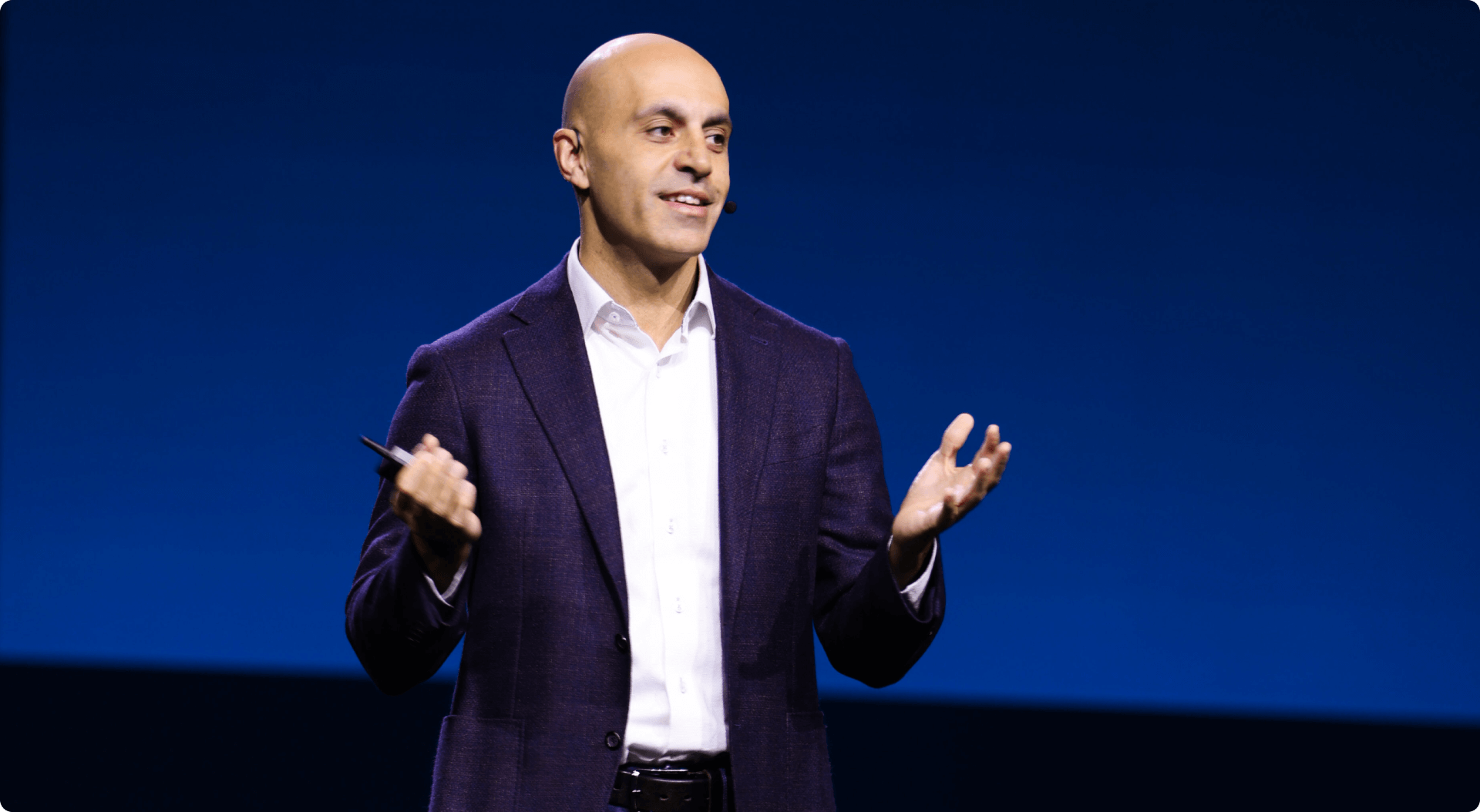
Here we go again. Databricks announced yet another investment this week. This one is for $5 billion plus another $2 billion in debt capacity. The company's $134 billion valuation from a $4 billion December raise remained unchanged.
The company also reported that it had surpassed a $5.4 billion annual revenue run rate, growing 65% year over year in the fourth quarter of 2025. Those kind of numbers tend to get attention and this round came from the likes of JPMorgan Chase, Goldman Sachs, Morgan Stanley, Microsoft and others. It's no wonder these firms are eager to get involved, even this late in the game with numbers like that.
CEO Ali Ghodsi has been fielding the 'when are you going to IPO' question for at least five years now. But as always he deftly deflected the question this week when he told CNBC, "when the time is right." It's a pretty predictable response at this point for the leader of a company that investors are anxiously awaiting its IPO, even at a time when SaaS stocks are otherwise getting hammered.
But Databricks could be insulated from this turbulence because good data matters now more than ever. Databricks and its chief rival Snowflake have become the go‑to data and AI platforms, and investors clearly think they’re onto something. AI isn't going anywhere and the need to fully understand your data isn't either. That's why the future is bright and the time could be right for an IPO just about any time the company is ready.
Databricks was founded in 2013 and raised a hair over $27 billion, according to Crunchbase data.
This week in startups

I’m adding a new section this week: a rollup of startup news worth reading about. Let me know what you think at feedback@fastforward.blog.
- Former GitHub CEO Thomas Dohmke announced a new startup this week called Entire, along with a $60 million seed round. The company is building a developer platform where humans and AI agents can collaborate to build and ship software together.
- Oxide, a startup which is trying to help customers run something closer to a public cloud experience in their own data centers, just landed a $200 million Series C. I covered the company’s launch with a hint of skepticism in 2023, but to its credit it keeps rolling along, helped by renewed interest in private clouds as AI pushes more companies to keep powerful infrastructure close to their data.
- ServiceNow announced it intends to acquire Israeli startup Pyramid. The company offers a unified, AI-driven platform that combines business analytics, data science and data preparation in one place. It should fit nicely with ServiceNow’s AI platform by making it easier for people and AI tools to ask questions about their data and get useful answers out of ServiceNow.
- Newo.ai, a San Francisco-based startup, announced $25 million in Series A funding this week to enhance its AI receptionists. The service answers calls and messages for small businesses so they don’t miss customers when they’re busy. The company was co-founded by ABBYY founder David Yang and serial entrepreneur Luba Ovtsinnikova.
My adventures in AI 🤖

If you think today's AI is intelligent in the way we think of human intelligence, you clearly aren't using it on a regular basis. If you ask a human to do a simple task, and they are able to complete it, you can reasonably assume the person can do the same task again the next time you ask, all things being equal. But that isn't always the case with generative AI.
On Friday, I asked ChatGPT to create a business document for me and then generate a PDF I could download. It was able to do this, and through a back and forth process, I got a final PDF I was happy with.
On Monday morning, I asked ChatGPT to do almost exactly the same thing – to generate a similar business document based on my instructions and create a downloadable PDF. It couldn't do it. It's the exact same thing I asked it to do on Friday (and it's not a complex task).
A 10-year-old could have followed and repeated the same instructions, once they were trained on the task, and yet this technology that's supposed to take all our jobs can't.
This post originally appeared on my LinkedIn.
What I'm reading 📚
Salesforce workers outraged after CEO makes joke about ICE watching them
~Dani Anguiano, The Guardian
ChatGPT thinks your state is dumb. Or lazy. Or ugly. See for yourself.
~Geoffrey Fowler, Substack
Meet the One Woman Anthropic Trusts to Teach AI Morals
~Berber Jin & Ellen Gamerman, WSJ
Spotify says its best developers haven't written a line of code since December, thanks to AI
~Sarah Perez, TechCrunch
Look who's talking 👄
"The entry-level jobs that you had two to three years ago, AI can do most of them. So, if you're going to convince your business leaders that you need to make this investment, then you need to be able to show the real value."
~IBM's Chief Human Resources Officer Nickle LaMoreaux talking about IBM's plans to triple entry-level hires this year.