
Exclusive: Kilo Code bets on agentic engineering with a model-agnostic CLI spanning 500 AI models

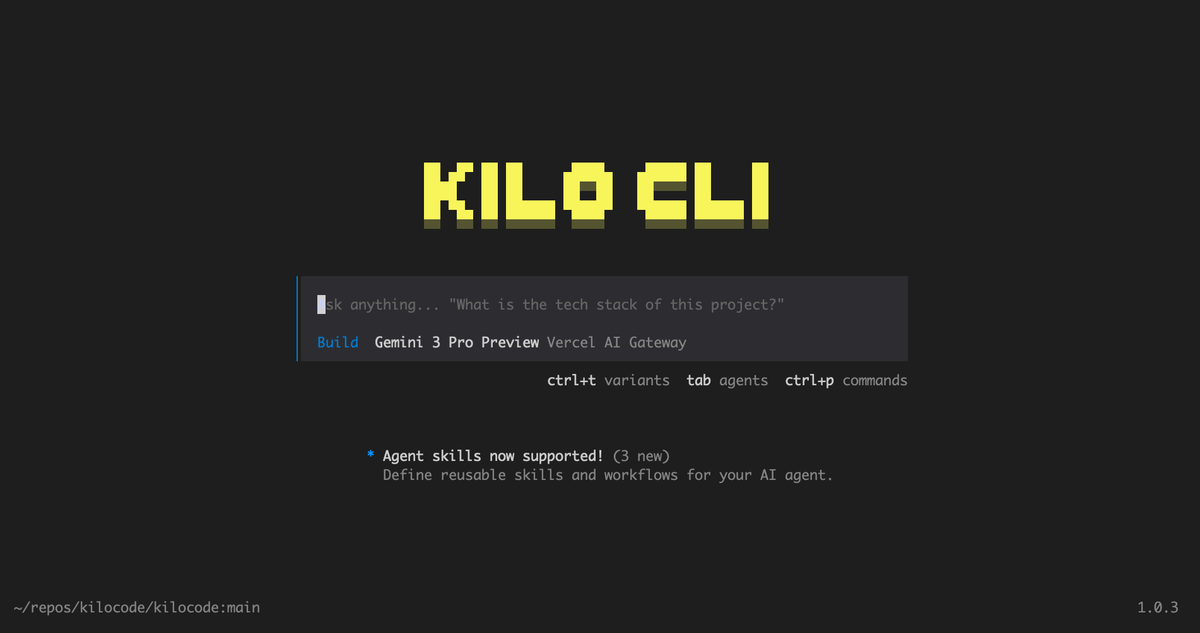
Kilo Code, an early‑stage open source agentic development platform, co‑founded by GitLab chair Sid Sijbrandij, is rolling out a new command‑line interface built to work with more than 500 AI models. Kilo Code rebuilt its original CLI into a single, model-agnostic tool designed to help developers build and manage agentic workflows, choosing the best model for each task.
Company co-founder and CEO Scott Breitenother says the startup believes in choice when it comes to models, and sees its role as providing the infrastructure that lets developers stay in control of those choices. “There are just so many amazing models coming out, and we see a lot of folks restricting themselves to a handful of models. We believe in model freedom,” Breitenother told FastForward.
But it's more than just a chatbot interface that lets developers communicate in natural language. Kilo is attempting to create a truly agentic platform where the programmer is managing these agents to complete multi-step workflows. "What we're starting to see more and more is truly agentic engineering, and that is going from a chat box and the autocomplete to the developer as conductor of an orchestra, conducting and managing multiple agents in parallel," he said.
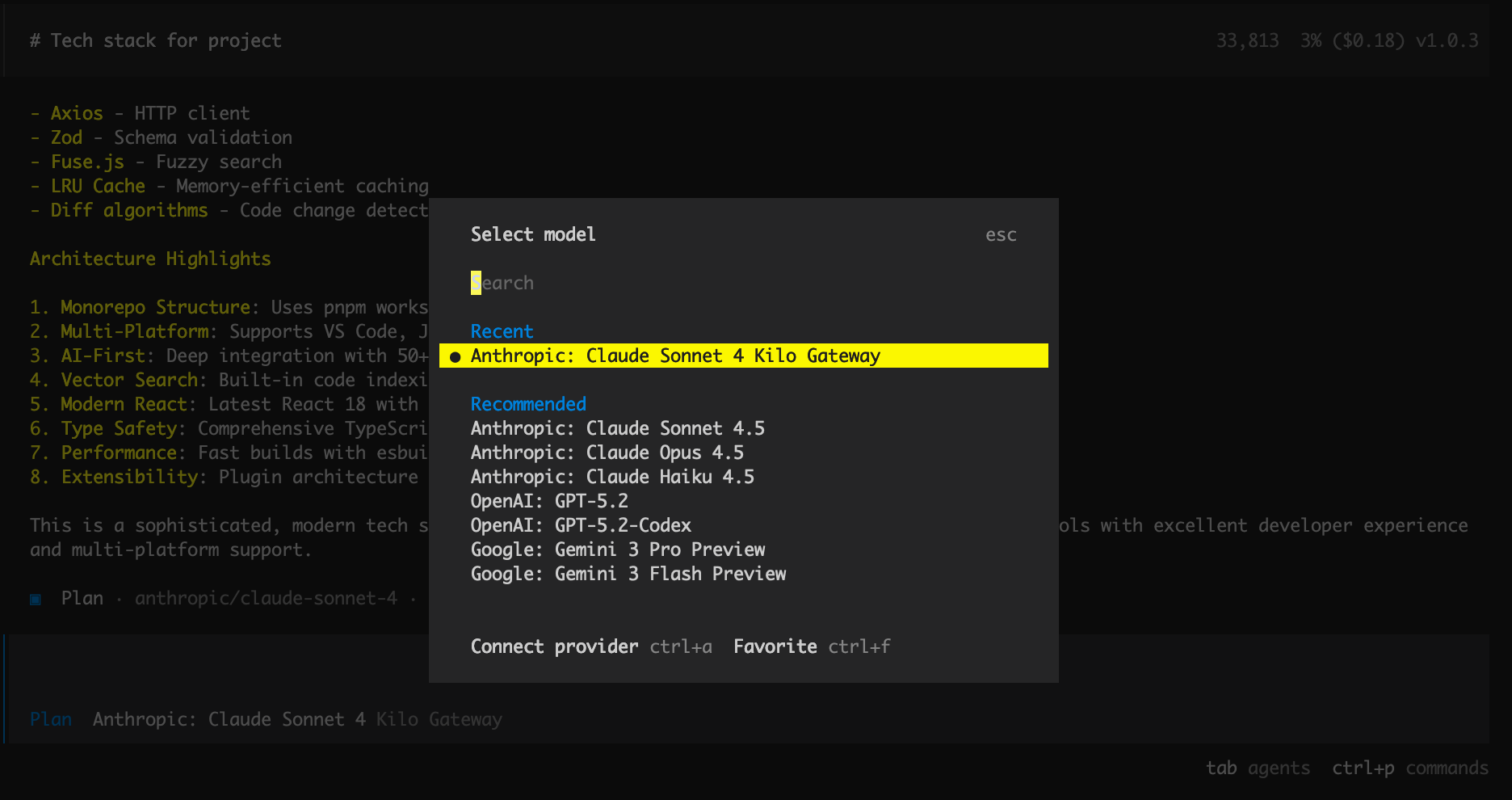
While developers can run the CLI from a standalone terminal, they can also use the existing VS Code or JetBrains extensions to work with Kilo Code directly inside those popular editors. "We're creating an experiential layer on top of those coding models, as well as the cloud infrastructure, so that you can, say, start a coding session in VS Code, kick off a long-running session to the cloud, pull it back down and be running multiple agents in parallel," he said.
The platform also lets developers set modes to create workspaces for different tasks. By default, it comes with Code, Ask, Architect, Debug and Orchestrator, but developers can create their own shareable custom modes as well. "Each of these modes has its own kind of specialized prompts and settings. With Ask, for example, you can't actually modify the code," he said.
Staying true to open source
In a world where the meaning of open source software is increasingly being watered down, Sijbrandij and Breitenother are leaning into a more traditional open source ethos where they are completely transparent. "There are a lot of black boxes out there, and we want to be the opposite," Breitenother said. "We want to be the folks that say, 'Hey, AI is a world-changing technology. We don't think it should be gated and we don't think it should belong in a black box.'"
Kilo Code’s core application is built on an MIT open source license, and the company plans to make the source code for its back-end infrastructure repositories available this week. That means most of the product will either be open source or have its source code available for review. The only exception is a small component used to detect and prevent abuse of its agents for illegal or otherwise harmful tasks.
The company plans to monetize through enterprise agreements, following a familiar open source playbook. While Kilo Code charges users for AI model usage, it does so at pass-through list pricing, without marking up token costs.
The approach appears to be resonating with developers. Breitenother reports more than a million downloads already, a notable milestone for a company founded last year that only began shipping product over the summer.
As for funding, the company announced an $8 million seed round in December. The round was led by Cota Capital with participation from Breakers, General Catalyst, Quiet Capital and Tokyo Black.