AWS takes an AI step forward

A year ago this week, I launched FastForward #1 at AWS re:Invent. It was a heck of a place to officially start my journey, amidst the tumult of a ginormous conference in one of the most distracting places on the planet, but we were ready to go and there is never a perfect time. So I took the leap.
A year and 48 issues later, I was back in Vegas waiting in long taxi lines and getting hassled by overzealous event security, who took umbrage with me for having the audacity to take a picture on my way out of the auditorium during Matt Garman’s keynote. I was threatened with arrest and having my badge revoked until cooler heads prevailed. I was sent on my way, shaken up and aggravated, but with a good story to tell my journalist friends in the press room.
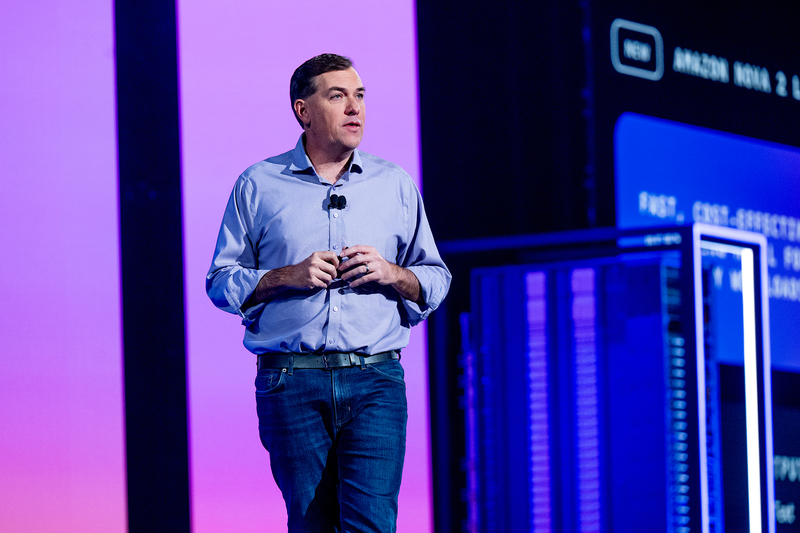
But the real story this week wasn’t about my misadventures one year into FastForward. It was about the themes of re:Invent and where Amazon stands in the ongoing AI race. Two years ago Adam Selipsky was still AWS CEO and there was a general industry perception that Amazon had fallen behind. Microsoft’s tight relationship with OpenAI at the time seemed to give Redmond a leg up. Everyone said it was early, but some level of panic seemed to be setting in at Amazon.
Six months later, Selipsky was out (officially stepping away), replaced by AWS lifer Matt Garman, who set the company more firmly on its AI journey. Last year Garman’s inaugural keynote emphasized the basics, Amazon’s infrastructure strengths, before launching into the AI announcements. This year agentic took center stage with a much more coherent AI story that included chips, hardware, agent creation tools and Amazon large language models. But was the company losing something by avoiding the core infrastructure story?
Where to focus?
If perception is everything, then Amazon covered its bases with the flurry of announcements this week in Las Vegas. “It certainly helped them catch up in all the key areas,” Holger Mueller, an analyst at Constellation Research, told FastForward this week. He particularly liked things like larger S3 buckets, which are now able to handle objects up to 50 terabytes, large enough to hold most SAP ERP data. He also highlighted the release of S3 Vectors, which lets customers query vector data at what Amazon claims is a fraction of the cost of stand-alone vector databases. Finally, he liked the agent story, including the Amazon Bedrock AgentCore update and the announcement of new all-purpose agents for developers, security and DevOps.
But David Linthicum, founder and principal analyst at Linthicum Research, offered a pointed critique of Amazon's AI focus. “My overall take is that these announcements feel more like “me-too” moves than true innovation. In the rush to chase generative AI hype, AWS risks sidelining the mission-critical services enterprises depend on,” Linthicum said. “In short, AWS is back in the AI headlines, but these announcements don’t address the everyday operational challenges that keep enterprises up at night.”
"In the rush to chase generative AI hype, AWS risks sidelining the mission-critical services enterprises depend on."
~David Linthicum, cloud consultant
As Jon Turow, a partner at Madrona Venture Group and a former AWS employee, told me, he’s not completely sold on Amazon's approach." The traditional AWS Lego brick approach may not be the right abstraction level for this generation of technology,” Turow said, referring specifically to AgentCore. “Developers are discovering other intermediate levels of abstraction for agentic infrastructure that are higher level while still being composable." Those intermediate abstraction levels hide some of the complexity of building agents, whereas the Amazon approach provides more basic, but flexible tooling.
Amazon may still have miles to go, but at least it finally took the leap — much like I did last year when I published the first issue of this newsletter. You can hardly blame the company for sticking with familiar approaches as it more fully incorporates AI into the product set. The real test is whether it can push ahead on agents without losing sight of the infrastructure foundation that has made AWS what it is.
~Ron
Featured photo by Ron Miller.