AI is falling into trough of disillusionment

For all the optimism surrounding AI in recent years, it feels like we are hearing an increasingly loud drumbeat of negativity lately. Heck, even Sam Altman is talking about an AI bubble – and he’s not alone. There’s even been talk of another AI winter.
AI winters tend to happen in the aftermath of a period of extreme hype when the reality can no longer match the noise coming from the market. It's a saying that hits a little too close to home, doesn’t it?
Gartner’s hype cycle is a handy guide here: New tech typically climbs to a peak of inflated expectations, before plunging into the trough of disillusionment as companies realize it’s not living up to the buzz. If it’s not vaporware, it usually works its way up the slope of enlightenment before finally, blissfully landing on the plateau of productivity.
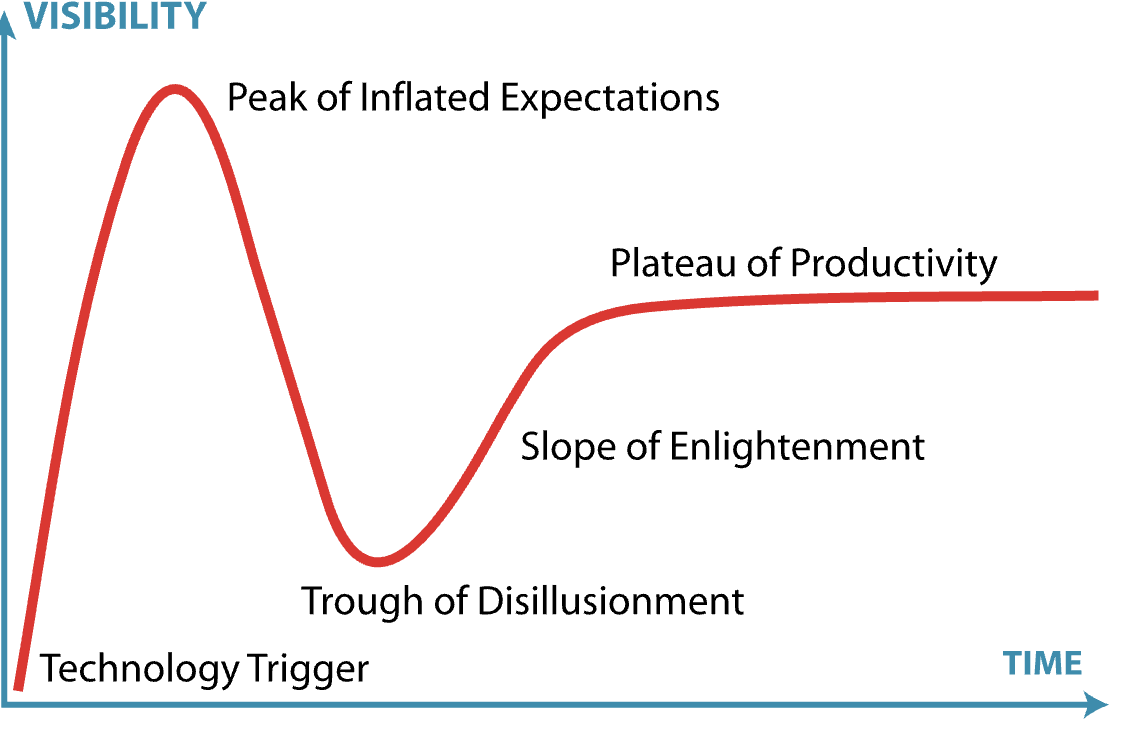
If I had to guess where we are right now with the current generation of AI, I would say we are rapidly descending into that disillusionment trough where major investments have been made, ROI has been measured and companies are not seeing the productivity gains they hoped for.
The backlash could be due to the screaming hype raising unreasonable expectations – and the industry only has itself to blame.
Signs of weakening demand
There are signals aplenty out there that people are growing fed up with a lack of positive results when it comes to AI. The first was the MIT NANDA report released in July. The major finding was that after investing between $30 and $40 billion, the report concluded that about 95% of projects have resulted in no measurable ROI. If that’s not disillusioning, I don’t know what is.

If you need more proof, an S&P Global report published in May found: “The percentage of companies abandoning the majority of their AI initiatives before they reach production has surged from 17% to 42% year over year, with organizations on average reporting that 46% of projects are scrapped between proof of concept and broad adoption.” That’s in line with other studies I’ve seen throughout this year that there’s a lot of experimentation, but not many wins at scale.
To be sure, there are success stories, but only 27% of organizations in the S&P Global report have implemented AI across the company, with projects mostly limited to certain departments.
AI adoption dropping
Those studies help provide a snapshot in time, but don’t necessarily give you the entire view. It helps to look at more timely data. My colleague Ed Sim shared a report recently from Apollo Global Management chief economist Torsten Sløk on LinkedIn that does just that.
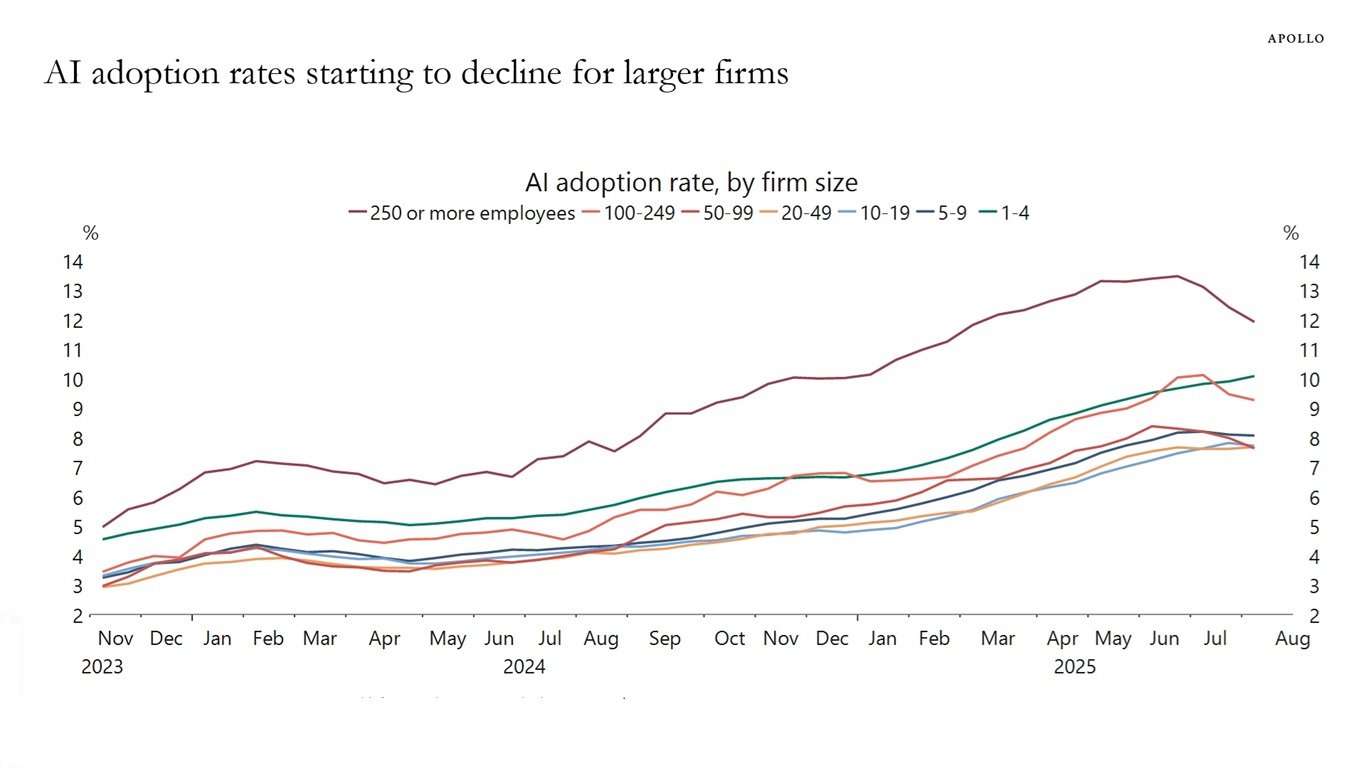
Sløk published his note (link here) last week showing the AI adoption rate is dropping at major firms. Sløk follows a bi-weekly survey from the U.S. Census Bureau, looking closely at one question in particular: “whether a business has used AI tools such as machine learning, natural language processing, virtual agents or voice recognition to help produce goods or services in the past two weeks.”
The adoption rate for firms with over 250 employees appears to be losing momentum. After going steadily up over the last year, the rate slowed in July and fell more sharply in August. It’s another signal that we might be plunging into that trough.
As Sim wrote, “The last mile in the enterprise is always the hardest, moving from pilot to production is messy and complex, especially when the promise doesn't immediately equal value.” He’s right, of course. It’s hard for companies to continue to make major investments in AI and not see some sort of significant payback in the form of measurable productivity gains and positive impact on the bottom line.
Not your typical technology cycle
That naturally leads to the question whether we are heading into that dreaded AI winter or if it’s a normal plunge into the trough before companies begin to better understand how to put this technology to work.

Of course, it’s impossible to have this discussion without acknowledging that this isn’t necessarily your typical technology cycle. AI companies are raising princely sums with gargantuan valuations. As an example, OpenAI raised $8.3 billion in August at a $300 billion valuation. Just weeks later it was valued at $500 billion as part of a $10.3 billion secondary share sale, designed to help investors and employees get some cash out. That disconnect between falling adoption and rising valuations makes this cycle unusual.
While AI optimists believe the market potential is so great that it’s worth the massive investments, pessimists fear we could be in a bubble. With this kind of money on the line, the question is whether the disillusionment will be momentary, or if companies and investors will lose patience and trigger a new AI winter. Either way, the next few quarters will test just how much conviction this market really has.
~Ron
Featured photo by Elijah G on Unsplash